
Sh*cking Revelation: Convicted Murderer Ran TikTok Live, Cashed Out While Behind Bars In Ogun Prison
 Follow us on Google News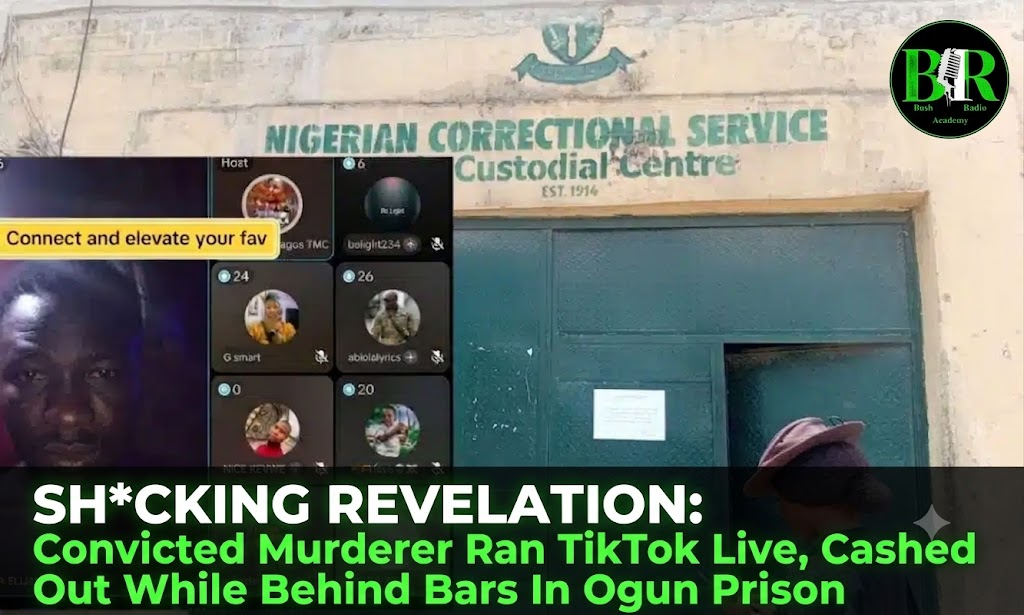
A death-row inmate at the Ibara Custodial Centre in Abeokuta, Ogun State, has come under scrutiny after an investigation revealed he allegedly operated multiple TikTok accounts, hosted livestreams and received financial gifts from followers while serving a death sentence.
The inmate, Elijah Oyebode, was sentenced to death by hanging in 2019 by Justice S.O. Falola of the Osun State High Court for the murder of Rofiat Adebisi, a final-year student of Osun State University (UNIOSUN). Court records showed that Adebisi was killed on December 22, 2016, after Oyebode picked her up while she was waiting for transportation to Osogbo.
According to an investigation by Premium Times, Oyebode allegedly had unrestricted access to smartphones and internet services within the custodial facility, enabling him to interact with thousands of TikTok users, host live sessions and solicit financial support through virtual gifts and donations.
The report stated that one of his TikTok accounts reportedly attained Level 20 gifting status, indicating significant financial activity. Many of those who supported him online were allegedly unaware that he was a condemned inmate.
Oyebode was also accused of creating another TikTok account using the identity of activist and TikTok host Omolola Awoyele. Awoyele said the inmate used her name and photograph, raising fears the account could be used to defraud unsuspecting members of the public. She said he later apologised and changed the account details after she confronted him.
Awoyele explained that she initially believed Oyebode’s claims of innocence and even sought legal assistance to help him pursue an appeal. However, after obtaining certified court documents detailing the case, she withdrew her support. She further alleged that the inmate later threatened her, prompting her to sever all contact.
During one of Awoyele’s TikTok livestreams, Oyebode allegedly claimed that numerous inmates at the Ibara Custodial Centre possessed internet-enabled mobile phones, with some reportedly owning multiple devices. He also claimed that most of the money he received came from online supporters rather than relatives.
The condemned inmate further alleged that some correctional officers aided inmates by smuggling phones and other prohibited items into the facility for financial rewards. He also claimed that officers sometimes demanded money before returning confiscated phones and alleged that drugs were illegally brought into the prison for resale by inmates. He additionally accused some officers of allowing wealthy inmates to leave the facility under supervision for private engagements. None of these allegations has been independently verified.
The Nigerian Correctional Service (NCoS) acknowledged that compromised personnel could undermine security within custodial centres but stressed that concrete evidence would be required before disciplinary action could be taken.
Responding to the revelations, NCoS National Spokesperson Jane Osuji said the service could neither immediately confirm nor dismiss the allegations, noting that misconduct by a few officers was possible in any large organisation.
She warned that inmates with unauthorised internet access posed a serious security risk, arguing that if prisoners could freely access social media for entertainment or financial gain, they could also coordinate criminal activities from behind bars.
Osuji urged the public not to send money or virtual gifts to inmates operating illegal social media accounts, saying such support could undermine the correctional system’s rehabilitative objectives.
She also cited Section 29 of the Nigerian Correctional Service Act, 2019, which prescribes penalties of up to three years imprisonment, a fine of as much as ₦3 million, or both, for officers found guilty of facilitating inmates’ access to prohibited communication devices.
While the correctional service disclosed that more than 1,400 personnel had been disciplined for various offences and said surprise searches were regularly conducted to recover contraband, it did not explain how Oyebode allegedly maintained multiple social media accounts, conducted livestreams, received donations and placed online bets over an extended period while on death row.



Comments
0 comments