
They Don’t Want Us To Use Solar — Man Raises Alarm Over Estate’s Electricity Charges
 Follow us on Google News
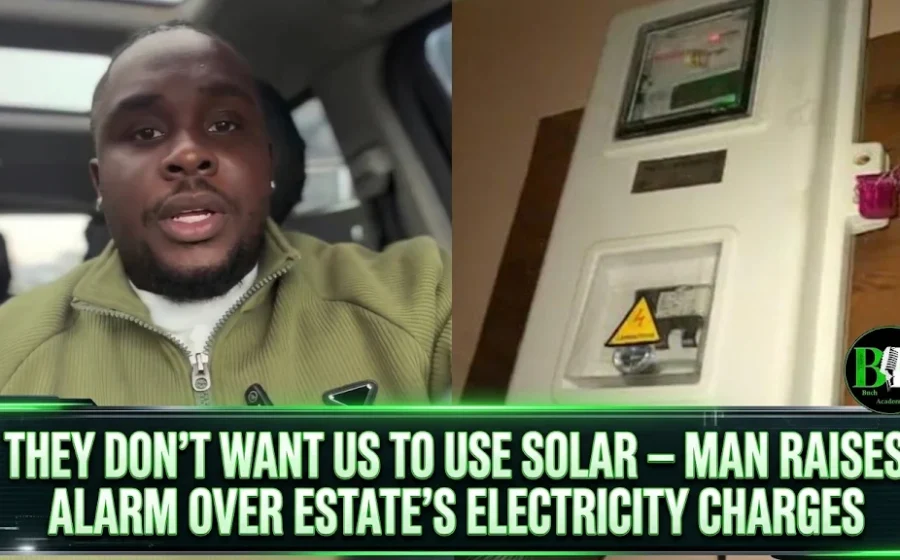
A Nigerian man has sparked reactions online after alleging that residents of his estate are being discouraged from installing solar power systems because management fears losing revenue from electricity payments.
The man made the allegation in a viral video, where he expressed frustration over what he described as the rising cost of electricity and additional financial charges imposed on residents of the serviced estate.
According to him, residents do not purchase electricity directly from the national grid but obtain power through an application operated by the estate management. He explained that the estate generates electricity using its own generator, while residents’ meters continue to record their power consumption.
Highlighting the financial burden, the man disclosed that his household spends approximately ₦450,000 monthly on electricity, explaining that ₦30,000 worth of power lasts only about two days.
He added that residents are also required to pay a monthly service charge of ₦65,000, while additional levies are sometimes imposed when management reports a shortfall in electricity funding.
The man claimed that residents were recently informed that the estate had incurred an additional expenditure of ₦12 million to sustain electricity supply. According to his account, management subsequently demanded ₦110,000 from each housing unit to cover the cost.
Based on the figures he provided, the combined expenses for electricity, monthly service charges and the additional levy could amount to approximately ₦625,000 for an affected resident in a month.
He further explained that the rising expenses had prompted several homeowners to consider alternative sources of electricity, with some reportedly investing in solar power systems to reduce their dependence on the estate’s generator.
However, he alleged that the growing interest in solar energy had become a source of concern for estate management, which reportedly fears that fewer residents paying for its electricity supply could affect the funding of power generation.
He claimed that management was considering restricting solar installations within the estate, adding that residents who choose to adopt the alternative energy source are sometimes criticised and described as uncooperative.
Expressing his dissatisfaction, the man questioned why residents should be discouraged from investing in solar systems when the move could help reduce their electricity expenses.
He also argued that renewable energy should be encouraged rather than opposed, noting that solar power offers an alternative for households seeking more affordable and sustainable electricity.
His allegations have renewed online discussions about electricity costs, estate management policies and residents’ freedom to adopt alternative power sources amid Nigeria’s persistent energy challenges.






Comments
0 comments