
Tinubu Makes Power Move—Four Tax Bills Signed, Reforms Roll Out
 Follow us on Google News
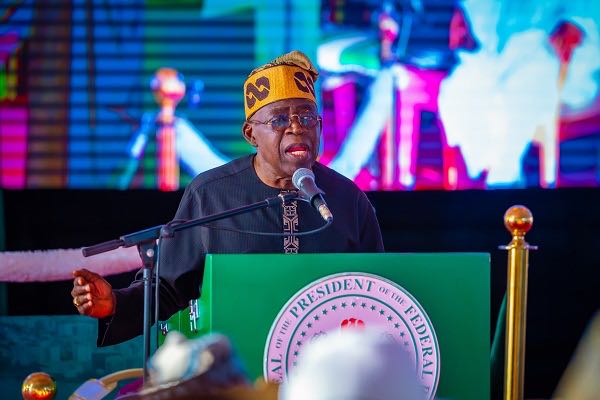
Today, Thursday, President Bola Tinubu will sign four major tax reform bills into law, marking a significant shift in Nigeria’s financial and revenue policies.
The four landmark tax reform bills — the Nigeria Tax Bill, the Nigeria Tax Administration Bill, the Nigeria Revenue Service (Establishment) Bill, and the Joint Revenue Board (Establishment) Bill — were recently passed by the National Assembly following extensive consultations with a wide range of stakeholders and interest groups.
Once enacted, these laws are expected to usher in a significant transformation of Nigeria’s tax administration system. They aim to enhance revenue generation, improve the ease of doing business, and attract both local and foreign investments by creating a more efficient and transparent fiscal framework.
The historic signing ceremony at the Presidential Villa in Abuja will be graced by key government figures, including the Senate President, the Speaker of the House of Representatives, the Senate and House Majority Leaders, as well as the chairmen of the Senate and House Committees on Finance.
Also expected to attend are the Chairman of the Nigeria Governors’ Forum, the Chairman of the Progressive Governors Forum, the Minister of Finance and Coordinating Minister of the Economy, and the Attorney General of the Federation.
Among the four bills is the Nigeria Tax Bill (Ease of Doing Business), designed to consolidate Nigeria’s previously fragmented tax statutes into a single, harmonised legal framework. By streamlining tax categories and eliminating redundancies, the bill aims to lower compliance costs, foster a more business-friendly environment, and promote fiscal predictability.
The Nigeria Tax Administration Bill provides a unified legal and operational framework for tax administration at the federal, state, and local government levels, thereby enhancing consistency and coordination.
The Nigeria Revenue Service (Establishment) Bill repeals the existing Federal Inland Revenue Service Act, replacing it with a more autonomous and performance-oriented Nigeria Revenue Service (NRS). The NRS will have an expanded mandate, including non-tax revenue collection, and will be governed by strict standards of accountability, efficiency, and transparency.
The Joint Revenue Board (Establishment) Bill introduces a structured governance model to enable seamless collaboration among revenue authorities at all levels. It also establishes key oversight institutions such as the Tax Appeal Tribunal and the Office of the Tax Ombudsman to ensure fairness and taxpayer protection.







Comments
0 comments