
Tinubu’s Economic Triumphs: Full List Of Milestones That May Reshape Nigeria
 Follow us on Google News
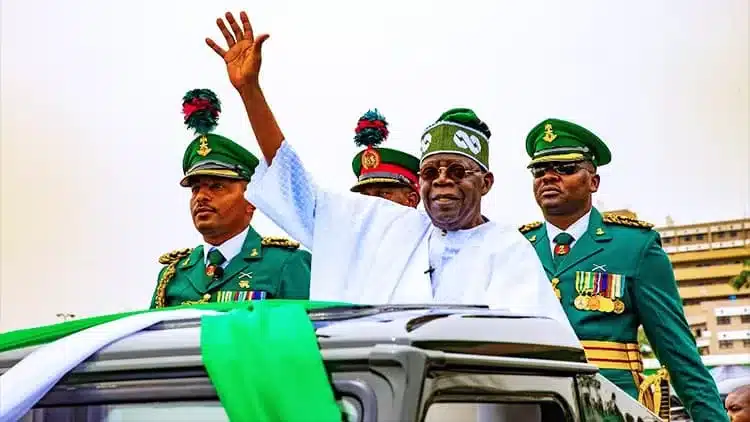
President Bola Ahmed Tinubu has outlined what he called “remarkable economic milestones” recorded under his administration in the past two years, assuring Nigerians that his fiscal and monetary reforms are beginning to deliver tangible progress.
In his Independence Day address on Wednesday, October 1, 2025, marking Nigeria’s 65th anniversary, the President declared that the government’s policies have restored economic stability while laying the foundation for inclusive growth.
According to Tinubu, Nigeria has achieved a historic breakthrough in non-oil revenue generation, surpassing its 2025 target with over ₦20 trillion by August. He also highlighted a major reduction in the nation’s debt service-to-revenue ratio, from 97 percent to below 50 percent, after settling the “Ways and Means” overdrafts that once destabilised the economy and fueled inflation.
He noted that the removal of fuel subsidy has freed trillions of naira for investments in infrastructure, education, healthcare, security, agriculture, and social programmes.
Other key achievements outlined by the President include:
-
Foreign Reserves: Increased to $42.03 billion in September 2025, the highest since 2019.
-
Tax-to-GDP Ratio: Rose to 13.5 percent, with new tax reforms set to expand the base while easing burdens on low-income earners.
-
Trade Surplus: Nigeria has now recorded five consecutive quarters of trade surplus, with exports rising by 44.3 percent in Q2 2025 to ₦7.46 trillion. Non-oil exports grew to 48 percent of total trade, signaling diversification away from oil dependence.
-
Oil Production: Output rebounded to 1.68 million barrels per day from about one million in May 2023, aided by improved security and new investments. Nigeria is also refining petrol domestically for the first time in four decades and has emerged as Africa’s leading exporter of aviation fuel.
-
Naira Stability: The currency has stabilised following FX reforms, with the gap between official and parallel market rates significantly reduced. Multiple exchange rates, which encouraged corruption, have been abolished.
-
Social Investment: ₦330 billion has been disbursed to eight million vulnerable households under cash transfer schemes.
-
Solid Minerals: Coal mining rebounded strongly, recording 57.5 percent growth in Q2 after a sharp decline earlier in the year.
-
Infrastructure: Rail, road, and port projects are advancing nationwide, with major rail projects such as the Kano-Katsina-Maradi line nearing completion. The Lagos-Calabar Coastal Highway and Sokoto-Badagry Highway are also underway.
-
Investor Confidence: Sovereign credit rating agencies have upgraded Nigeria’s outlook, while the stock market surged to an all-time high of 142,000 points in September 2025, up from 55,000 points in May 2023.
-
Monetary Policy: The Central Bank cut interest rates for the first time in five years, citing improved macroeconomic stability.
Tinubu emphasised that these 12 milestones reflect Nigeria’s economic recovery and resilience. He acknowledged the sacrifices made by citizens but insisted that the reforms were necessary to reposition the country for sustainable growth and prosperity.







Comments
0 comments