Trade Sh*ckwave: Trump Hikes Worldwide Tariffs To 15% Following Court Setback
 Follow us on Google News
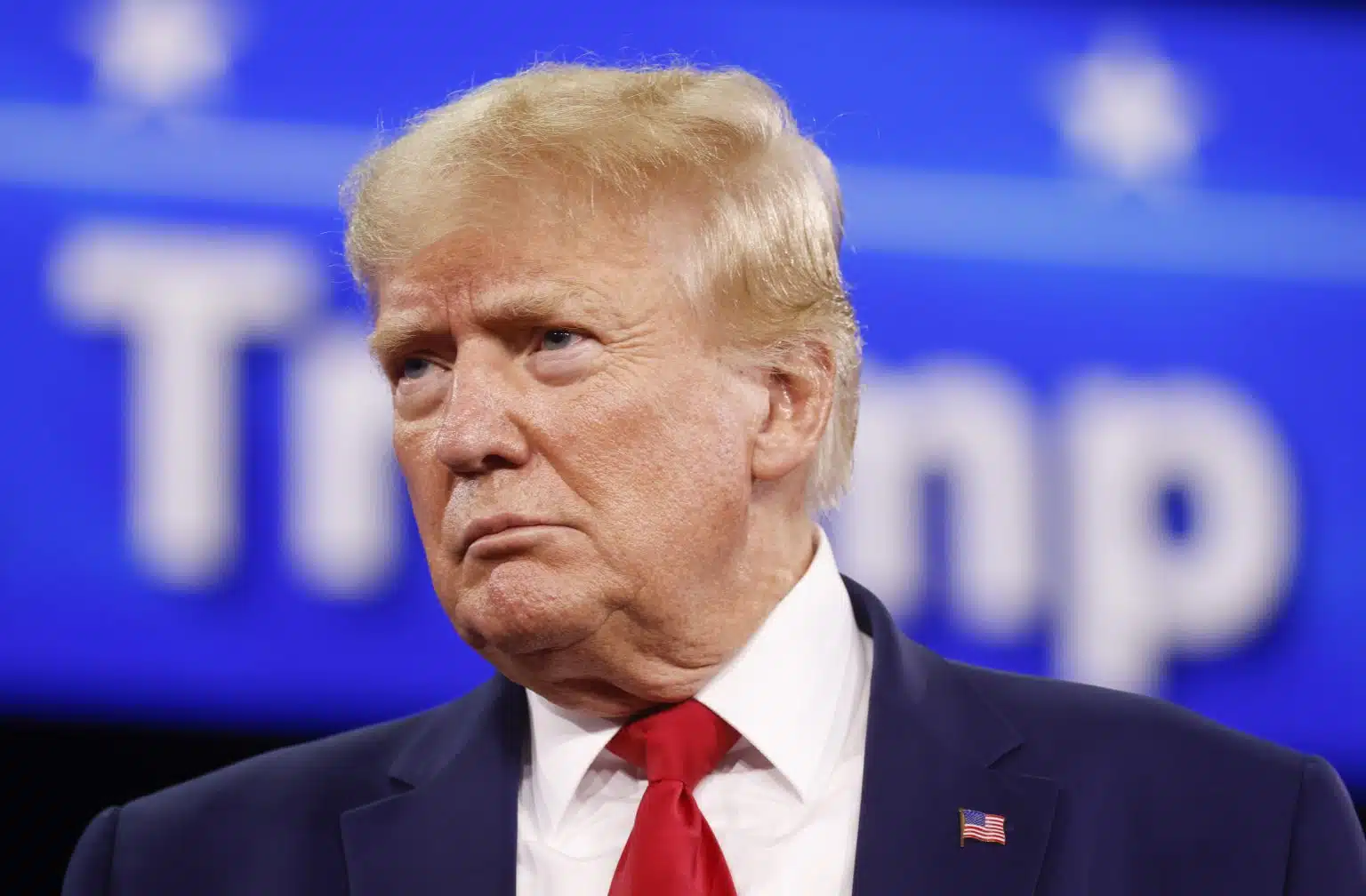
United States President Donald Trump on Saturday announced an increase in global import tariffs to 15 percent, intensifying his hardline trade policy just a day after the U.S. Supreme Court ruled that significant aspects of his tariff strategy were unlawful.
The decision marks a sharp escalation in Washington’s trade stance and signals the likelihood of extended legal and diplomatic disputes.
In a 6–3 judgment delivered on Friday, the Supreme Court ruled against Trump’s reliance on a 1977 economic emergency powers law to implement broad tariffs. The verdict represented one of the most notable judicial defeats for the president since his return to office 13 months ago.
The ruling effectively dismantled a cornerstone of his administration’s economic agenda — a sweeping tariff framework that has rattled international markets and reshaped global trade relationships.
Trump responded swiftly.
Posting on his Truth Social platform, he described the court’s decision as “extraordinarily anti-American” and announced that his administration would increase global import duties to what he called the “fully allowed, and legally tested, 15% level.”
Immediately after the ruling, Trump had initially invoked a separate legal authority to introduce a 10 percent global tariff. Saturday’s announcement raised that figure to 15 percent.
The political backlash was immediate. Some Republicans openly criticized conservative justices who joined the majority, accusing them of betrayal. Meanwhile, Trump commended the three conservative justices who supported his position — Clarence Thomas, Samuel Alito, and Brett Kavanaugh — thanking them for their “strength and wisdom.”
He further alleged that the six-justice majority, including two appointees from his first term, had been influenced by foreign interests — a claim that added to the controversy surrounding the ruling.
International and Domestic Reactions
Trump’s tariff increase has injected fresh uncertainty into global trade discussions, with several governments reviewing both the court’s decision and Washington’s response.
Brazilian President Luiz Inácio Lula da Silva urged cooperation rather than confrontation, stating that the world does not need a new Cold War and calling for equal treatment of nations.
In Europe, German Chancellor Friedrich Merz said he would consult with European partners to develop a unified response ahead of his planned visit to Washington in early March.
Within the United States, criticism also emerged. Pennsylvania Governor Josh Shapiro urged Trump to comply with the Supreme Court’s ruling and warned that ongoing tariff disputes were harming farmers, small businesses, and families.
Business groups, however, welcomed the court’s decision. The National Retail Federation said the ruling offers greater clarity for companies navigating uncertain trade policies.
Financial markets responded cautiously, with Wall Street recording modest gains following the anticipated judgment.
Temporary Policy, Ongoing Legal Uncertainty
According to a White House briefing document, the new 15 percent global tariff will remain in effect for up to 150 days under temporary legal authority.
Certain sectors — including pharmaceuticals — remain exempt due to separate investigations, as do goods covered under the U.S.-Mexico-Canada Agreement. Previously imposed sector-specific tariffs on steel, aluminum, and other products are unaffected by the court’s ruling.
The administration has also indicated that countries with separate tariff agreements may still be subject to the new global levy.
During oral arguments, officials suggested companies could receive refunds if the tariffs are ultimately ruled unlawful. However, the Supreme Court did not address the refund issue in its decision.
Trump acknowledged that the legal battle could continue for years, while Justice Kavanaugh reportedly cautioned that any refund process could prove complicated.