
VeryDarkMan Takes Aim At Pastor Arome, Blames Churches And Mosques For Nigeria’s Setbacks
 Follow us on Google News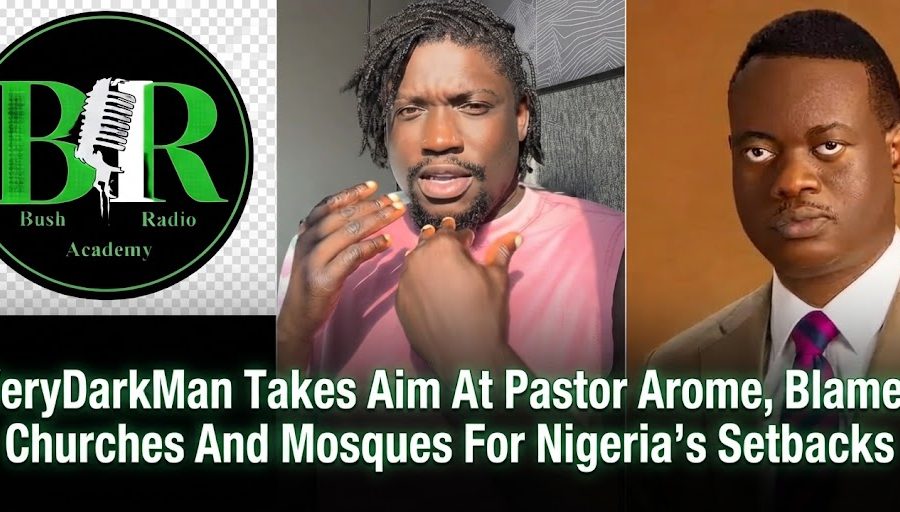
Social media activist VeryDarkman has criticised a recent preaching by cleric Osayi Arome, arguing that excessive reliance on prayer and religious revival could discourage Nigerians from pursuing innovation, creativity and practical solutions to the country’s challenges.
According to Bush Radio Academy, VeryDarkman was reacting to comments by Arome about Nigeria’s calling being centred on revival. The activist argued that religious institutions, including churches and mosques, have played a role in what he described as the country’s slow pace of development.
VeryDarkman maintained that Nigerians possess the intellectual ability to achieve technological and industrial advancement comparable to countries they often admire, but argued that the potential is not being fully utilised.
He questioned why Nigerians would spend significant time seeking miracles through religious activities when, in his view, greater attention should also be given to innovation, creativity, scientific development and practical solutions.
The activist also criticised what he described as an emphasis on offerings and tithes, alleging that some religious leaders benefit financially while encouraging their followers to focus heavily on religious activities. He made the remarks while directly addressing Arome over his position on Nigeria’s need for revival.
VeryDarkman further challenged Arome’s reported criticism of Nigerians who showcase technological innovations from other countries. He defended those travelling abroad to learn about new technologies and those supporting efforts to bring technical knowledge and expertise back to Nigeria.
He argued that exposing Nigerians to technological developments around the world could encourage creativity and contribute to efforts aimed at developing local solutions.
The comments have generated discussion online, particularly over the role of religion in Nigeria’s social and economic development. While VeryDarkman’s remarks represent his personal views, the broader debate centres on how religious faith, education, innovation and practical policy solutions can coexist in addressing the country’s challenges





Comments
0 comments