
Latest
War Talks Dispute: Iran Dismisses Trump’s Claim Of Renewed U.S. Negotiations

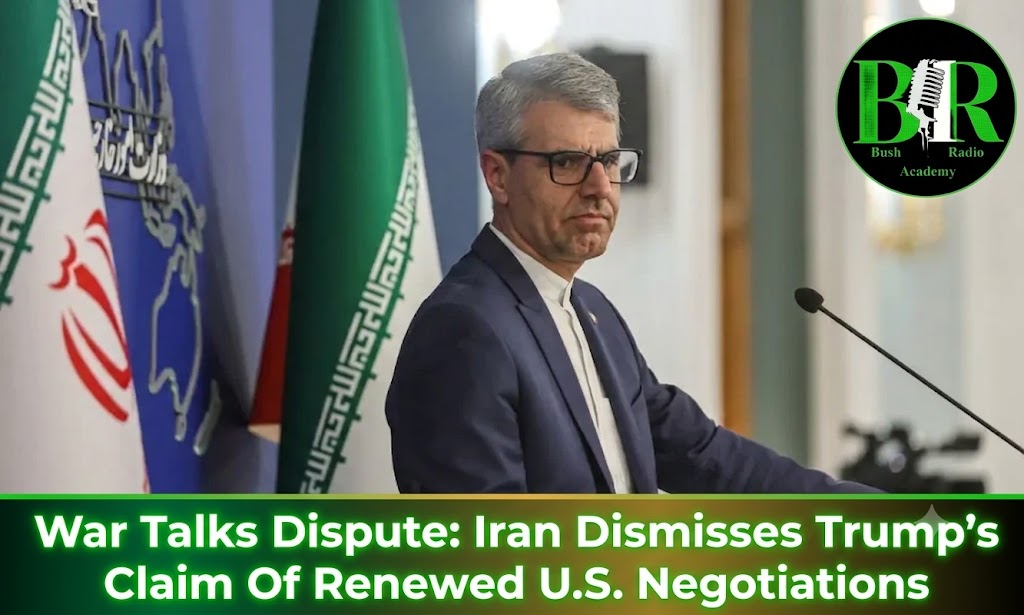
Iran has dismissed claims by United States President Donald Trump that fresh negotiations between Washington and Tehran were set to begin on Monday to help end the ongoing conflict between the two countries.
Trump had announced on Sunday that he was delaying further military action against Iran to allow diplomacy another opportunity, claiming that new talks would commence the following day.
However, Iran’s Foreign Ministry rejected the assertion, insisting that there are currently no direct negotiations taking place with the United States.
Speaking during a weekly press briefing, Foreign Ministry spokesperson Esmaeil Baqaei said Tehran’s ongoing discussions are with Oman and are focused solely on securing safe passage through the Strait of Hormuz.
“We are not currently negotiating with the United States. Our negotiations are with Oman to secure passage through the Strait of Hormuz,” Baqaei said.
The denial comes as the conflict enters its sixth month, with disagreements over Iran’s nuclear programme and navigation through the strategic Strait of Hormuz continuing to hinder diplomatic progress.
Trump had earlier warned of additional military strikes against Iran, including possible attacks on energy infrastructure, before later suggesting that the framework for a diplomatic agreement was beginning to take shape.
The latest phase of the conflict began after the United States and Israel launched coordinated attacks on Iran on February 28. Although intermittent diplomatic efforts have produced brief periods of calm, hostilities have continued.
The Strait of Hormuz has remained one of the central issues in the crisis, with Iran tightening control over vessel movements through the vital shipping corridor.
Tehran has reportedly imposed new restrictions on commercial shipping and insists that vessels use routes closer to the Iranian coastline while seeking greater oversight of maritime traffic, proposals that Washington has opposed.
Despite the disagreements, Baqaei said talks mediated by Oman had produced progress toward identifying a mutually acceptable shipping route.
“We are now going to reach an understanding on a route acceptable to both sides, neither the northern route nor the southern route, but one that respects the sovereign rights of both sides and safeguards our national interests and security.”
He added, however, that any agreement on shipping arrangements should not be interpreted as a full reopening of the Strait of Hormuz.
Speaking aboard Air Force One on Sunday, Trump said the proposed negotiations would centre on Iran’s nuclear programme and maritime security in the Strait of Hormuz.
The US president maintained that military pressure was aimed at preventing Iran from acquiring nuclear weapons.
Iran has consistently denied seeking to develop nuclear arms, insisting its nuclear activities are intended exclusively for peaceful civilian purposes.
“Now what we’re doing is we’re talking to them in the form of a negotiation. It begins tomorrow afternoon,” Trump told reporters.
He did not disclose where the talks would take place or identify the officials expected to participate.
Trump also claimed that Iran, along with US allies including Saudi Arabia, the United Arab Emirates and Qatar, had urged him to suspend further military action, describing the planned strikes as potentially “the biggest attack since World War II.”
Iranian media, however, rejected the claim that Tehran had appealed to Washington to halt military operations.
The US president has repeatedly expressed optimism about the prospects of a deal, although previous diplomatic efforts have broken down and fighting has resumed.
A ceasefire reached between both sides last month eventually collapsed, despite expectations that it would pave the way for the reopening of the Strait of Hormuz to international energy shipments.
Meanwhile, Iranian lawmaker Hassan Ghashghavi, spokesperson for the parliament’s National Security Commission, disclosed that international mediators are working to revive a memorandum of understanding agreed upon by both countries in June.
According to him, the document was intended as a framework for broader negotiations rather than a final peace agreement and also addressed issues surrounding navigation through the Strait of Hormuz.
“They know that the main issue and, in fact, the key to the matter right now is the issue of the Strait of Hormuz, so yes, there is an exchange of views,” Ghashghavi said.
Separately, maritime tensions remained high after a commercial tanker sailing off the coast of Oman reported hearing an explosion nearby on Sunday.
The United Kingdom Maritime Trade Operations Centre confirmed the incident, adding that the vessel and its crew were safe.
Reacting to the latest developments, Iranian President Masoud Pezeshkian called for continued efforts to ensure that any agreements reached during the conflict are fully respected.
“We must strive to compel the enemy to remain committed to what it has signed,” he said in a post on X.


I Don’t Joke With My Wife’s TikTok’ – Peller Sparks Reactions With Jealousy Confession

We Have No Regrets’ – Senator Nwaebonyi Explains Why Senate Rejected Tinubu’s Ministerial Nominee

War Talks Dispute: Iran Dismisses Trump’s Claim Of Renewed U.S. Negotiations

Senator Kalu Sparks Reactions: ‘Bishops Will Tell Tinubu The Truth Even If Politicians Won’t

Umahi Reveals Tinubu’s Private Advice Amid Growing Calls For His Removal

Fear Grips Kidnappers, Bandits as Okpebholo Deploys 497 Forest Guards Across Edo

Aliko Dangote’s Daughter Reveals Sh*cking Condition In Billionaire’s Will

Aisha Yesufu Unleashes Scathing Reaction To Peter Obi’s Channels TV Interview

I’ve Never Seen ₦1 Billion In My Life” — Ndume Speaks On Ransom Allegations
