
2027: APC Chairman Fires Back At Atiku Over Fuel Subsidy Promise, Asks “Who Pays?”
 Follow us on Google News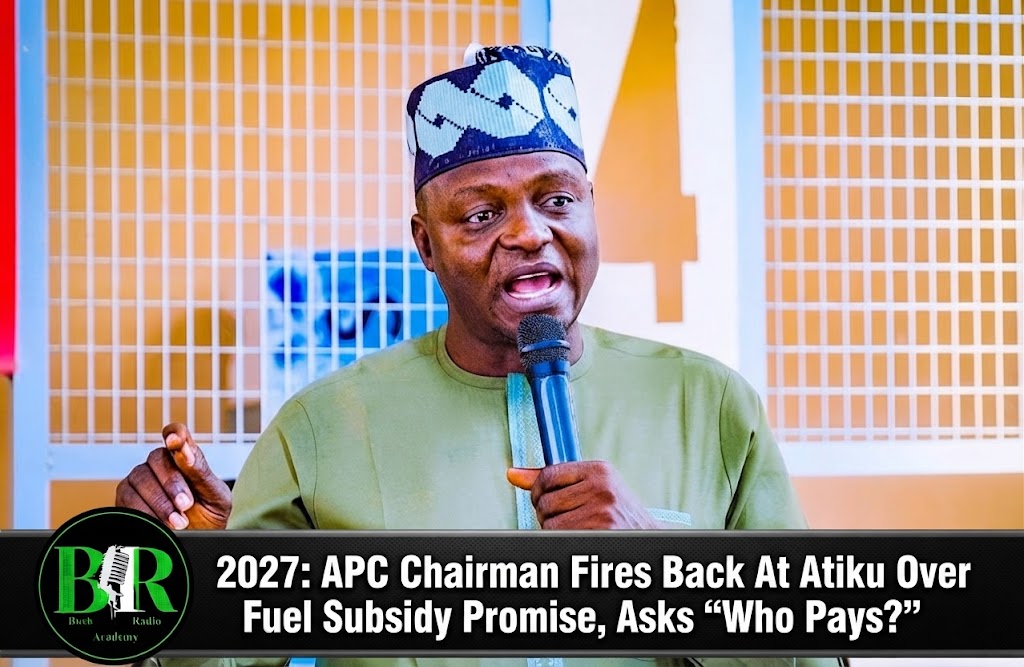
The National Chairman of the All Progressives Congress (APC), Nentawe Yilwatda, has questioned the proposal by the African Democratic Congress (ADC) presidential candidate, Atiku Abubakar, to restore fuel subsidy if elected president in the 2027 general elections.
Yilwatda argued that bringing back the subsidy could reverse some of the economic gains recorded following its removal, while potentially reintroducing fuel scarcity and queues across the country.
According to Bush Radio Academy, the APC chairman made the remarks in Abuja while receiving a delegation of economic stakeholders who visited him to discuss Nigeria’s economic situation, ongoing reforms and prospects for sustainable growth.
Yilwatda defended President Bola Tinubu’s decision to remove the petrol subsidy, urging Nigerians to look beyond the immediate attraction of cheaper fuel and consider how the government would finance such a policy.
He said Nigerians should ask who would bear the financial burden of the subsidy and what other areas of government spending could suffer as a result.
The APC chairman maintained that the success or failure of any subsidy policy should not be measured solely by the price motorists pay at filling stations. He said its wider implications for government revenue, workers’ salaries, pensions, education, healthcare and infrastructure must also be considered.
Yilwatda further argued that the removal of the subsidy had increased the funds available to federal and state governments through higher allocations. According to him, some states that previously struggled to meet salary and pension obligations have been able to improve their financial position.
He therefore warned that any proposal to reintroduce fuel subsidy should undergo thorough economic assessment to determine whether the country can sustain the financial burden without returning to previous fiscal challenges.
The APC chairman also connected the subsidy debate to the implementation of the new minimum wage, stressing that governments require sufficient and reliable revenue to sustain higher salaries while continuing to fund essential public services.
He cautioned that simply promising cheaper petrol or higher wages would not solve the country’s economic problems unless such policies were backed by sustainable financing.
Yilwatda further warned that restoring fuel subsidy could have consequences beyond the price of petrol, arguing that reduced government revenue could affect critical sectors such as healthcare, education, infrastructure and other areas of public welfare.
His comments come as political parties and presidential aspirants begin positioning themselves ahead of the 2027 elections, with economic policies, petrol prices and the future of fuel subsidies expected to remain major issues in the political debate.




Comments
0 comments