
Chaos At The Polls: Voting Halted In 15 Lagos Units Over Logistics Breakdown
 Follow us on Google News
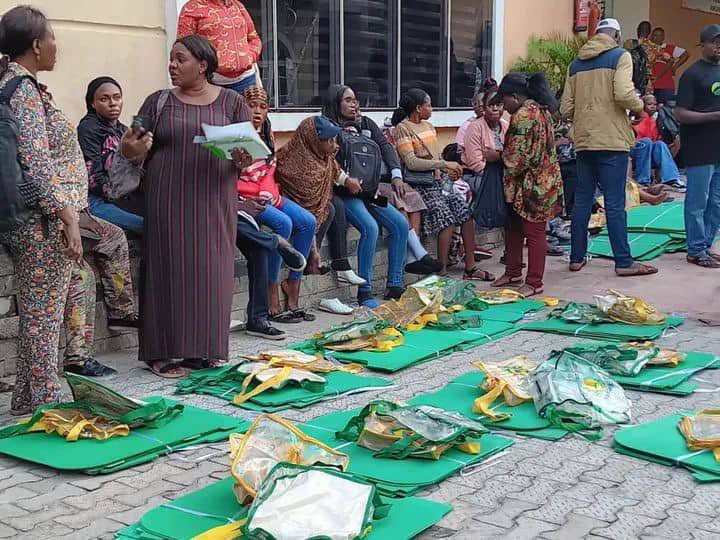
What was expected to be a smooth and orderly start to Saturday’s local council elections in Lagos was disrupted by significant delays in no fewer than 15 polling units across Abule Egba and Meiran. Voters were left waiting for hours due to major logistical shortcomings.
Although voter accreditation was slated to begin at 8:00 a.m., according to the Lagos State Independent Electoral Commission (LASIEC), many polling units remained unmanned well into the late morning.
From Old Ota Road to the inner parts of Meiran, numerous polling booths were either deserted or completely unattended, with no officials present. For instance, at Polling Unit 047, Kabowe Bus Stop, not a single ballot had been cast as of 9:30 a.m., and the atmosphere lacked the usual buzz associated with election day.
Polling units 029, 107, and 028 in the Olota area also saw no presence of electoral officials by 10:00 a.m., while several others along Ekoro Road—including Units 011, 034, 061, 017, 010, 027, 022, 045, and 008—experienced similar setbacks, with voting not commencing until well after 10:30 a.m.
What Went Wrong?
According to LASIEC officials, the delays stemmed from a series of logistical errors—ranging from mislabelled materials and mismatched polling codes to fuel shortages and overcrowded staff vehicles.
Grace Tolape, the Presiding Officer at PU 039, Meiran Bus Stop, explained:
“We had to return for clearer directions because the initial instructions were confusing. That’s why we arrived late.”
She also reported poor voter turnout: “By noon, fewer than 30 out of over 1,000 registered voters had cast their ballots.”
At PU 017, Owolabi Isaac, a polling clerk, revealed how mismatched envelopes added to the confusion:
“Our envelope was labeled Unit 16, but the contents were for Unit 17. We walked long distances before arriving and were already exhausted.”
A presiding officer at PU 07, speaking anonymously, described how their vehicle ran out of fuel after repeated wrong turns:
“We got lost multiple times trying to locate the polling unit. By the time we figured it out, our vehicle broke down. We had to wait for a private car to rescue us.”
Another LASIEC official at PU 034 highlighted a more technical issue:
“INEC had updated most polling unit codes, but LASIEC was using outdated ones. This made it difficult to find our assigned locations.”
Transportation also contributed to the chaos. “Instead of two polling units per vehicle, many teams were crammed into one bus, which had to drop people off one after another,” the official added.
The result of these combined challenges—poor coordination, logistical failures, and infrastructure bottlenecks—left many voters frustrated and further eroded public trust in the integrity of local elections.





Comments
0 comments