
Latest
Don’t Speak For INEC! David Mark Slams NASS Over Electoral Act Amendment

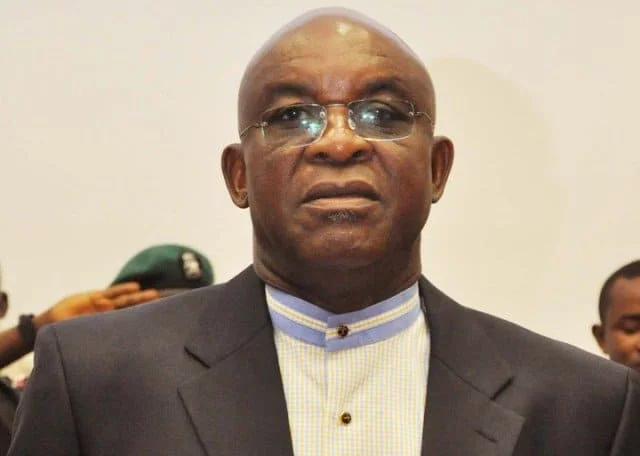
The Interim National Chairman of the African Democratic Congress (ADC), David Mark, on Sunday called on the National Assembly to pass the Electoral Act Amendment Bill while leaving the operational feasibility of real-time electronic transmission of election results to the Independent National Electoral Commission (INEC).....KINDLY READ THE FULL STORY HERE▶
Mark made the remarks in Abuja during the unveiling of The Burden of Legislators in Nigeria, a book authored by Senator Effiong Bob.
Addressing the ongoing debate over the proposed amendment, the former Senate President cautioned lawmakers against assuming the role of the electoral body, emphasizing that decisions on implementation rest solely with INEC.
“What the ADC is saying is simple: pass the law and let INEC decide whether they can carry out real-time electronic transmission or not. Don’t speak for INEC,” Mark said.
He added that public demand strongly favors electronic transmission but insisted that INEC alone should assess its readiness.
“The public wants electronic transmission. If INEC cannot implement it, that is their responsibility, not yours. It’s as simple as that. This is just a minor point, not a major issue,” he explained.
His comments come amid intense public debate over the Senate’s handling of provisions on electronic transmission of election results.
Also speaking at the event, Senate President Godswill Akpabio defended the amendment process, describing criticisms of the Senate’s actions as premature and based on a misunderstanding of legislative procedures.
“The Electoral Act amendment is not yet complete, but people are already on television claiming otherwise. They don’t understand how lawmaking works. What is in the Senate is not final until we examine the Votes and Proceedings,” Akpabio said.
He explained that the Votes and Proceedings stage allows lawmakers to amend or clarify decisions made during plenary before the bill is finalized.
“At that stage, any senator can rise and say, ‘On clause three, this is what we agreed upon.’ That is the only time you can accurately comment on the Senate’s actions,” he added.
Akpabio dismissed claims that electronic transmission had been removed entirely, insisting that only the requirement for real-time transmission was under reconsideration.
“I must be clear: the Senate has not eliminated any method of transmitting results. If you want to use a bicycle, your phone, or an iPad to deliver votes, you may. Real-time is not mandatory,” he said.
He argued that making real-time transmission compulsory could lead to legal challenges, particularly in areas affected by power outages or poor network connectivity.
“All we did was remove the word ‘real time.’ Otherwise, if there’s a grid failure or network issue, a court could claim the transmission wasn’t in real time,” Akpabio explained.
He also warned that weak telecommunications infrastructure and insecurity in certain states could invalidate election results if real-time transmission were mandatory.
“Real-time means that in over nine states where networks are down due to insecurity, no results would be transmitted. Nationally, if the grid fails and networks are down, no results would be valid,” he said.
Akpabio emphasized that the amendment bill is still undergoing the bicameral legislative process, and a conference committee will harmonize differences between the Senate and House of Representatives versions before final passage.
“Only after that process can it be said that the National Assembly has passed any amendment to the Electoral Act,” he concluded.


Trump Takes Action: Investigation Begins As Americans Grapple With Higher Fuel Costs

Without Fayose, No Makinde Governorship’ — Isaac Sparks Controversy

Democracy-Era Dispute Erupts As NADECO Challenges Abdulsalami’s Narrative

Nigerians React As Onanuga Questions Scale Of Economic Hardship

State Police Debate Deepens As Former Security Chiefs Clash Over Governors’ Powers

Family Speaks: How General Abubakar Died, Reveals Wife Still In Bandits’ Captivity

Sh*cking Police Shake-Up As Oyigbo DPO Is Removed Over ₦500,000 Bribery Allegation

Dollar To Naira Sh*ck: Fresh Exchange Rate Revealed For June 21, 2026

Etinosa Reacts To Viral Concerns About Her Neck Size, Says She Is Healthy
