
Latest
Senate Reversal and the Bigger Democratic Lesson: Why Adams Oshiomhole’s Voice Still Resonates Beyond Politics

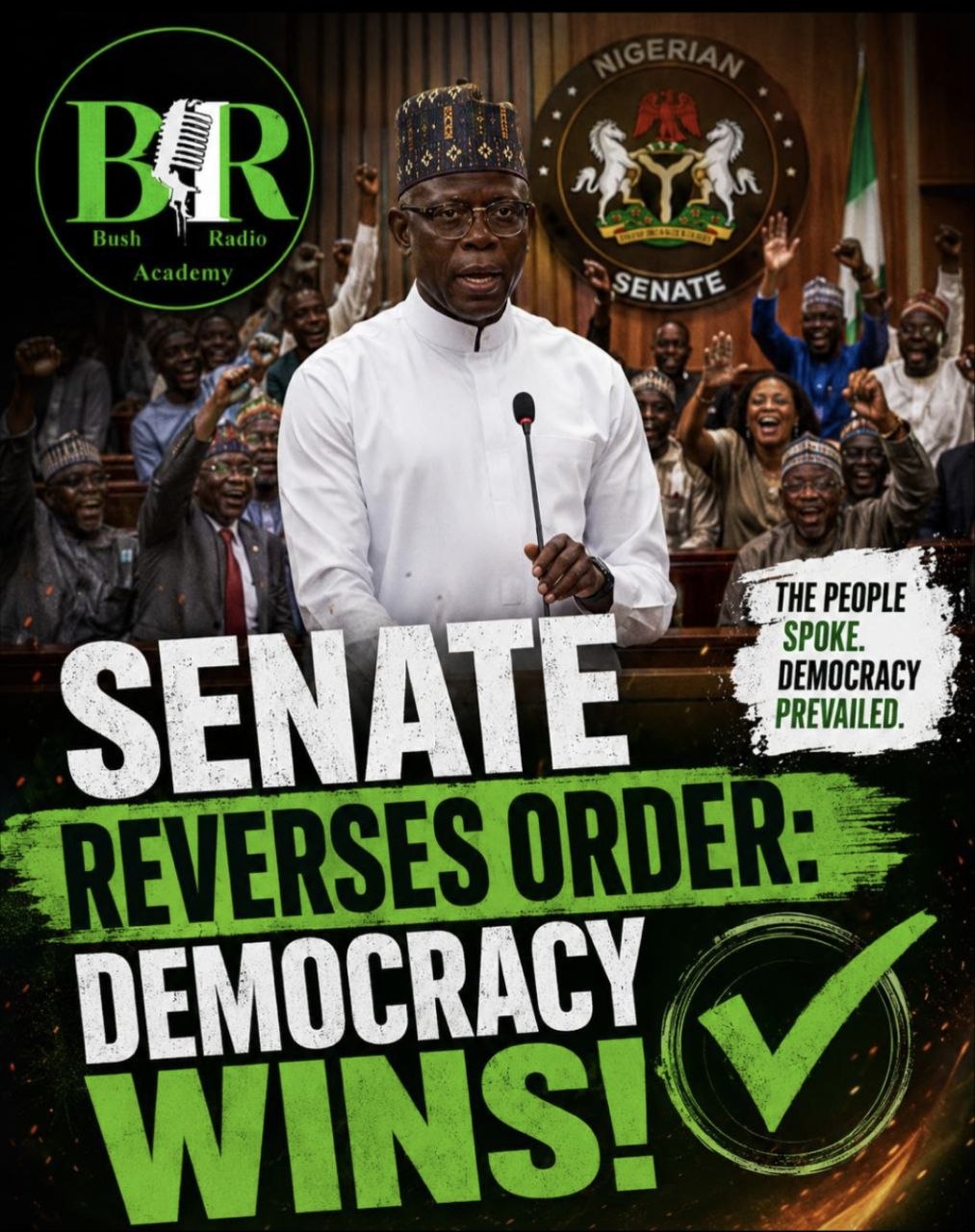
Senate Reversal and the Bigger Democratic Lesson: Why Adams Oshiomhole’s Voice Still Resonates Beyond Politics
In a move that has now calmed growing public concern and political tension, the Nigerian Senate has reportedly reversed aspects of the controversial Standing Orders amendment that sparked heated national debate over leadership eligibility in the Red Chamber.
What initially appeared to many Nigerians as a restrictive institutional adjustment has now evolved into something deeper: a national conversation about democracy, inclusion, institutional flexibility, and the importance of internal self-correction within democratic structures.
And somewhere at the center of that conversation stood Senator Adams Oshiomhole.
Not as a man fighting an individual.
Not as a senator pursuing personal ambition.
But as a public figure whose political identity has, for decades, been tied to speaking up whenever institutional processes appear capable of excluding broader participation.
For many Nigerians, this moment was not merely about Senate rules. It became symbolic of a larger democratic principle: that institutions must always remain open to review, dialogue, and constructive dissent.
The eventual reversal of the order therefore sends an important signal. It shows that democratic institutions are strongest not when they are rigid, but when they are responsive enough to listen, reflect, and adjust in the interest of fairness and stability.
And this is where Adams Oshiomhole’s long public history becomes impossible to ignore.
Long before the Senate.
Long before party politics.
Long before national appointments.
There was “Comrade” Oshiomhole.
A labour leader who built his national reputation standing with workers, confronting anti-people policies, negotiating for better conditions, and consistently projecting the idea that institutions should serve the people, not isolate them.
That legacy has followed him into every stage of public life.
Whether one agrees with his politics or not, even critics acknowledge one recurring pattern: Oshiomhole rarely stays silent when he believes institutional processes risk creating exclusion or weakening public confidence.
That is why many Nigerians interpreted his intervention on the Senate matter less as a personal political reaction and more as part of his longstanding ideological disposition toward institutional accountability and democratic openness.
Importantly, the Senate’s reversal also demonstrates maturity within the institution itself.
Democracy is not damaged by debate.
It is strengthened by it.
Strong institutions are not those that never face criticism.
Strong institutions are those capable of reflection without collapse.
In many ways, what Nigerians witnessed was democracy doing what democracy is designed to do:
debate,
resistance,
review,
and eventual recalibration.
At a time when public trust in institutions across the world is increasingly fragile, moments like this remind citizens that voices within government still matter, dissent still has value, and democratic systems still possess the ability to self-correct.
For Adams Oshiomhole, the episode further reinforces the image many supporters have long projected of him:
a politician who, regardless of office, continues to see himself first as a defender of institutional fairness and the ordinary Nigerian voice.
And perhaps that is the bigger story here.
Not conflict.
Not personalities.
Not factions.
But the enduring reminder that democracy functions best when institutions remain bigger than individuals, and when leaders are willing to speak, listen, and ultimately place the nation above political calculations.
Nigeria’s democracy grows stronger when dialogue prevails.
And in the end, that may be the most important victory of all.
Osigwe Omo-Ikirodah is the Principal and CEO of Bush Radio Academy.


I Made Over ₦10 Million Monthly Selling Akara And Bread — Governor Umo Eno Reveals

10 Years Later, Man Recalls Embarrassing Incident At GTBank

Falconets Ready For Tough Spain Clash, Coach Aduku Declares

Lagos Govt Issues Strong Warning To Husbands Over Forceful Sex With Wives

NDC Rejects INEC List, Says We Did Not Submit These Names

WHY OKPEBHOLO KNOWS WHAT HE IS SAYING ABOUT TINUBU’S 2.5 MILLION VOTES

Fake Agency Scandal: ICPC Recommends Punishment for 13 Officials — See Full List

Cement Hits ₦15,000: FCCPC Demands Answers From Dangote, BUA, Other Producers

Was The Sacrifice Worth It?” – El-Rufai’s Son Reveals What Father Told Him In Detention
