Connect with us

Latest

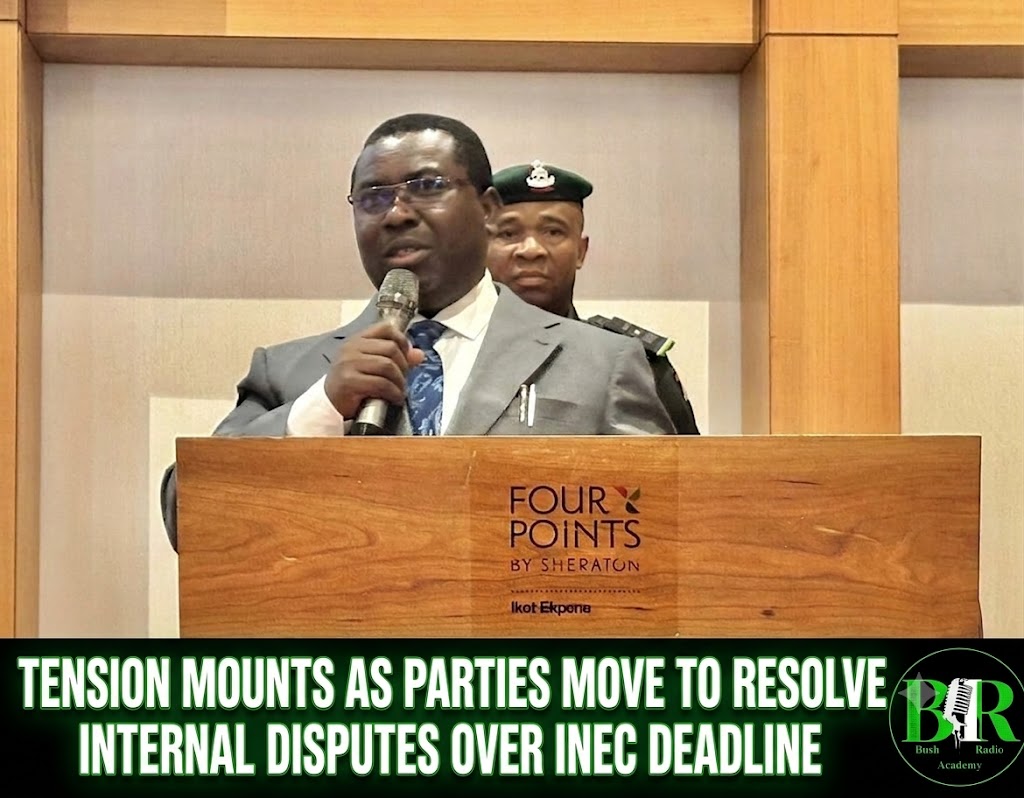
Tension Mounts As Parties Move To Resolve Internal Disputes Over INEC Deadline

Published

on

Political parties are intensifying efforts to resolve post-primary disputes, conclude negotiations on running mates, and finalise candidate lists ahead of the opening of the Independent National Electoral Commission (INEC) nomination portal for the 2027 general elections.....KINDLY READ THE FULL STORY HERE▶

INEC has fixed June 26, 2026, for the issuance of access codes to political parties and July 11 as the deadline for submitting candidates’ details. The access codes will allow authorised party officials to upload nominees’ information through the commission’s dedicated nomination portal.

Several parties, including the African Democratic Congress (ADC), Young Progressives Party (YPP) and All Progressives Grand Alliance (APGA), have indicated readiness to forward their candidates’ names after completing their primaries. However, some parties are still grappling with internal appeals, grievances and leadership conflicts.

The commission has also warned that ongoing internal party disputes and court cases challenging aspects of its electoral timetable could complicate preparations for the elections.

INEC to Issue Access Codes

INEC Chairman, Prof. Joash Amupitan, disclosed the development in Abuja during the Second Quarterly Consultative Meeting with political party leaders, noting that the process follows the conclusion of party primaries on May 30, 2026.

He explained that the nomination portal will open on June 27, while submission of candidates’ particulars will close on July 11, 2026. Only submissions made within the window will be considered valid for participation in the elections.

According to him, access codes will be issued to designated national officers of political parties, who will be responsible for uploading candidates’ biodata and other required details.

He warned that the portal is fully automated and will shut down automatically once the deadline elapses.

Amupitan urged parties to ensure their ICT teams are fully prepared and to submit all entries ahead of schedule.

“Portal Will Close Automatically”

“On Friday, 26th June, 2026, the commission will issue official access codes to all political parties for the purpose of accessing the Candidate Nomination Portal,” he said.

“These access codes will enable designated national officers to upload names, personal particulars and other required information relating to nominated candidates.”

He also cautioned parties against delays, stressing the importance of early compliance.

“The portal is fully automated and will close automatically at the expiration of the prescribed period,” he added.

The INEC chairman expressed concern over unresolved internal party disputes and related court cases, describing them as distractions that could affect electoral planning. He urged political actors to resolve conflicts quickly in order to maintain the election timetable.

Amupitan also reaffirmed INEC’s independence and commitment to conducting free and fair elections in line with the Constitution and the Electoral Act.

He encouraged political parties to mobilise citizens for voter registration and promote participation in the electoral process.

“The success of the 2027 general election will depend not only on the preparedness of the commission but also on the commitment of political parties to uphold democratic principles,” he said.

INEC Appeals Court Rulings

Despite ongoing legal challenges, Amupitan said preparations for the 2027 general elections would continue as scheduled.

He disclosed that INEC has appealed two recent Federal High Court judgments that questioned aspects of its election timetable.

The first case, filed by the Youth Party, challenged parts of the election schedule, while the second, brought by the Social Democratic Party (SDP), affirmed INEC’s authority to issue a timetable but nullified certain provisions relating to nomination and substitution timelines.

INEC maintained that its timetable is based on interconnected processes that are essential for election planning and cannot be separated without causing disruption.

Quoting the court’s observation in the SDP case, Amupitan said, “an election timetable, without a date for submission of parties’ membership register, timeframe for primaries, etc., is inchoate.”

He added that while the commission respects judicial decisions, the rulings raise important constitutional questions requiring clarification from higher courts.

Election Activities Interdependent

Amupitan explained that election timetables are structured frameworks that coordinate multiple administrative and logistical processes.

He noted that while the Electoral Act provides timelines for some activities, several key processes are not explicitly covered but must still be incorporated into the overall schedule.

These include party membership verification, monitoring of primaries, pre-uploading of results, ballot printing, training of personnel, voter education, and configuration of election technologies such as the BVAS system.

He stressed that all electoral activities must be harmonised to ensure transparency, efficiency and equal treatment of all political parties.

Amupitan assured stakeholders that the commission remains focused and will not be distracted by legal disputes as it prepares for the 2027 elections.

Advertisement
Click to comment

Leave a Reply

Your email address will not be published. Required fields are marked *