
Latest
My Time In IDP Camp Taught Me A Lot’ — Yilwatda Warns Nigerian Politicians

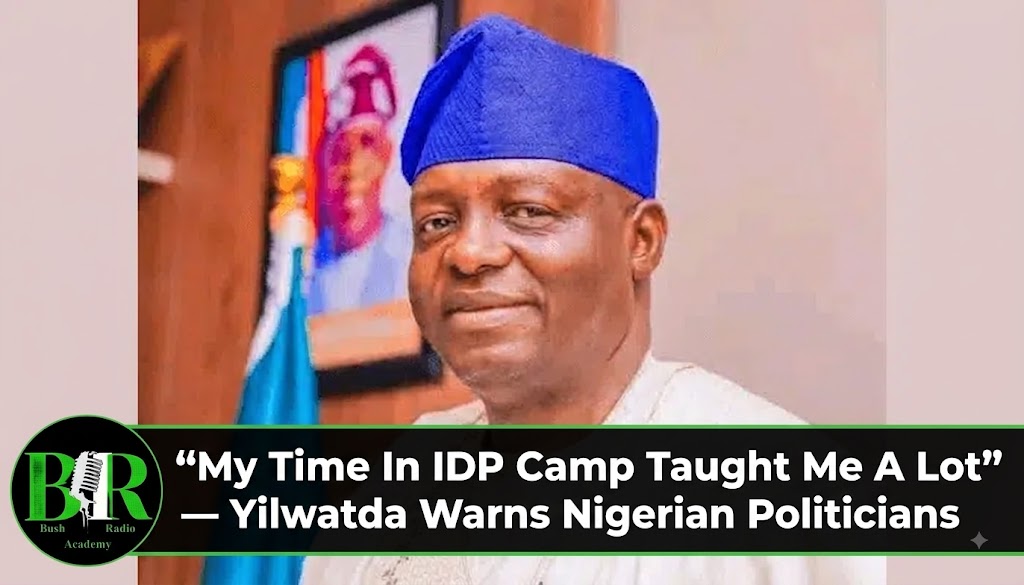
The National Chairman of the All Progressives Congress (APC), Nentawe Yilwatda, has opened up about his experience as a displaced person during the Bauchi crisis, saying the ordeal taught him that violence affects people regardless of their religious background.
Yilwatda made the remarks on Tuesday at the International Conference on Security and National Unity, organised by Jama’atu Izalatil Bid’ah Wa Iqamatus Sunnah in partnership with the Muslim World League.
Reflecting on his experience in an internally displaced persons (IDP) camp, the APC chairman said the crisis showed him that violence does not distinguish between Christians and Muslims, as people from different backgrounds ultimately suffer the same consequences.
He therefore cautioned political leaders against exploiting religious and ethnic sentiments for political gains, warning that such tactics could deepen divisions and cause long-term damage to the country.
Yilwatda maintained that Nigeria’s diversity should be viewed as a strength rather than a source of conflict, stressing that differences in religion and ethnicity should not overshadow Nigerians’ shared humanity and common destiny.
“When violence comes, it does not ask whether you are a Christian or a Muslim before it destroys either your home, or your humanity, or your dignity,” he said.
According to him, his time in an IDP camp taught him that Nigerians may practise different religions but still share similar fears, aspirations and hopes for the future.
“We may worship differently. Or we may suffer together. We dream together. We can build together. And ultimately, we can rise and fall together,” Yilwatda said.
Yilwatda Warns Politicians
The APC chairman urged politicians to reject the use of religion and ethnicity as political weapons, warning that short-term political benefits could leave the country with lasting consequences.
“To our political leaders, let us resist the temptation to exploit religion or ethnicity for sentiments, and sentiments for temporary political advantage.”
He added:
“No political victory is worth the permanent damage inflicted on our nation, and we’ve been seeing it every day.”
Yilwatda also appealed to religious leaders to use their platforms to encourage peace, reconciliation and responsible citizenship instead of promoting hatred and division.
“You as religious leaders, let our mosques and our churches become centres of peace, of reconciliation, and responsible citizenship,” he said.
He urged religious leaders to “preach faith without hatred, conviction without contempt, and truth without incitement,” while calling on traditional rulers to strengthen dialogue and reconciliation rather than retaliation.
The APC chairman further appealed to religious leaders, politicians, traditional institutions and ordinary citizens to work together to reject hate speech and protect vulnerable communities.
He stressed that religion must never be used to justify violence and called for the rejection of inflammatory rhetoric, whether it originates from religious platforms, traditional institutions, political circles or social media.
“We will not use religion to justify violence, and we will reject hate speeches where it comes from a pulpit, or a mosque, or the palace, or a political platform, or the keyboard of our social media,” he said.


2026 Osun Poll: Political Firepower As Akpabio, Uzodimma, APC Governors Rally Supporters In Osogbo

Nollywood Mourns As Tope Osoba’s Burial Is Postponed Indefinitely

Opposition Alliance: Atiku Camp Reveals What It Wants Before Backing Single Candidate

I’m Under Threat’ — Osun Speaker Seeks IGP’s Urgent Action Over Viral Video

Otti Support Sparks APC Crisis As Party Moves Against Orji Kalu, Nwokota

Explosive Details Surface As Full List Of Alleged Sylva Coup Fund Beneficiaries Emerges

2Baba Makes Bold Move Amid Growing Tension In Marriage To Natasha

Tense TV Moment: Orji Kalu Clashes With Seun Okinbaloye During Live Interview

Wike Reveals Why Fubara Will Allegedly Sit Out The 2027 Governorship Race
