
₦155bn National Library Deal: Tinubu Govt Approves Massive Funding For Abuja Project
 Follow us on Google News
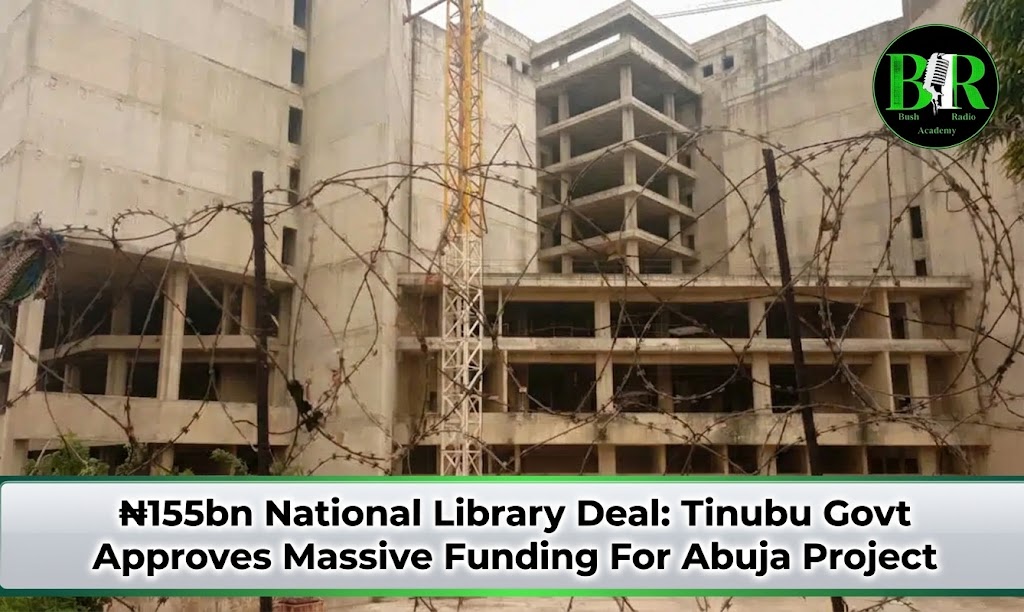
Minister of Education Tunji Alausa has disclosed that the Federal Executive Council (FEC) approved ₦118.309 billion for the completion of the National Library of Nigeria Headquarters Building Complex in Abuja.
The government also approved approximately ₦37 billion for the furnishing of the facility, bringing the total allocation for completing and equipping the long-delayed project to about ₦155 billion.
Alausa made the disclosure while briefing State House correspondents on the outcome of Wednesday’s FEC meeting in Abuja.
According to the minister, the approval followed President Bola Tinubu’s directive to ensure that legally cleared and unencumbered funds belonging to Nigerians are deployed to priority national development projects, particularly in the education sector.
He explained that the President had directed the Attorney-General of the Federation to work with the Minister of Finance and the Ministry of Education to examine the legal framework for using funds from the Unclaimed Capital Market/Unclaimed Dividend Trust Fund and the Dormant Account Trust Fund.
Alausa stressed that funds involved in ongoing legal disputes would not be transferred for the project.
“Every single fund that is still subject to a legal challenge will not be part of the money that will be transferred to the fund,” the minister clarified.
He said only funds that had received legal clearance and were free from encumbrances would be considered, noting that the resources must legitimately belong to Nigeria and its citizens.
Alausa said the decision was driven by the government’s desire to invest in education and create better opportunities for Nigerian children.
“We need to educate our children. We need to move this fund to use it, and using this fund to educate our children, you can never get a better use for this fund than to educate our children,” he said.
National Library Project Stalled Since 2008
The minister revealed that construction of the National Library headquarters began in April 2006 and was originally expected to be completed within two years.
However, work on the project stopped in October 2008, leaving the facility unfinished for several years.
Alausa said that after President Tinubu assumed office in 2023, he directed the Ministry of Education to explore alternative funding options to ensure the completion of the national project.
He also acknowledged the contribution of First Lady Senator Oluremi Tinubu, who, according to him, helped raise approximately ₦25 billion for the project by directing that gifts received during her birthday celebration be channelled towards its completion.
The minister said the latest FEC approval, combined with funds secured through the Tertiary Education Trust Fund (TETFund) and other sources, would enable work to resume.
He expressed optimism that construction would recommence in the coming months.
FG Moves To Address Delayed Student Payments
Alausa also addressed reports of some tertiary institutions delaying the disbursement of funds meant for students.
He said the Federal Government had introduced new procedures and timelines aimed at preventing such delays.
According to him, institutions are now expected to return funds to students within one week of receiving confirmation that the government has released the relevant payments.
The minister acknowledged that payment-related challenges had occurred previously but maintained that measures had now been put in place to address them.
Commenting on a reported case involving Abia State University, where a payment-related issue was said to have remained unresolved for more than six months, Alausa requested details of the matter and pledged to investigate.
He nevertheless maintained that such incidents no longer constituted a systemic problem, insisting that the government had established mechanisms to prevent similar occurrences.
Alausa said the various funding measures approved by the FEC were part of the Tinubu administration’s broader strategy to strengthen the education sector, expand access to tertiary education and channel national resources into projects capable of improving the future of Nigerian children.







Comments
0 comments