
Latest
NFF Crisis: FIFA, CAF Face Fresh Decision As Stakeholders Clash Over Reform

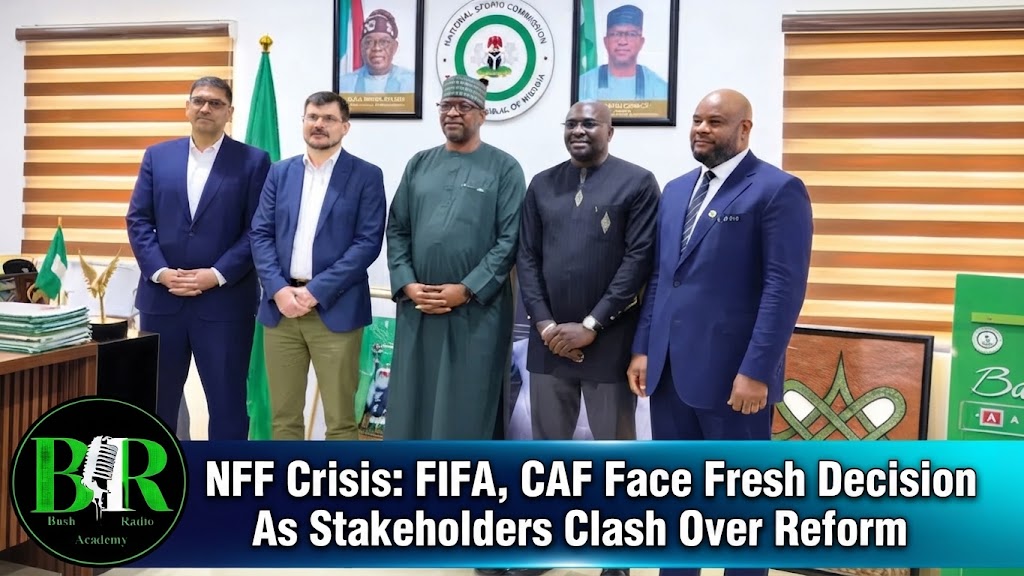
FIFA and the Confederation of African Football (CAF) have concluded a two-day assessment mission into the leadership crisis within the Nigeria Football Federation (NFF), with conflicting proposals from major stakeholders now before the international football governing bodies.
According to Bush Radio Academy, the assessment mission ended on Tuesday, September 15, following the mass resignation of NFF President Ibrahim Gusau, General Secretary Mohammed Sanusi and other board members on August 27.
The crisis has unfolded amid concerns surrounding the performances of some of Nigeria’s national and youth teams, including the failure of the senior men’s and women’s teams to qualify for their respective World Cups.
The FIFA and CAF delegation included FIFA Member Association Governance Services team lead Ahmed Harraz, FIFA Head of Member Association Governance Rolf Tanner, FIFA Regional Office for West Africa lead El Hadj Wack Diop and CAF Legal Manager Nnaemeka Olu.
During the mission, the delegation met with various stakeholders within Nigerian football, including players’ representatives, coaches, referees and members of the Sports Writers Association of Nigeria (SWAN).
Players’ representatives, coaches and referees reportedly supported a normalisation process and called for broader and more equal representation across the NFF Congress, board, standing committees and voting structures.
One attendee said the players’ union, coaches and referees’ association had reached a common position on the need for reforms, including equal representation and a stakeholder-driven normalisation process.
However, state Football Association chairmen, who constitute a significant portion of the NFF Congress and its voting bloc, rejected the proposal for a normalisation committee. They maintained that the existing Congress has the authority to resolve the leadership vacuum within the federation.
Gombe State FA chairman and leader of the state FA delegation, Yakubu Sarma, argued that Nigerian football was not experiencing a crisis requiring intervention outside the existing framework.
He pointed to the continued activities of domestic leagues, Nigerian clubs competing in continental competitions, women’s international football and the functioning of the NFF secretariat as evidence that the established structure remains operational.
Former NFF officials have taken a different position, submitting a petition to the FIFA and CAF delegation calling for the immediate establishment of a six-month normalisation committee.
Former NFF presidents Sani Lulu Abdullahi and Aminu Maigari, former first vice-president Obinna Ogba, and former general secretaries Fanny Amun, Sani Toro, Bolaji Ojo-Oba and Musa Amadu endorsed the proposal.
The former officials proposed a transition process that would begin with consultations among stakeholders, followed by elections at the local football council and State FA levels, an expanded NFF Congress and, ultimately, national NFF elections.
They also called for changes to the composition of the NFF Congress, arguing that State FAs currently control about 84 per cent of the voting power. Under their proposal, leagues, players, coaches, referees and grassroots football organisations would receive greater representation.
With the assessment mission now concluded, FIFA and CAF are expected to consider the positions presented by the various stakeholders before determining the next steps concerning the leadership and proposed reforms within the NFF.


Lookman Fires Up Super Eagles Ahead Of Crucial Madagascar, Guinea-Bissau Clashes

Chidinma Okeke Makes Major European Move As Super Falcons Star Joins Napoli

Trump Makes Major Move On H-1B Visas, Extends $100,000 Fee Requirement

Ola Of Lagos Opens Up On Being Looked Down On Over His Educational Background

CAF President Motsepe Breaks Silence On AFCON 2027 As Kenya Races Against Time

Wedding Cancelled Man Walks Away After Fiancée’s Mother Says He Is Marrying Down

I’ll Pay All The Wedding Bills — 41-Year-Old Woman Makes Bold Marriage Offer Online

Oshiomhole’s Constituency Projects: A Record of Delivery Across Edo North

Drama As Parents Defend Son Accused Of Stealing, Only To Be Shown Shocking Video Evidence
