
NAFDAC Raises Alarm Over Viral List Of Fake Products, Warns Nigerians Against Sharing
 Follow us on Google News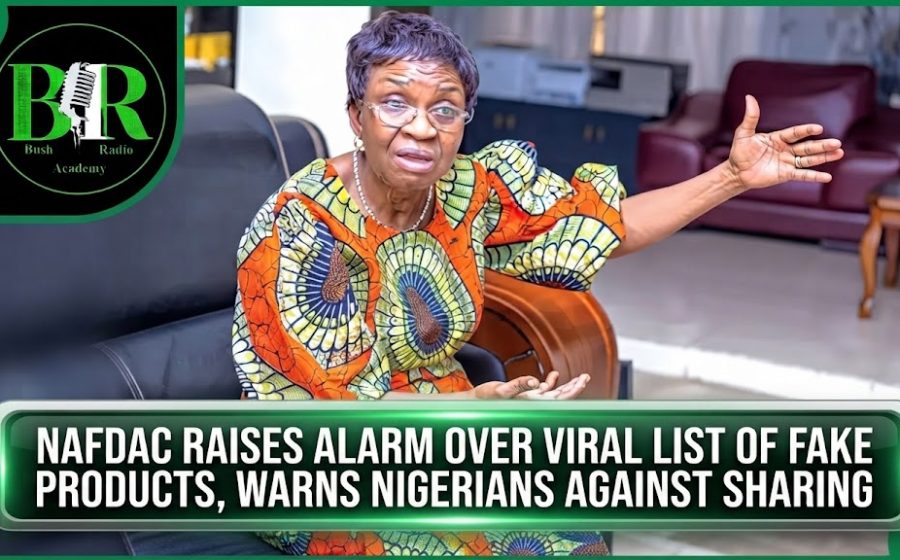
The National Agency for Food and Drug Administration and Control (NAFDAC) has disowned a viral list circulating on social media that claims to identify fake, adulterated and substandard products in Nigeria.
The agency clarified that the list did not originate from it and should not be regarded as an official warning, product recall notice or public safety announcement.
NAFDAC made the clarification in Abuja on Thursday through its resident media consultant, Olusayo Akintola, urging Nigerians to avoid treating unverified social media posts as confirmed regulatory findings.
According to Bush Radio Academy, the agency explained that it follows established procedures before declaring any product fake, unsafe, adulterated or below the required quality standards.
These procedures include conducting investigations, collecting product samples and carrying out scientific laboratory tests to determine whether the products meet the necessary safety and quality requirements.
NAFDAC noted that official announcements concerning unsafe or substandard products typically contain specific information that enables consumers, distributors and other stakeholders to verify the claims.
The agency added that when a particular product or batch is confirmed to be falsified, adulterated or unsafe, it communicates the findings and outlines the appropriate regulatory action through its recognised channels.
It warned that circulating unverified claims about products could create unnecessary panic, mislead consumers and cause confusion in the marketplace.
NAFDAC therefore urged members of the public to disregard the viral list and refrain from sharing it further unless the claims are confirmed through official sources.
The agency also stressed that the appearance of a product’s name or photograph on social media does not, on its own, establish that the item is fake, adulterated or dangerous.
It maintained that allegations concerning the authenticity and safety of products must be properly investigated and supported by scientific evidence before an official conclusion can be reached.
The clarification comes amid growing concerns over misinformation on social media, particularly posts that make claims about the safety of products consumed or used by Nigerians.







Comments
0 comments