
Nigeria Faces Extreme Heat Warning As Researchers Project 31,400 Additional D*aths
 Follow us on Google News
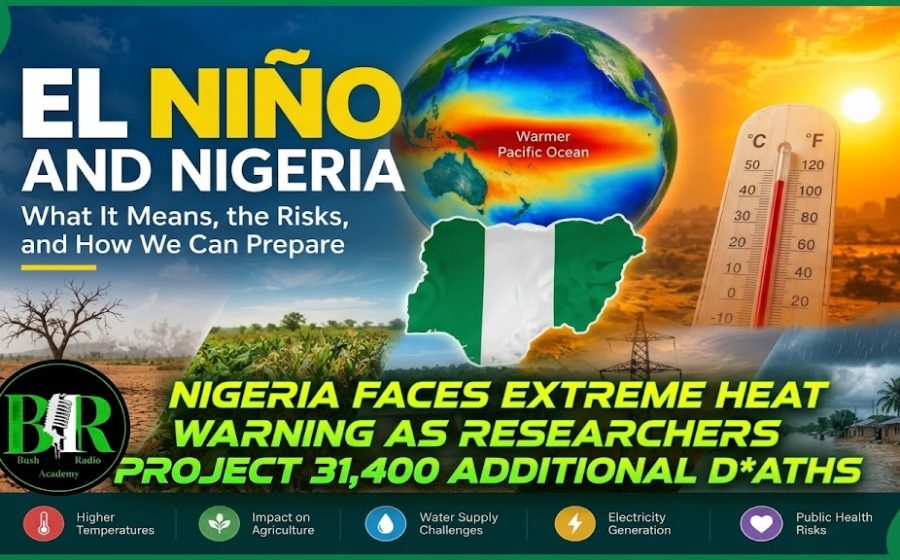
Nigeria could face increased health and environmental risks in the coming months as the El Niño climate pattern strengthens, raising concerns about extreme temperatures and changing rainfall conditions across different parts of the country.
Researchers at the University of Chicago’s Climate Impact Lab have projected that Nigeria could experience an additional 31,400 heat-related deaths between September 2026 and February 2027 if the forecast conditions materialise.
According to Bush Radio Academy, the estimate was published in September and places Nigeria among the countries potentially facing a significant increase in heat-related fatalities during the period. However, the figure is a scientific projection rather than a confirmed death toll, and it does not mean that the deaths will inevitably occur.
The warning follows an update from the World Meteorological Organization (WMO) on September 3, which indicated that El Niño had become established and was expected to strengthen, with its influence on global weather patterns potentially extending into early 2027.
Nigeria’s weather agency, the Nigerian Meteorological Agency (NiMet), also reported the onset of a strong El Niño event in its August 2026 climate update, highlighting the possibility of changing weather conditions.
El Niño is a natural climate phenomenon associated with warmer-than-usual surface waters in the central and eastern tropical Pacific Ocean. Although the warming occurs far from Nigeria, it can influence atmospheric circulation and alter temperature and rainfall patterns in different regions.
The phenomenon forms part of the El Niño-Southern Oscillation, commonly known as ENSO. Its opposite phase, La Niña, is associated with cooler-than-normal sea surface temperatures in the same region of the Pacific.
The WMO explains that El Niño generally occurs every two to seven years and typically lasts between nine and 12 months. Its effects vary across regions and depend on other prevailing climate conditions.
Consequently, a strong El Niño does not automatically mean that every part of Nigeria will experience extreme heat, drought or flooding. Nevertheless, the possibility of unusual weather conditions has heightened the need for early preparation.
One of the major concerns is the potential impact of extreme temperatures on public health. Prolonged exposure to excessive heat can cause dehydration, heat exhaustion and heatstroke, which can be fatal without urgent medical attention.
Older people, infants, outdoor workers and individuals with existing health conditions are particularly vulnerable. Farmers, construction workers, traders and others who spend extended periods outdoors may also face increased risks.
Health guidance from the World Health Organization recommends drinking water regularly, wearing light and loose-fitting clothing, seeking shade or cooler environments and limiting strenuous activities during the hottest periods of the day where possible.
Residents are also encouraged to check on children, elderly relatives, neighbours and other vulnerable people. Anyone experiencing severe symptoms such as confusion, convulsions or loss of consciousness during extreme heat should receive immediate medical attention.
Agriculture could also be affected if rainfall patterns change significantly. Longer dry spells or an early end to the rainy season could disrupt planting schedules, reduce crop yields and increase pressure on irrigation systems. Conversely, excessive rainfall in some areas could cause flooding, damage farmland and destroy crops.
NiMet’s August 2026 seasonal outlook highlighted the possibility of different rainfall conditions across the country. Its forecast for August to October projected normal to above-normal rainfall across much of northern Nigeria, while parts of the South-West and Cross River State were expected to experience normal to below-normal rainfall.
Farmers are therefore advised to monitor updated NiMet forecasts, consult agricultural extension officers and consider appropriate crop varieties suited to expected local conditions. Communities anticipating heavy rainfall should also take measures to improve drainage and reduce the risk of flooding.
Changes in rainfall could place additional pressure on water supplies, particularly in communities that depend on rivers, dams and reservoirs. Prolonged shortages of rainfall may reduce water availability for households, irrigation and other essential activities.
Hydropower generation could also be affected if water levels in dams decline, although the current outlook does not establish that Nigeria will experience nationwide water shortages or electricity disruptions.
Authorities responsible for water and power infrastructure are encouraged to monitor conditions and develop contingency plans for areas that may be vulnerable. Households can contribute by repairing leaking taps, storing water safely and reducing unnecessary waste.
Food security is another area of concern. If excessive heat or unfavourable rainfall damages crops, reduced harvests could affect food supplies and potentially place upward pressure on market prices. Transport disruptions and damage to roads could further increase distribution costs.
However, El Niño alone does not guarantee higher food prices nationwide. The eventual effect will depend on harvest outcomes, storage facilities, transportation expenses, market conditions and government policies.
To reduce potential losses, authorities are encouraged to support farmers, strengthen food storage and distribution systems, and monitor supplies in vulnerable communities.
Beyond individual precautions, experts stress the importance of coordinated action involving federal and state governments, health agencies, agricultural authorities, water managers and emergency response organisations.
NiMet is expected to remain central to preparedness efforts through timely, location-specific forecasts and public advisories that reach rural communities, farmers and residents with limited access to the internet.
Health authorities can help by raising awareness about heat-related illnesses, strengthening emergency response plans and preparing medical facilities to handle possible increases in heat-related cases. Agricultural agencies should also help farmers interpret forecasts and make informed decisions about planting, irrigation, drainage and crop selection.
Water authorities, meanwhile, can monitor reservoir and groundwater levels, identify communities at risk and prepare measures to manage possible shortages. Public communication through broadcasters, journalists and community leaders will also be important in ensuring that weather warnings are understood and misinformation is addressed.
The WMO has emphasised that even a very strong El Niño does not produce identical effects everywhere. Local conditions, seasonal patterns and other climate influences determine how individual regions are affected.
Nigeria’s priority, therefore, is to prepare for possible risks without assuming that the most severe outcomes are inevitable. The projection of 31,400 additional heat-related deaths is a warning that requires attention, not a confirmed forecast of how many people will die.
Timely weather information, access to drinking water, public health awareness and effective government planning could help reduce the risks associated with extreme heat and unusual rainfall in the months ahead.







Comments
0 comments