
Politics
IMF: Nigeria’s Current Account Balance Exceeds $1.432 Billion Mark

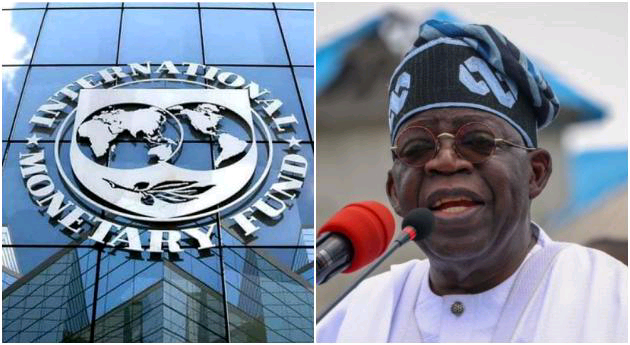
IMF: Nigeria’s Current Account Balance Exceeds $1.432 Billion Mark....KINDLY READ THE FULL STORY HERE▶
According to the latest report from the International Monetary Fund (IMF), Nigeria’s current account balance has experienced a surplus of $1.432 billion in 2024. This marks a significant improvement from the $1.21 billion surplus recorded in the previous year, as highlighted in the ‘World Economic Outlook Database’ accessed by Channels Television……….. CONTINUE READING
The notable increase in the Federal Government’s account is attributed to the country’s burgeoning gross national savings and investment. In 2024, Nigeria witnessed a rise in gross national savings to 26.32 per cent of Gross Domestic Product (GDP), up from 24.61 per cent in 2023. Similarly, total investment surged to 25.75 per cent of GDP in 2024, compared to 24.28 per cent in 2023.
The current account balance serves as a comprehensive indicator of a country’s international economic transactions, encompassing trade balance, net income, direct transfers, and asset income. A positive balance indicates a net lending position, reflecting a surplus, while a negative balance signifies a net borrowing position.
The IMF data paints a positive outlook for Nigeria’s economic growth and stability, signaling a flourishing economy with escalating investment and savings. This trajectory is anticipated to bolster economic growth and stability in the region.
This development unfolds amidst Nigeria’s ongoing challenges following the removal of subsidies by President Bola Tinubu in May 2023. The subsequent surge in electricity tariffs, food prices, transportation costs, house rents, and inflation rates has prompted nationwide industrial action led by the Nigerian Labour Congress (NLC) and the Trade Union Congress (TUC).
In response to the unions’ demands, which include a monthly living wage of N494,000, the Federal Government has indicated willingness to negotiate, proposing a wage higher than the initial N30,000. However, negotiations continue amid Nigeria’s current inflation rate standing at 33.69 per cent, according to data from the National Bureau of Statistics (NBS).


Trump Takes Action: Investigation Begins As Americans Grapple With Higher Fuel Costs

Without Fayose, No Makinde Governorship’ — Isaac Sparks Controversy

Democracy-Era Dispute Erupts As NADECO Challenges Abdulsalami’s Narrative

Nigerians React As Onanuga Questions Scale Of Economic Hardship

State Police Debate Deepens As Former Security Chiefs Clash Over Governors’ Powers

Family Speaks: How General Abubakar Died, Reveals Wife Still In Bandits’ Captivity

Sh*cking Police Shake-Up As Oyigbo DPO Is Removed Over ₦500,000 Bribery Allegation

Dollar To Naira Sh*ck: Fresh Exchange Rate Revealed For June 21, 2026

Etinosa Reacts To Viral Concerns About Her Neck Size, Says She Is Healthy
