
Chimamanda Adichie’s Son’s Death: Lagos Hospital Moves To Stop Inquest
 Follow us on Google News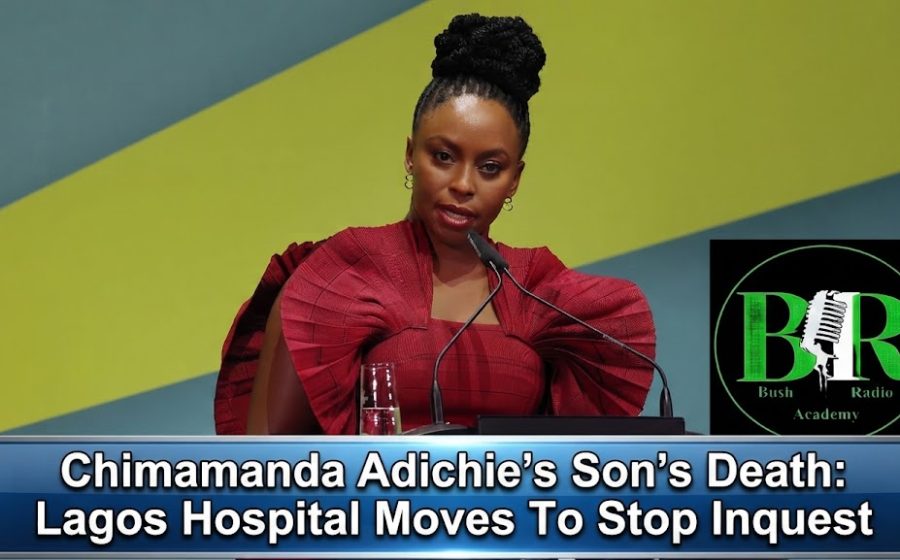
The Lagos State High Court has fixed October 12, 2026, to rule on an application by Eurapharma Care Services Nigeria Limited, operators of Euracare Multi-Specialist Hospital, seeking to halt the coroner’s inquest into the death of Nkanu Adichie-Esege, son of renowned Nigerian author Chimamanda Adichie and her husband, Dr Ivara Esege.
According to Bush Radio Academy, Justice Aishat Opesanwo, sitting at Osborne Foreshore in Ikoyi, Lagos, reserved the date after hearing arguments from Eurapharma, the Lagos State Government, Nkanu’s family and other parties involved in the case.
Eurapharma is challenging aspects of the coroner’s proceedings and has asked the court to issue orders of certiorari to quash decisions already made in connection with the inquest, as well as prohibition restraining Coroner Magistrate Atinuke Adetunji from continuing with the investigation.
Representing the hospital, Senior Advocate of Nigeria, Prof. Taiwo Osipitan, argued that the cremation of Nkanu’s remains meant that a post-mortem examination could no longer be carried out. He maintained that this created a difficulty in establishing the cause of death and questioned whether the coroner could continue with the proceedings under such circumstances.
Osipitan relied on provisions of the Lagos State Coroners System Law, including Sections 14 and 15, to argue that the coroner’s jurisdiction was connected to the presence of the deceased’s body within the relevant coroner district.
The hospital’s lawyer also challenged the proposed sequence of evidence, arguing that Euracare and its personnel should not be required to present their witnesses before Nkanu’s family had presented evidence supporting allegations of medical negligence against the hospital.
Although a coroner’s inquest is inquisitorial rather than a conventional criminal trial, Osipitan argued that the circumstances of the case had effectively placed the hospital in an accusatorial position. He maintained that requiring Euracare to lead evidence first could raise concerns about its right to a fair hearing.
The Lagos State Attorney-General and Commissioner for Justice, Lawal Pedro, SAN, opposed the hospital’s application and urged the court to allow the inquest to continue. He relied on Section 21 of the Lagos State Coroners System Law, arguing that the provision gives the coroner discretion to conduct an inquest even where the deceased’s body has been destroyed or is unavailable.
Pedro also argued that Eurapharma’s judicial review application was premature because the coroner had not yet taken evidence or reached a substantive determination that warranted the intervention of the High Court.
Counsel representing Nkanu’s family, Kemi Pinheiro, SAN, similarly urged the court to dismiss the hospital’s application. He argued that no decision capable of being reviewed by the High Court had been made by the coroner and maintained that the application was premature.
Pinheiro also disputed the argument that the cremation of Nkanu’s remains had deprived the coroner of jurisdiction. He relied on Sections 21 and 31 of the Coroners System Law to contend that an inquest could proceed even where a body was unavailable for inspection.
The lawyer stressed that a coroner’s inquest is primarily a fact-finding process and does not determine the criminal guilt or innocence of any party. He said any eventual findings would be forwarded to the appropriate authorities, including the Attorney-General and Director of Public Prosecutions, for consideration of any further action.
Counsel for Atlantis Paediatric Hospital Limited also opposed Eurapharma’s application, arguing that concerns over the order of witnesses had already been addressed during proceedings before the coroner in April 2026, when it was agreed that Nkanu’s family would lead evidence first. The counsel further relied on Sections 21 and 40 of the law to argue that an inquest could proceed even where the deceased’s body could not be recovered.
Nkanu died on January 7, 2026, at Euracare Multi-Specialist Hospital in Lagos. His parents have alleged breaches of the duty of care in the treatment of their son, while Euracare has denied allegations of medical negligence, describing them as inaccurate and unfounded. The competing claims remain allegations, and the court has not determined liability for Nkanu’s death.
Justice Opesanwo, after hearing the submissions of the parties, reserved ruling until October 12, 2026. The decision will determine whether Eurapharma’s challenge to aspects of the coroner’s proceedings can proceed and whether the inquest can continue despite the cremation of Nkanu’s remains.







Comments
0 comments