
Latest
EFCC Has Three Days To Freeze Account’ — Tietie Explains Commission’s Powers

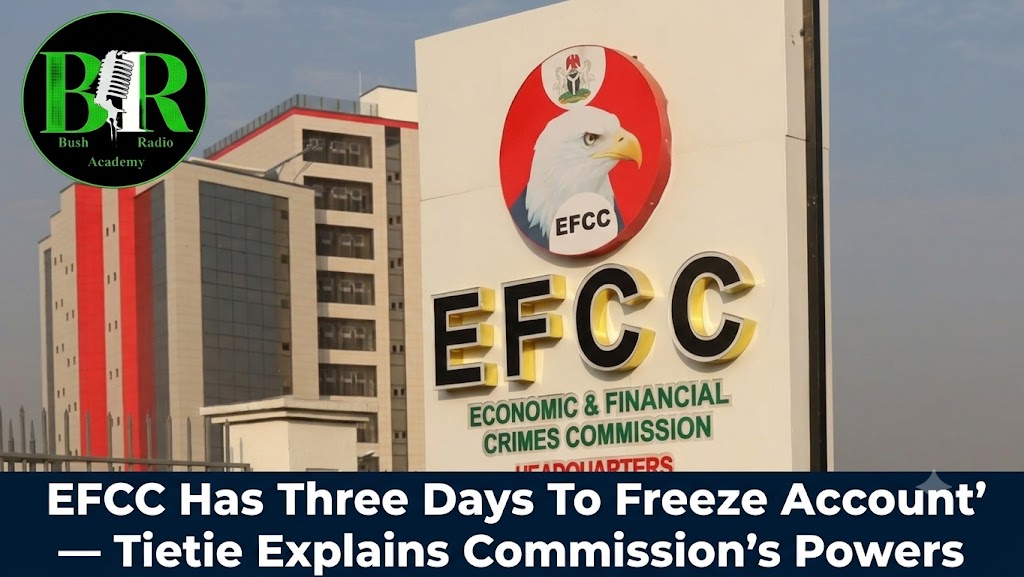
A legal practitioner and public affairs analyst, Frank Tietie, has defended the Economic and Financial Crimes Commission (EFCC) over its decision to restrict access to an Osun State Government account, arguing that the anti-graft agency does not require prior approval to act on an account suspected of being linked to unlawful transactions.
Tietie made the submission on Friday during an interview on Arise Television while discussing the controversy surrounding the EFCC’s action ahead of the Osun State governorship election.
President Bola Tinubu had subsequently directed the commission to take steps to vacate the court order restricting the state government’s account.
Reacting to the President’s intervention, Tietie argued that the directive could amount to interference in the activities of a law enforcement agency.
“It is a case of hindrance of law enforcement and nearly borders on obstruction to justice,” he said.
The lawyer said his position was supported by provisions of the EFCC Establishment Act and the Money Laundering Act, as well as previous rulings of the Court of Appeal.
“I establish it by referring to the various decisions of the Court of Appeal with regards to the cases against EFCC in terms of Benue State in the time of former Governor Samuel Ortom, and then the express provisions of Section 34 of the EFCC Act and Section 7, Subsection 6 of the Money Laundering Act,” he stated.
According to Tietie, the EFCC has legal authority to take immediate action when it identifies suspicious transactions or accounts, provided it operates within the limits prescribed by law.
“The EFCC didn’t need to apologise to anybody, didn’t also need to consult anybody before exercising its powers to freeze a particular transaction, which I urge it to do, or to freeze a particular bank account, so long as it does not exceed three days.
“The EFCC chairman and the commission were acting within their powers,” he said.
‘Election Season Should Not Stop Enforcement’
Tietie also dismissed suggestions that the approaching Osun governorship election should have prevented the EFCC from taking action.
He argued that an anti-corruption agency could not overlook suspicious financial transactions simply because an election was imminent.
“Now, you couldn’t expect that a reasonable and responsible commission would see state monies, for example, being ferreted to terrorists in terms of terrorist financing, and you want to say that because of an election season, the EFCC shouldn’t exercise these statutory powers?” he asked.
He maintained that failing to intervene in such circumstances could amount to a dereliction of duty.
“That will be unpatriotic, illegal and gross negligence on the part of those leading the EFCC,” Tietie added.


PFIPC Probe Deepens As Police Reveal Details Of Adeyemi’s Alleged ₦400m Spending

Five Govt Officials Fingered in PFIPC Scandal — Police Reveal

State Police Debate: Senate Reveals Why FCT Was Excluded

Fresh Twist In P-Square Feud As Henry Reveals Alleged Architect Of Family Division

EFCC Has Three Days To Freeze Account’ — Tietie Explains Commission’s Powers

Explosive Details Surface As Full List Of Alleged Sylva Coup Fund Beneficiaries Emerges

This Is Why He Was Arrested’ — Osun Speaker Breaks Silence On SSG Saga

Army Gets New Leadership Boost As COAS Shaibu Appoints Commanders For Tinubu’s New Divisions

She Should Resign!’ — Reuben Abati Fires At Head Of Civil Service Over PFIPC Controversy
