
Fourth Mainland Bridge: Hamzat Reveals Why Lagos Won’t Borrow To Fund Mega Project
 Follow us on Google News
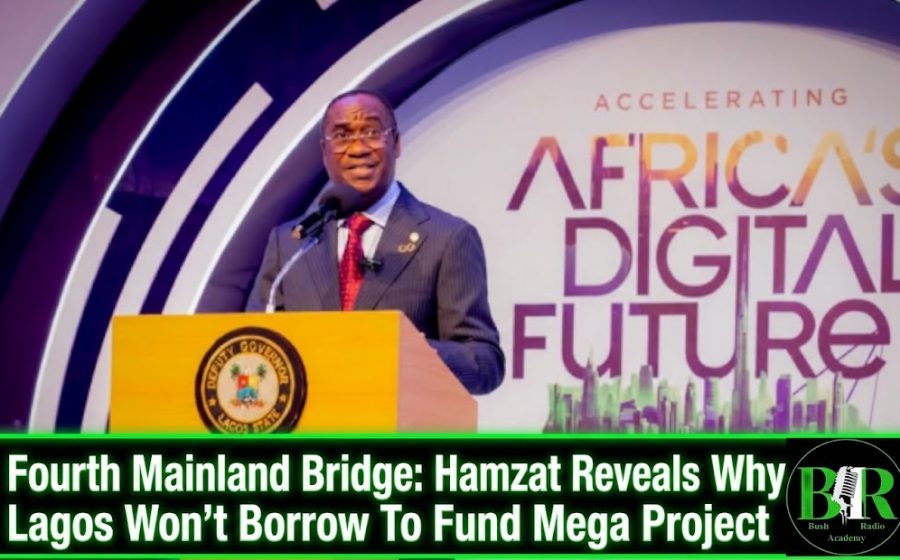
Lagos State Deputy Governor and the All Progressives Congress (APC) governorship candidate for the 2027 election, Obafemi Hamzat, has reaffirmed the state government’s commitment to constructing the proposed Fourth Mainland Bridge, saying the project will be financed through a public-private partnership (PPP).
According to Bush Radio Academy, Hamzat disclosed this during an interview on Lagos Television on Tuesday, explaining that the state could not independently finance the bridge while simultaneously investing in major rail infrastructure projects.
He said the bridge had been designed and its cost assessed, adding that discussions were ongoing with prospective investors to establish a sustainable financing arrangement for its construction.
Hamzat described the bridge as a major infrastructure project that Lagos needed to undertake but stressed that relying solely on public funds would place considerable pressure on the state’s finances.
“The Fourth Mainland Bridge is a fantastic project that we must build, but we cannot fund it on our balance sheet and fund rail at the same time. They are both monster projects, so we’ve been talking to investors,” he said.
The deputy governor disclosed that investors from Portugal, China and other locations had expressed interest in the project. He said the government was exploring partnerships that would enable the bridge to be built without placing an excessive financial burden on the state.
According to Hamzat, the government was reluctant to borrow heavily to finance the project because of the potential difficulties associated with servicing the debt. He maintained that a public-private partnership would provide a more suitable funding model.
“We will build it with partnerships, but it’s also important that we know that it will be expensive and we cannot—we don’t want to borrow to build it because it might be a challenge for us. So that’s why we believe it must be a partnership; it must be a PPP,” he said.
Hamzat also highlighted concerns raised by prospective investors over the collection of tolls on roads, explaining that toll revenue could be essential to recovering investments in major infrastructure projects.
He noted that investors would need a clear and reliable mechanism for earning returns on their investments, particularly if they were expected to contribute substantial funds to the bridge’s construction.
“When we pay tolls on our road, and we stop it, investors are not going to come. How do they get their money? Return on investments. How will they get it?” he asked.
The deputy governor said some investors were concerned about the reluctance of road users to pay tolls, especially in situations where toll collection had previously been discontinued.
He added that the state government was providing prospective investors with traffic data and other relevant information to demonstrate the project’s commercial viability and the growing demand for improved transportation infrastructure in Lagos.
Hamzat said addressing investors’ concerns would be crucial to securing the partnerships required to deliver the project, stressing the need to build confidence in the state’s infrastructure investment opportunities.
The proposed Fourth Mainland Bridge is expected to improve connectivity across Lagos and provide an alternative route for motorists, potentially easing congestion on existing roads. However, its construction will depend on the government’s ability to secure a workable financing arrangement and reach agreements with private-sector partners.







Comments
0 comments