
Latest
Fresh Revelation: Babangida Explains Vatsa’s Execution, Why He Annulled June 12 Election

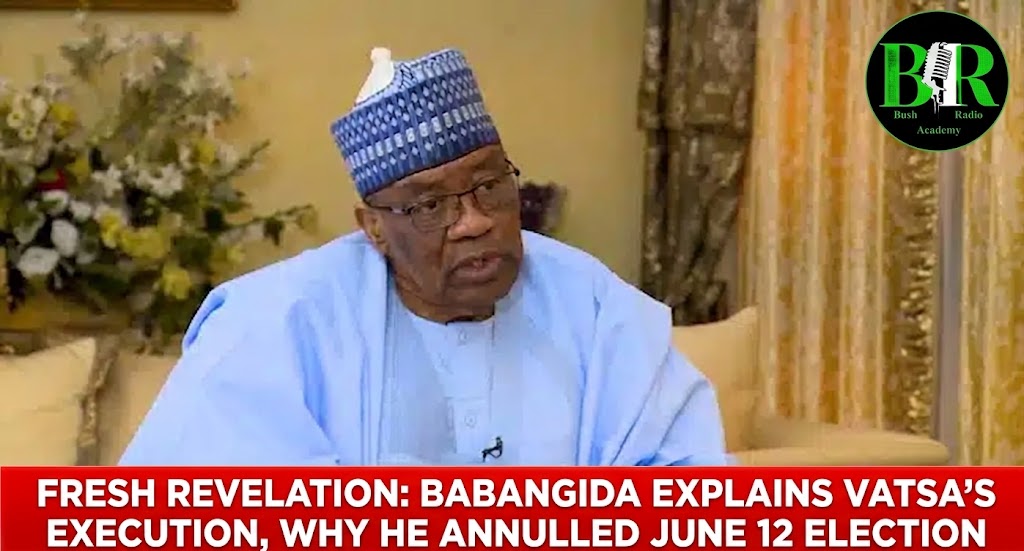
Former Military President, General Ibrahim Badamasi Babangida (retd.), has spoken about two of the most controversial decisions of his administration — the execution of his childhood friend, General Mamman Jiya Vatsa, and the annulment of the June 12, 1993 presidential election.
Babangida made the revelations during a programme on Badeggi 90.1 FM Radio, Minna, as part of activities marking his 85th birthday, which will be celebrated on Monday, August 17, 2026.
Vatsa was executed in March 1986 after a military commission found him involved in an alleged plot to overthrow Babangida’s administration.
Reflecting on their relationship, Babangida said he initially found it difficult to believe the allegations because he and Vatsa had grown up together, attended the same school and joined the military around the same time.
“We grew up together, attended the then Bida Middle School, now known as Government College, Bida. We graduated in the same year and joined the military together,” he said.
He recalled his disbelief when reports emerged that Vatsa was allegedly involved in a coup plot against his administration.
“When I first heard the rumour that General Mamman Vatsa was involved in a plot to overthrow my administration, I could not believe it,” Babangida said.
According to him, their longstanding friendship made the allegations particularly difficult for him to accept.
Babangida Summoned Vatsa, Nasko
The former military leader said he summoned Vatsa and General Mohammed Gado Nasko after a senior military officer brought the allegations to his attention.
“When they arrived, I asked them about the reports that they had been mentioned in a plot to topple my government. Both of them denied any involvement,” he recalled.
Babangida said a military Commission of Inquiry was subsequently established to investigate the allegations.
He stated that Nasko was cleared, while the commission found evidence linking Vatsa to the alleged coup plot.
Babangida said the finding left him devastated but that he was unable to stop the legal consequences.
“When investigations finally revealed General Vatsa’s involvement in the aborted coup, I was shocked, devastated and deeply disappointed.
“There was nothing I could do to exonerate him from the consequences prescribed by military law. My hands were tied. That was how I lost my brother, General Mamman Vatsa,” he said.
‘Civilians Have Always Played Roles In Coups’
Babangida also alleged that successful military coups in Nigeria had historically involved the participation of civilians.
He claimed that wealthy individuals had at various times played roles in supporting or sponsoring military takeovers.
Speaking about the late businessman and politician Chief MKO Abiola, Babangida described him as a close friend who used his wealth to assist people across ethnic, religious and regional divides.
“Chief MKO Abiola was a man who used his God-given wealth to positively impact the lives of Nigerians irrespective of their background,” he said.
Babangida Revisits June 12 Annulment
The former military president also addressed the controversial annulment of the June 12, 1993 presidential election, which is widely regarded as one of Nigeria’s freest and fairest elections.
Babangida acknowledged that the decision was among the most difficult choices of his military career.
However, he maintained that the decision was taken collectively based on what his administration at the time considered to be the national interest.
“I must say that it was one of the toughest decisions taken during my military career, but it was made in what we believed was the best interest of the nation,” he said.
Calls For Hope Amid Nigeria’s Challenges
Commenting on Nigeria’s current economic and security difficulties, Babangida urged citizens to remain hopeful and support the administration of President Bola Ahmed Tinubu.
The former military leader expressed optimism that ongoing government efforts would eventually yield positive results.
He also appealed to traditional and religious leaders to prioritise the national interest and continue working towards peace, unity and development across the country.


Fresh Revelation: Babangida Explains Vatsa’s Execution, Why He Annulled June 12 Election

Osun Election: Tinubu Makes Major Promises Ahead Of Crucial Governorship Poll

Osun Election: Accord Party Crisis Deepens As Factional Chairman Dumps Adeleke For APC

Bauchi Assembly Hit By Fresh Shake-Up As Majority Leader Saleh Hodi Resigns

Viral Video Sparks Legal Battle As Osun Govt Demands Police Probe Of Fadahunsi

Explosive Details Surface As Full List Of Alleged Sylva Coup Fund Beneficiaries Emerges

2Baba Makes Bold Move Amid Growing Tension In Marriage To Natasha

Tense TV Moment: Orji Kalu Clashes With Seun Okinbaloye During Live Interview

Wike Reveals Why Fubara Will Allegedly Sit Out The 2027 Governorship Race
