
Jonathan Speaks Out: Nigeria Would Rival Global Powers If Oil Laws Existed From The Start
 Follow us on Google News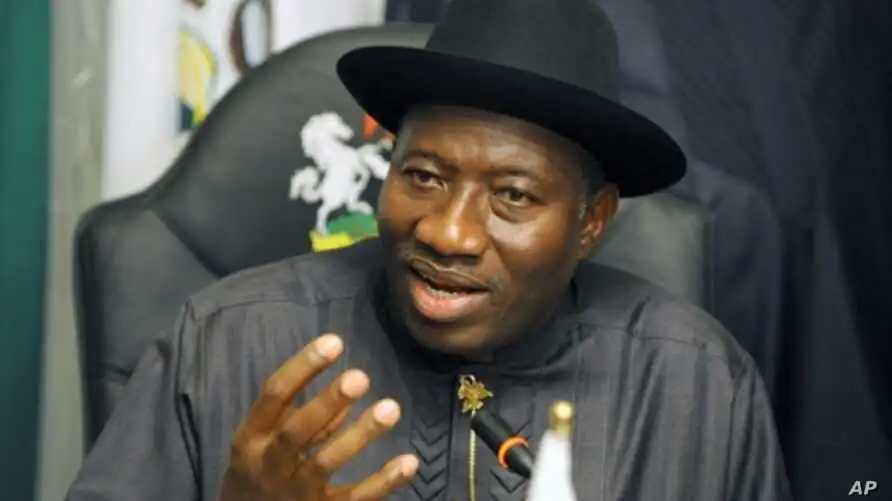
While speaking at the Champions of Nigerian Content Awards Dinner organized by the Nigerian Content Development and Monitoring Board (NCDMB) in Yenagoa, Bayelsa State on Wednesday night, former President Goodluck Jonathan reflected on a past conversation with a Ugandan official.
He highlighted how Uganda deliberately prioritized the development of local expertise before entering into agreements with international oil companies (IOCs), a strategic move to avoid the same pitfalls Nigeria encountered.
Jonathan stated that Nigeria might have been significantly more developed had it enacted protective oil-related laws from the beginning.
He said, “I remember a Ugandan telling me how they focused on building skills and institutional capacity before finalizing deals with IOCs, learning from Nigeria’s experience. I mention this because if Nigeria had put strong legal protections in place at the start of its oil journey, our development trajectory would have been much better.”
He noted that the initial oil laws—the Mineral Oil Ordinance of 1886 and its 1914 revision—were colonial statutes, largely excluding Nigerian input or interest.
“I doubt that many Nigerians are even aware of those early laws, let alone their consequences,” Jonathan added.
He went on to explain that it wasn’t until 1969—13 years after the first oil discovery in Oloibiri and almost a decade post-independence—that the country enacted its first indigenous regulation, the Petroleum Act.
Jonathan also emphasized that the reform process continued during his presidency, eventually leading to the passage of the long-awaited Petroleum Industry Act (PIA) in 2021, a transformative law aimed at modernizing Nigeria’s oil sector.


Comments
0 comments