
Latest
Obasanjo Opens Up On Atiku: Why He Says He Regrets Picking Him As Vice President

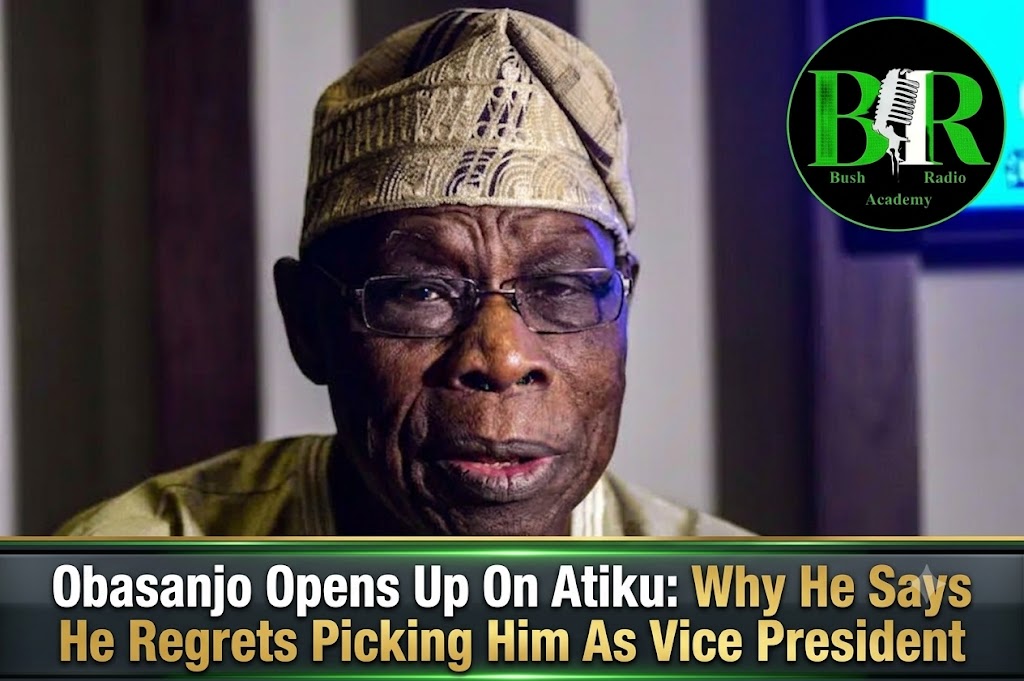
Former President Olusegun Obasanjo has described his decision to choose Atiku Abubakar as his running mate in the 1999 presidential election as one of the major mistakes of his political career, saying he would have made a different choice had he known him better at the time.
Obasanjo made the remarks on Friday during a fireside conversation with veteran entertainer and activist Charles Oputa, popularly known as Charly Boy, in Lagos. The event marked the unveiling of Charly Boy’s foundation and his memoir, 999: A Memoir in Tribute to Late Justice Chukwudifu Oputa.
A video of the discussion was later published on the YouTube channel of iWitnessLive TV.
Asked to identify the biggest mistake of his presidency, Obasanjo acknowledged that every leader inevitably makes errors while in office. He, however, singled out his choice of vice president as a decision he later came to regret.
Reflecting on the appointment, the former president said that if he had possessed the knowledge he later gained about his deputy, he would not have selected him as his running mate.
“What I have found in my own life is that many mistakes that could have been fatal, God has taken care of for me,” Obasanjo said.
When Charly Boy pressed him to name one such mistake, Obasanjo responded, “The man I picked as my running mate, my number two. If I had known him as I came to know him later, I would not have picked him.”
Asked whether he was referring to Atiku Abubakar, Obasanjo replied that he was talking about his vice president, leaving no doubt about the person he meant.
Despite expressing regret over the decision, Obasanjo insisted he harbours no resentment toward his former deputy.
According to him, although Atiku’s actions after they assumed office together differed from what he had expected, he believes divine intervention prevented those developments from distracting his administration or harming the country’s interests.
“There is no bitterness,” he said, adding that everyone acted according to their convictions while God ensured he remained focused on serving Nigeria.
Obasanjo and Atiku were elected on the platform of the Peoples Democratic Party (PDP) in 1999 and served together as president and vice president until 2007. Their relationship later deteriorated during Obasanjo’s second term, leading to a prolonged political rift.
The former president also reflected on the Nigerian Civil War, rejecting suggestions that the conflict amounted to genocide. While acknowledging the immense suffering caused by the war, he maintained that the military campaign was aimed at preserving Nigeria’s unity.
Describing the conflict as a painful chapter in the nation’s history, Obasanjo said it affected all Nigerians, although some communities bore a heavier burden than others.
He further disclosed that, as a military commander, he deliberately sought to minimise civilian casualties during operations. Using the recapture of Owerri as an example, he explained that he avoided bombing the city directly in order to protect innocent residents, opting instead to target areas outside the city as a warning of advancing troops.


Starstruck! 2Baba’s Daughter Reveals She Froze When She Met Her Crush, Wizkid

He Bit Me And Choked Me!” Portable Reveals Why He Walked Out Of Fight With Charles Okocha

2027 Twist: INEC Rejects PDP Faction’s Attempt To Submit Jonathan As Presidential Candidate

Obasanjo Opens Up On Atiku: Why He Says He Regrets Picking Him As Vice President

Former Kogi Governor Bello Applauds Tinubu, Says He Deserves Praise For Oyo Pupils’ Rescue

Fear Grips Kidnappers, Bandits as Okpebholo Deploys 497 Forest Guards Across Edo

Aliko Dangote’s Daughter Reveals Sh*cking Condition In Billionaire’s Will

Aisha Yesufu Unleashes Scathing Reaction To Peter Obi’s Channels TV Interview

I Don’t Want To Hear Justice For Your Stupid Name!’—Bimpe Fires Back At Troll Over Paternity Claim
