
Okonjo-Iweala Fires Back: “I’m Not Panicking Over Trump Administration’s Tariff Plans
 Follow us on Google News
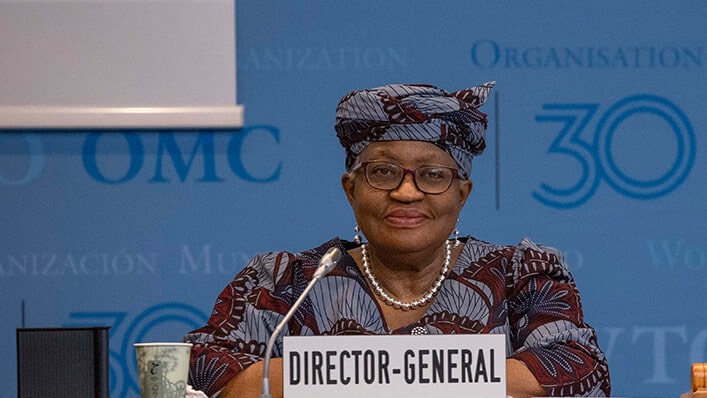
The Director-General of the World Trade Organization (WTO), Ngozi Okonjo-Iweala, has emphasized the importance of global cooperation to sustain economic growth.
In an interview with CNN’s Fareed Zakaria, Okonjo-Iweala addressed concerns over protectionism and President Donald Trump’s recent tariff threats. She acknowledged the rise of protectionist policies among WTO member nations but highlighted the resilience of global trade.
“Over the past five years, despite challenges, trade has remained strong. At $30.4 trillion, it has surpassed pre-pandemic levels,” she said, noting that 80% of global trade still operates under WTO’s most-favored-nation terms.
Okonjo-Iweala cautioned against the risks of global economic fragmentation, explaining that dividing into geopolitical trade blocs could result in a 6.4% loss of global GDP, equivalent to $6.7 trillion. “It’s like losing the economies of Japan and Korea combined. Increased fragmentation benefits no one,” she warned.
On Allegations Against China
When asked about claims that China engages in unfair competition, Okonjo-Iweala emphasized that the WTO provides mechanisms for resolving such issues. “The WTO offers a forum for complaints, allowing countries to demonstrate harm and pursue remedies,” she explained.
On Trump’s Tariff Threats
Okonjo-Iweala maintained that she is not panicking over the Trump administration’s policies, urging WTO members to approach challenges thoughtfully. “Yes, there are concerns, but there’s no need for panic. Let’s avoid tit-for-tat reactions and focus on considered solutions,” she advised.
On Canada’s Tariff Response
Regarding Canadian Prime Minister Justin Trudeau’s threat to impose tariffs on U.S. goods, Okonjo-Iweala acknowledged that political leaders must protect their citizens but called for transparent and constructive dialogue.
She warned against repeating past mistakes, referencing the Smoot-Hawley Act of the 1930s, which worsened the Great Depression through retaliatory tariffs. “We’ve seen this movie before, and it doesn’t end well. Let’s not repeat it,” she concluded.







Comments
0 comments