
Latest
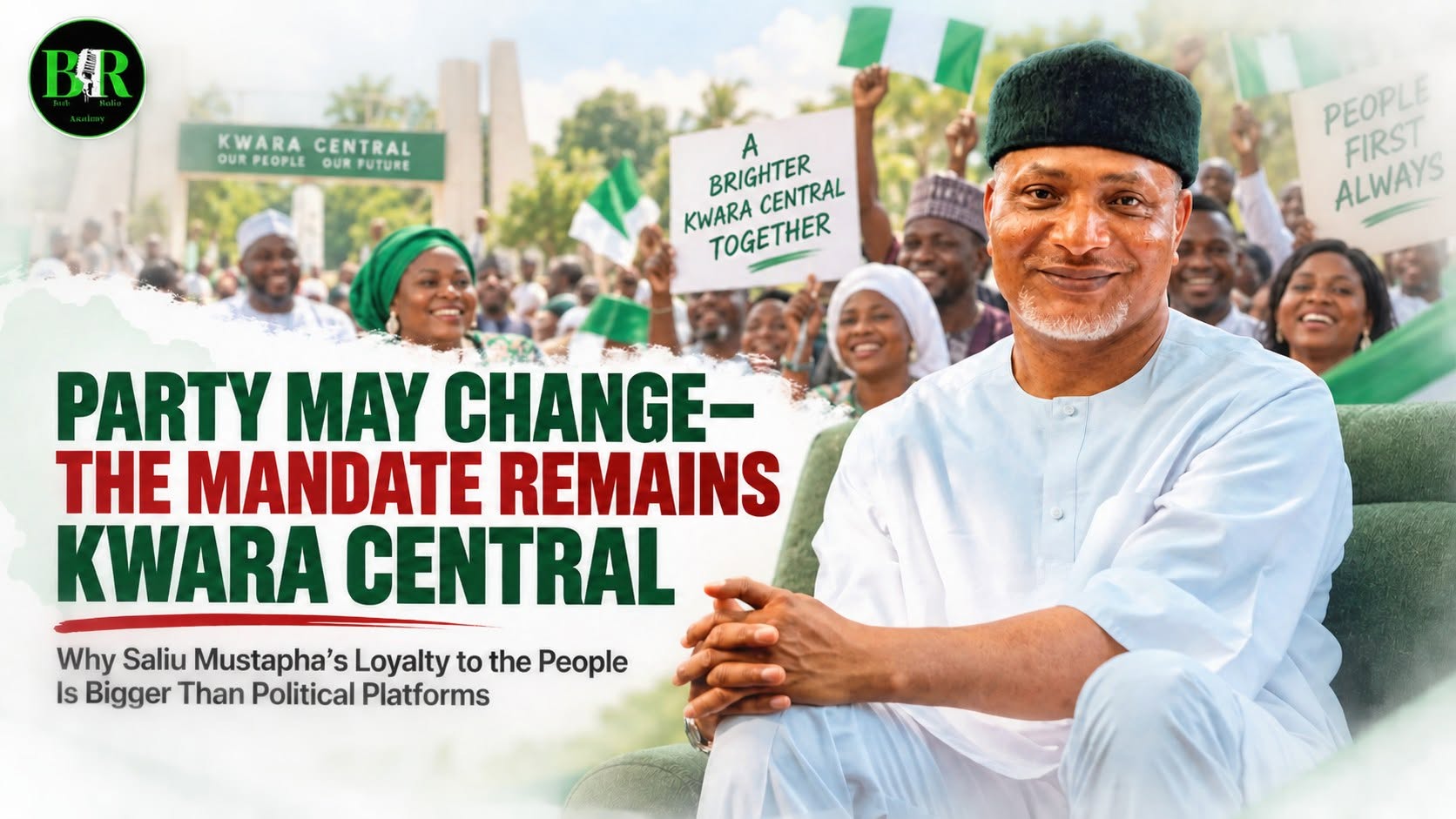
PARTY MAY CHANGE—THE MANDATE REMAINS KWARA CENTRAL

PARTY MAY CHANGE—THE MANDATE REMAINS KWARA CENTRAL
Why Saliu Mustapha’s Loyalty to the People Is Bigger Than Political Platforms
My people, political parties are important.
They provide the platforms through which candidates contest elections. They organise political movements, present manifestos and mobilise citizens around common ideas.
But there is something even greater than the political platform:
The mandate of the people.
Because a political party may give a candidate its ticket—but only the people can give that candidate their votes.
In 2023, the people of Kwara Central gave Senator Saliu Mustapha 109,823 votes to represent them in the National Assembly.
Those votes did not come from party executives alone.
They came from traders, artisans, farmers, students, professionals, traditional communities, women, young people and families across Asa, Ilorin East, Ilorin South and Ilorin West.
Therefore, the mandate belongs to Kwara Central.
And regardless of the political platform Senator Saliu Mustapha chooses, his first responsibility must remain the same:
To protect the interests of the people who elected him.
This is the real issue that must guide the conversation ahead of 2027.
Has Saliu Mustapha remained accessible?
Has he attracted opportunities?
Has he empowered constituents?
Has he supported education?
Has he promoted agriculture?
Has he used his position and relationships to bring federal attention closer to Kwara Central?
These are the questions that matter—not merely the colour of a party logo.
Politics must never become so obsessed with platforms that it forgets the people standing on the ground.
Senator Saliu Mustapha’s political value did not begin with his election to the Senate.
For years, the Saliu Mustapha Foundation has supported education, empowerment, healthcare and vulnerable families.
That relationship with the grassroots was built before the ballot—and it has continued beyond the election.
His interventions have reached students seeking educational opportunities, farmers requiring support, artisans needing tools, women building small businesses and young people searching for a pathway to economic independence.
This is what makes his political story different.
It is not simply the story of a man seeking another term.
It is the story of a relationship between a representative and his people.
But there is another important point.
Kwara Central needs a senator who can disagree politically without disconnecting the constituency from development.
It needs someone who can maintain his convictions while still working with the Federal Government whenever the interests of the people are involved.
Roads do not carry party membership cards.
Scholarships do not ask whether a student belongs to one party or another.
Agricultural equipment does not cultivate only partisan farms.
And when federal projects arrive in Kwara Central, their benefits are shared by everyone.
That is why Senator Saliu Mustapha must continue to practise a politics of constructive engagement—supporting what benefits the people, questioning what threatens their interests and building bridges wherever cooperation can produce development.
This is not weakness.
It is political maturity.
The people of Kwara Central must also understand that influence matters in Abuja.
A senator requires more than a seat inside the chamber.
He needs relationships, legislative experience, negotiating capacity and the credibility to attract attention to his constituency.
Walking away from one political platform does not automatically erase those assets.
The real test is whether Senator Saliu Mustapha can continue converting his political relationships into tangible benefits for the people.
Ahead of 2027, opponents may attempt to reduce the entire campaign to party affiliation.
But the electorate must insist on a broader conversation.
Let every candidate present a record.
Let every candidate explain what they have done for the people.
Let them demonstrate their accessibility, political influence, community acceptance and capacity to deliver.
The election should not become a contest of symbols without substance.
It should be a referendum on performance.
Because parties provide platforms—but the people provide power.
And while a party may change, the mandate remains Kwara Central.
Osigwe Omo-Ikirodah is the Principal and CEO of Bush Radio Academy


Peller Is Spiritual, He Told Me My Son Will Win A Grammy — King Ochacho

I Just Received ₦20 Million Alert — Burgled Shop Owner Thanks Adeleke, Olajengbesi

Tragedy As 33 Suspected Illegal Miners D!e In NSCDC Custody

PARTY MAY CHANGE—THE MANDATE REMAINS KWARA CENTRAL

Phyna Breaks Silence, Responds To Nkechi Blessing’s Call-Out In Viral Video

Wedding Cancelled Man Walks Away After Fiancée’s Mother Says He Is Marrying Down

Fake Miracle Exposed! Nollywood Actor Reveals How He Was Paid To Stage One

I’ll Pay All The Wedding Bills — 41-Year-Old Woman Makes Bold Marriage Offer Online

Drama As Parents Defend Son Accused Of Stealing, Only To Be Shown Shocking Video Evidence
