
Stolen Mandates? Tension Mounts As PDP, Others Lose 82 Lawmakers In Sh*cking Turn
 Follow us on Google News
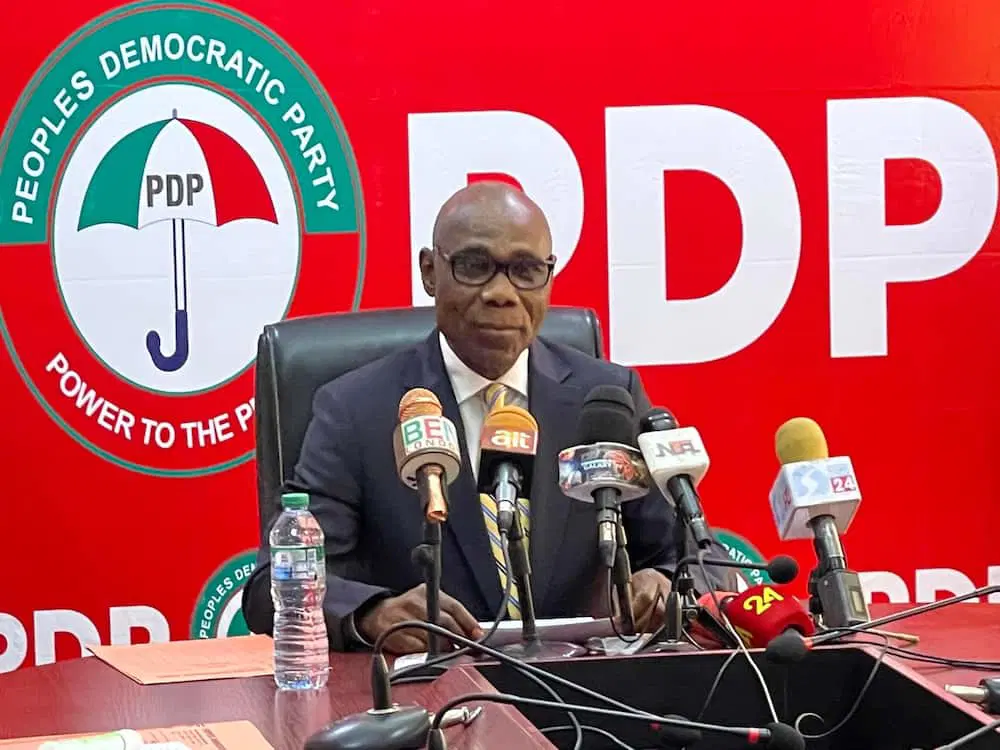
Nigerian politics is in turmoil as the People’s Democratic Party (PDP) reels from a wave of high-profile defections—most notably, Delta State Governor Sheriff Oborevwori’s switch to the All Progressives Congress (APC). With its grip on key regions slipping, the PDP is fighting back through the courts, aiming to reclaim what it calls “stolen mandates.”
In a tense six-hour closed-door meeting in Abuja, the PDP’s National Working Committee (NWC) resolved to challenge the defections legally. Their argument is rooted in Section 68(1)(g) of the 1999 Constitution, which stipulates that elected officials who defect from the party under which they were elected must vacate their seats—unless the party is shown to be factionalised.
This legal move, focused for now on Delta State, targets 22 defecting lawmakers and Governor Oborevwori, whose departure has shaken the party’s foundation in the South-South. Emma Ogidi has been appointed to stabilise the party in Delta, while National Legal Adviser Kamaldeen Ajibade is leading the legal charge. However, no suit had been filed as of the weekend, and no top legal team has been publicly unveiled.
Nationwide, the defections have mounted. Since 2023, 82 federal and state lawmakers—most of them from the PDP—have switched allegiance to rival parties, especially the APC. These include 4 senators, 19 House of Representatives members, and dozens from state assemblies across Delta, Rivers, Edo, and Abia.
The defections have reignited debate over the nature of political mandates in Nigeria. Can parties claim ownership of a seat won under their banner, or does the mandate belong solely to the electorate? The PDP’s legal action could set a precedent, but it also faces constitutional ambiguity—especially concerning governors, whose electoral legitimacy may rest more with the people than the party.
PDP National Chairman Ambassador Umar Iliya Damagum insists the party was not betrayed but abandoned by opportunists. He vows to recover every mandate lost. Yet, internal whispers reveal uncertainty: is this legal push a strategic masterstroke or an act of desperation?
Political analysts are divided. Dr. Tunji Abayomi, a constitutional lawyer, warns that the law is clearer for lawmakers than for governors. Analyst Dr. Chidi Nwaobia sees a legal gamble that could either revitalise the PDP or deepen its decline.
For now, the APC holds the upper hand, celebrating strategic gains while watching for further cracks. The PDP, under pressure and resource-constrained, remains at a crossroads. As the lawsuit looms, Nigerians await a verdict—not just from the courts, but from the evolving tides of political allegiance.
In the end, the question remains: who truly owns the political mandate—the party or the people?







Comments
0 comments