
Uba Sani Unveils ₦985.9 Billion ‘People-Centred’ 2026 Budget To Kaduna Assembly
 Follow us on Google News
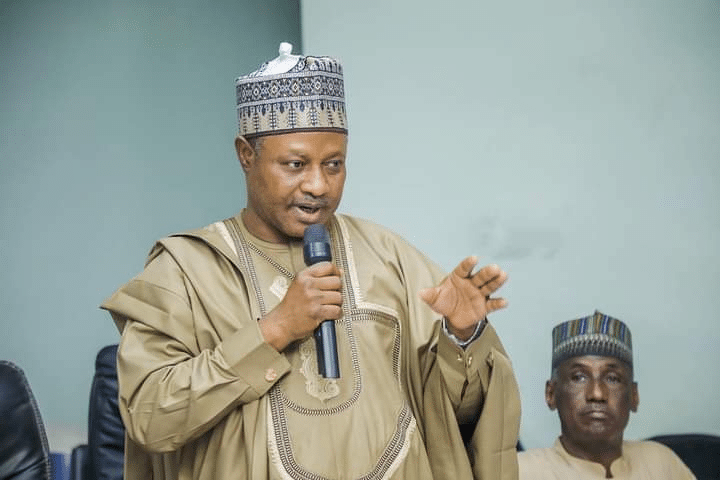
On Monday, December 1, Governor Uba Sani submitted a ₦985.9 billion 2026 Appropriation Bill to the Kaduna State House of Assembly, describing it as a people-focused plan aimed at deepening reforms in security, infrastructure, education, and rural development.
Addressing lawmakers, the governor said the budget is more than a constitutional requirement; it represents “a solemn civic engagement anchored on transparency, equity, and the welfare of citizens.” He noted that the 2026 budget was crafted through the widest consultative process in the state’s history, involving traditional rulers, civil society organizations, women and youth groups, academia, business leaders, and vulnerable communities across all local government areas.
Inputs from farmers, traders, artisans, teachers, persons with disabilities, and widows, he said, formed the backbone of the document, reflecting the administration’s commitment to participatory governance.
Reviewing 2025 Performance
Governor Sani highlighted that despite economic pressures, fluctuating federal allocations, and security challenges, 2025 witnessed “remarkable achievements and resilient advancement.” The administration maintained focus on delivering key reforms and sustaining development programs across Kaduna.
2026 Budget Framework
The proposed ₦985.9 billion budget comprises ₦734.2 billion in recurrent expenditure and ₦251.6 billion in capital allocations, with 71% earmarked for capital projects to accelerate development. Education and infrastructure each receive 25% of the allocation, health 15%, agriculture 11%, security 6%, social development 5%, governance 5%, and environment and climate initiatives 4%.
The governor reaffirmed his commitment to grassroots funding, under which each of the state’s 255 wards will receive ₦100 million for locally prioritized projects, calling it one of the largest and most transparent community-driven budgeting systems in Nigeria.
Security and Peace Initiatives
Sani noted that Kaduna continues to face banditry, kidnappings, and communal conflicts but emphasized that strengthened collaboration with federal security agencies has improved operations and restored confidence in previously troubled areas. Through the Kaduna Peace Model, formerly conflict-affected communities are reconciling, farmlands are reopening, and schools have resumed full activity.
Infrastructure and Transport
The governor highlighted the execution of 140 road projects covering 1,335 kilometers, 64 of which have been completed, opening economic corridors and connecting remote settlements. He also updated progress on the Kaduna Bus Rapid Transit (KBRT) system—the first of its kind in Northern Nigeria—powered by CNG buses with digital ticketing on a 24-kilometre dedicated corridor. The Kakuri Interstate Bus Terminal is 75% complete, and subsidized transport schemes have saved residents over ₦500 million. Work on the Kaduna Light Rail Project continues, with Phase I connecting Rigachikun-Sabon Tasha and Phase II linking Millennium City to Rigasa. Additional bus parks are also under construction.
Rural Development and Agriculture
Sani revealed that over 500,000 hectares of abandoned farmland have been reclaimed, with feeder roads, rural markets, and agricultural extension services restored to boost food production and market access. The state’s agricultural investment grew from ₦1.4 billion in 2023 to ₦74.2 billion in 2025, facilitating distribution of over 900 trucks of free fertilizer, irrigation schemes, mechanization, livestock vaccination, and improved seeds. He also highlighted the ongoing $510 million Special Agro-Industrial Processing Zone, supported by the African Development Bank, and the African Quality Assurance Centre to enhance farmers’ access to export markets.
Education and Health
Education, the governor said, remains the cornerstone of development. In 2025, 535 schools were reopened, over 300,000 out-of-school children returned to classrooms, and tertiary institution fees were reduced by 40%. Achievements include construction of 736 new classrooms, renovation of 1,220, provision of boreholes and toilets, furniture, and training for over 33,000 teachers. Bilingual schools and vocational hubs have been established to strengthen technical education.
In health, all 255 Primary Healthcare Centres were upgraded to Level 2, 15 General Hospitals are under renovation, five have been completed, and the 300-bed Bola Ahmed Tinubu Specialist Hospital was fully commissioned. CONMESS and CONHESS salary structures have been implemented, emergency services improved, an oxygen plant established, and ₦1 billion allocated to support vulnerable families.
Skills Development and Technology
The administration established the Institute of Vocational Training and Skills Development in Rigachikun with two satellite campuses, partnered with tech giants like Microsoft and Google to expand digital learning, and remodelled Panteka Market to support over 38,000 artisans.
Call for Legislative Approval
Governor Sani urged lawmakers to expedite consideration of the budget, describing it as “renewal, resilience, and a far-reaching vision” to ensure progress in every home, ward, and local government area.
Assembly Reaction
Kaduna State House of Assembly Speaker Hon. Yusuf Liman praised the budget as “ambitious, comprehensive, and aligned with the state’s development priorities.” He commended the governor for involving legislators in constituency projects and assured a thorough, transparent review to facilitate speedy passage.





Comments
0 comments