
Why Africa Must Tackle Investment Risks To Attract Foreign Capital – EFCC Chief
 Follow us on Google News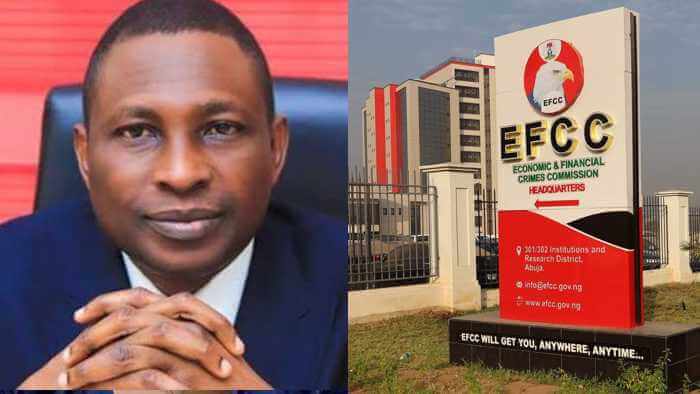
The Chairman of the Economic and Financial Crimes Commission (EFCC), Ola Olukoyede, has emphasized that sweeping reforms are the key solution to reducing investment risks across Africa.
He made this known on Friday, September 19, 2025, in Washington, D.C., United States, while speaking at the EBII Group African Leaders & Partners Forum.
According to Olukoyede, Africa must embrace broad and radical reforms to improve its investment climate and make the continent more attractive to global investors.
“De-risking Africa requires us to focus on reforms that will enhance the ease of doing business, uphold the rule of law, and strengthen human capital development. Achieving this demands strong institutions, especially considering the challenges in sectors like agriculture, renewable energy, and solid minerals,” he said.
The EFCC boss, who joined other global leaders to discuss de-risking Africa’s strategic sectors—agriculture, energy transition, and critical minerals—highlighted the continent’s enormous potential, including its rich natural resources and vibrant, tech-savvy youth population. However, he stressed that only fully integrated reforms can unlock these opportunities and drive greater foreign direct investment.
Showcasing Nigeria’s progress, Olukoyede pointed to the EFCC’s success in combating financial crimes through reforms and innovative strategies. Since its inception 22 years ago, the Commission has recorded over 13,000 convictions, including 4,111 in 2024 alone.
“There is no greater incentive for investors than the assurance of due process and the rule of law. From zero convictions at inception to over 13,000 today, the EFCC has proven that investors who feel wronged can seek redress and obtain justice,” he noted.
He also revealed that the EFCC provides advisory services to foreign investors on navigating Nigeria’s investment landscape. Citing reforms he initiated upon assuming office two years ago, Olukoyede said the EFCC strengthened its corruption-prevention mandate in 2024 through the Department of Fraud Risk Assessment and Control (established in 2023).
The department, he explained, has made significant strides in monitoring the disbursement and utilization of public funds, including auditing a $50 million Pi-CNG project that achieved 95% delivery of buses and conversion kits.
Other milestones presented at the forum include:
-
The arrest of 792 cryptocurrency and internet fraudsters in Lagos in a single-day operation.
-
The unmasking and forfeiture of 753 duplexes and apartments in Abuja linked to fraud.
-
The EFCC’s role in strengthening Nigeria’s compliance with global anti-money laundering and counter-terrorist financing standards to exit the FATF grey list.
-
Prosecution of sophisticated digital asset and investment scams, such as the Crypto Bridge Exchange (CBEX) fraud, where victims lost over half a billion dollars.
“Some masterminds are already being prosecuted in Nigerian courts,” Olukoyede added, recalling the EFCC’s earlier investigation into Binance, which exposed the vast financial resources controlled outside Nigeria’s financial system by crypto exchanges.
He urged the global community to draw lessons from the EFCC’s track record, stressing its successful collaborations with international agencies such as the FBI, the UK’s National Crime Agency, and the Canadian Mounted Police in advancing financial crime investigations and reforms.




Comments
0 comments