
Latest
A Nation At A Crossroads: Chibuikem Ugo-Ngadi Questions The Future OF Nigerian Federalism

A Turning Point for Nigerian Federalism
Tax reform and local government autonomy rarely make for attention-grabbing headlines. But this time, the stakes are different.....KINDLY READ THE FULL STORY HERE▶
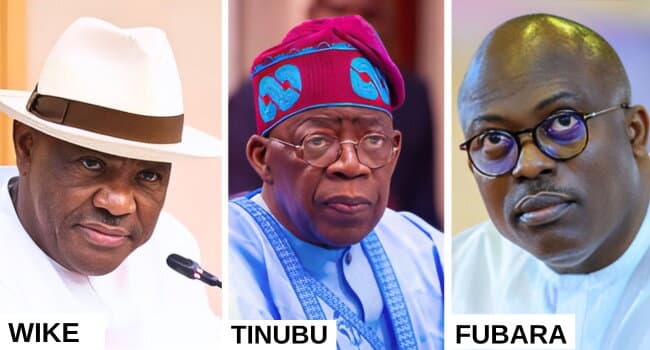
Last night, President Bola Tinubu made a seismic political move—he invoked emergency powers and suspended the democratically elected Governor of Rivers State, Siminalayi Fubara, a member of the opposition People’s Democratic Party (PDP). This decision follows a long-standing political feud between Fubara and his predecessor, now Minister of the Federal Capital Territory, Nyesom Wike. Regardless of their dispute’s finer details, one thing is clear: this action jeopardizes subnational autonomy and raises serious concerns about the future of Nigerian federalism.
The Legal Basis and Its Limits
The President’s authority to declare a state of emergency comes from Section 305 of the 1999 Constitution (as amended):
- Subsection 1 allows the President to issue a proclamation if convinced that Nigeria, or any part of it, faces an emergency.
- Subsection 3 outlines the specific conditions under which such a declaration is justified.
- Subsection 4 mandates the President to seek National Assembly approval within two days if in session, or ten days if not.
Since 1999, only three presidents have exercised this power:
- Olusegun Obasanjo (Plateau, 2004; Ekiti, 2006)
- Goodluck Jonathan (Borno, Yobe, Adamawa, and parts of Plateau, 2011)
Like Tinubu, Obasanjo suspended elected governors in affected states, sparking legal debates about whether Section 305 grants such authority. However, the Supreme Court has ruled that emergency powers do not permit the unilateral removal of elected officials.
Beyond legality, Tinubu’s justification for this move sets a dangerous precedent. It represents one of the most significant overreaches of presidential authority in recent history.
Why This Threatens Nigerian Federalism
Nigeria’s adoption of federalism was deliberate. Given the country’s deep ethnic, regional, and religious diversity, a centralized system was untenable. After the 1914 amalgamation, tensions between major ethnic groups and minorities intensified. Federalism—anchored on state autonomy—was meant to preserve self-determination while maintaining national unity.
States and their governors are the vehicles of this self-determination. They hold constitutionally protected powers and revenue streams, enabling them to chart independent courses, provided they remain within the law.
However, Tinubu’s move shifts the balance of power dangerously. The threshold for suspending a sitting governor is now alarmingly low. Nigerian federalism has always favored the central government, but this escalates the imbalance. Opposition governors already face challenges securing re-election under federal pressure—but now, their entire tenure could depend on presidential discretion.
Federalism is not a fixed model. Some systems are highly decentralized, while others emphasize cooperation between federal and state governments. In Russia, for example, governors are appointed rather than elected. Yet, regardless of its form, federalism relies on public trust. It must appear fair and independent to be legitimate.
Erosion of Public Trust
Tinubu’s actions shatter the perception of fairness, particularly in the Niger Delta—a region historically marginalized despite its vast economic contributions. The use of emergency powers in northern states under Jonathan and Buhari never resulted in governor removals. This inconsistency fuels public discontent.
- For Niger Deltans, this move reinforces the belief that the federal government selectively wields power against their region.
- For Northerners, it raises questions: If years of devastating terrorism never led to governor removals, why is Rivers State being treated differently? Does their suffering matter less because their states lack oil wealth?
Furthermore, Rivers State now has an unelected governor, installed through political maneuvering rather than democratic choice. While Nigeria’s electoral process already suffers credibility issues, at least elections provide the illusion of legitimacy. In this case, even that illusion has been discarded. This deepens the legitimacy crisis and highlights the deterioration of democratic principles at the state level.
A Dangerous Precedent
Every misuse of emergency rule lowers the threshold for future abuses. Future presidents might deploy it not for security crises, but for political control—especially in opposition-led states. This could render even minor disputes grounds for federal takeovers.
Conclusion: A Critical Juncture
The 2025 Rivers State emergency declaration is more than just another headline. It marks a pivotal shift in Nigeria’s federal structure. It:
✔ Exacerbates the imbalance between the federal government and states.
✔ Undermines constitutional protections for state autonomy.
✔ Erodes public trust in the fairness of Nigeria’s federal system.
✔ Sets a precedent for future presidents to exploit emergency powers for political gain.
Some argue that Tinubu should not be criticized since past presidents did the same. That logic is flawed. If unchecked, today’s actions will normalize future abuses. Just as Tinubu references past precedents, future leaders will cite him. This is a cycle that must be broken.
The real question is no longer whether Nigerian federalism is under threat. It is how much longer it can survive.


European Glory! Paris Saint-Germain Edge Arsenal On Penalties To Win 2026 Champions League

Minister Abubakar Momoh Highlights Sports As A Catalyst For National Development

The APC-ADC Strategic Blunder In Kwara State

Breaking: Police Block PDP Convention Venue In Abuja, Triggering Political Tension

Jang Reacts To PDP Primaries, Blasts Critics Over Alleged Backroom Result Claims

Drama In Lagos APC As Tinubu’s Daughter Threatens Protest Over Primary Results

APC Senate Race Takes Shape As Party Reveals Candidates For 2027 Polls

Full Text: President Tinubu’s 3rd Anniversary Address Shakes Nation

Full List Sparks Outrage — David Mark, Lamido Among June 12 Annulment Signatories
