
Trump’s Tariff War Looms: Peter Obi Reveals Africa’s Only Escape Route
 Follow us on Google News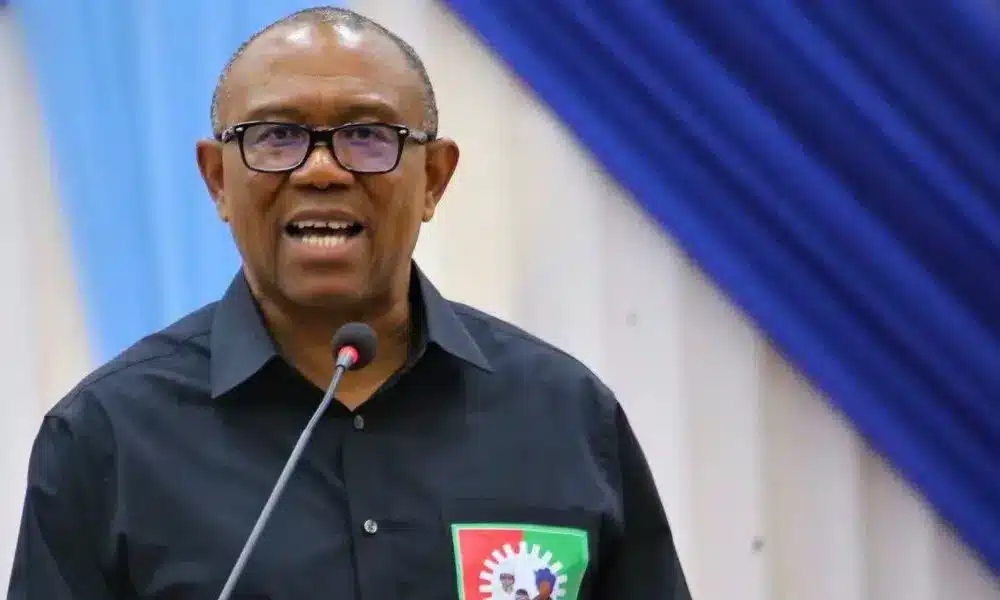
The 2023 Labour Party (LP) presidential candidate, Peter Obi, has urged African nations to prioritize productivity and human capital development as a strategic response to the tariff measures introduced by former U.S. President Donald Trump.
Speaking at the plenary session of the 2025 Commonwealth Enterprise and Investment Council (CWEIC) Trade and Investment Summit in London, Obi emphasized the need for a transformational agenda focused on rapidly advancing Africa’s economic development. His remarks were shared in a statement by his media office spokesperson, Ibrahim Umar.
Obi expressed concern over Africa’s overdependence on Western political and economic systems while neglecting the essential drivers of growth—productivity and investment in people.
His comments followed the U.S. government’s imposition of a 14% tariff on Nigerian exports, citing Nigeria’s trade barriers against 25 categories of American goods. Last week, Trump unveiled sweeping tariff policies under a “Liberation Day” trade agenda, affecting most countries, including Nigeria.
In response, Obi advocated for urgent reforms aimed at enhancing productive capacity, particularly through innovative approaches to education, healthcare, and poverty reduction.
During his speech titled “Africa’s Role in the New Global Economy,” Obi encouraged African leaders to tap into the continent’s greatest asset—its youthful population, which makes up a workforce of over one billion people.
While many nations are actively countering the effects of Trump’s tariffs, Obi noted that Africa has lagged behind, failing to respond effectively. He highlighted Africa’s modest participation in global trade, which stands at just 2–3%, according to the World Trade Organization (WTO).
“Our share of the global GDP is around three percent, with a per capita GDP of just $1,900—far behind Asia’s average of about $9,000,” Obi stated. “Yet Africa is home to the most energetic and youthful workforce in the world. We must harness this demographic strength to drive our economic future.”







Comments
0 comments