
Latest
Fresh Diplomatic Twist: Reason Tinubu Declined Ramaphosa Envoy’s Meeting Revealed

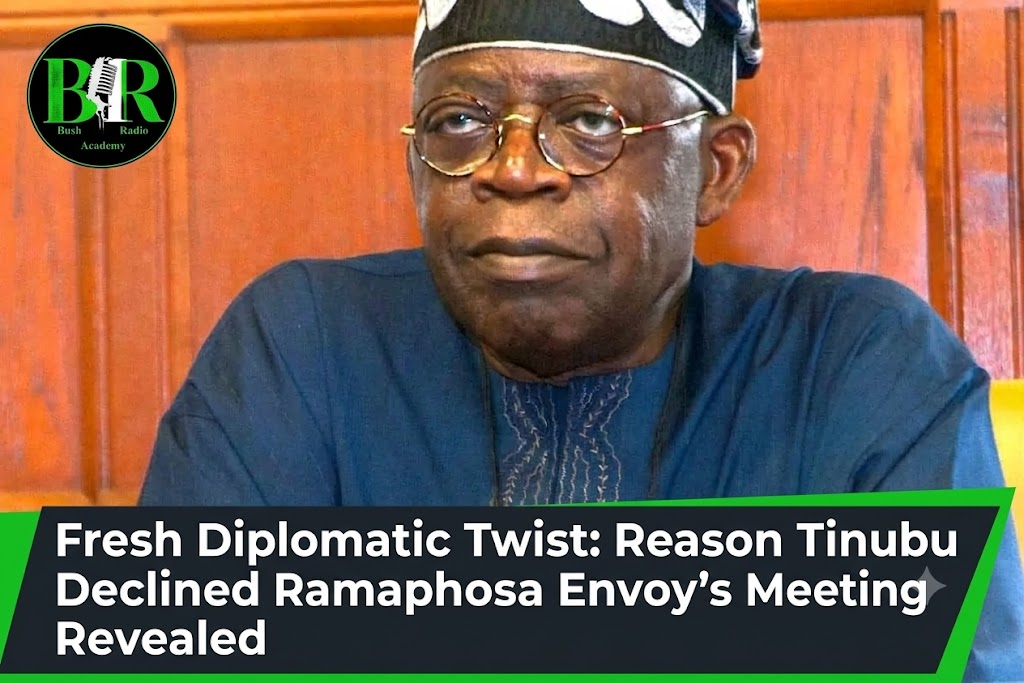
The Federal Government has strongly condemned the recurring xenophobic attacks targeting Nigerians and other African nationals in South Africa, calling on the South African authorities to take immediate and decisive action to end the violence.
The development comes amid growing diplomatic tensions between both countries after President Bola Tinubu declined to personally receive a special envoy sent by South African President Cyril Ramaphosa.
Instead, Tinubu directed the delegation, led by South Africa’s Minister of International Relations and Cooperation, Ronald Lamola, to hold discussions with the Minister of State for Foreign Affairs, Ambassador Sola Enikanolaiye.
According to Presidency sources, the South African delegation arrived in Abuja on Friday carrying a message from President Ramaphosa but had not secured a prior appointment with President Tinubu.
One source told The PUNCH that the delegation sought an audience with the President immediately upon arrival but was informed that no such meeting had been scheduled.
“They arrived on Friday hoping to meet the President, but there was no prior arrangement. We could not simply grant access without first confirming the President’s availability. By Monday, the President directed that they should instead meet with Ambassador Sola Enikanolaiye, who would brief him after the discussions,” the source said.
Another Presidency official confirmed that no meeting between Tinubu and the delegation had been included in the President’s schedule.
A third source disclosed that the Minister of Foreign Affairs, Bianca Odumegwu-Ojukwu, who was attending engagements in Addis Ababa, Ethiopia, advised that it would be inappropriate for the President to receive the envoy while reports of attacks on Nigerians and their businesses in South Africa were still ongoing.
FG Condemns Rising Afrophobic Attacks
Speaking while receiving the South African delegation in Abuja, Ambassador Enikanolaiye said President Tinubu mandated the meeting to provide both countries with an opportunity to discuss practical solutions to the persistent attacks on Africans living in South Africa.
He warned that the longstanding strategic relationship between Nigeria and South Africa should not be undermined by recurring violence against African migrants.
“It gives me great pleasure to welcome our brothers from South Africa. President Bola Ahmed Tinubu directed us to meet with you to exchange ideas and explore ways of resolving the continuing Afrophobic attacks in South Africa, which have affected Nigerians and other African nationals,” Enikanolaiye said.
The minister expressed concern over what he described as a recurring pattern of xenophobic violence spanning more than three decades.
According to him, similar incidents were recorded in 1995, 1998, 2006, 2015, 2016, 2019, 2021, 2024 and again in 2026.
Enikanolaiye further revealed that no fewer than 98 Nigerians have lost their lives in mob violence and hate-related attacks in South Africa since 2022.
“Since 2022 alone, 98 Nigerians have been killed in mob attacks and hate-related incidents which we describe as Afrophobia because Africans, particularly Nigerians, have been the primary victims,” he stated.
While reaffirming Nigeria’s opposition to criminal activities, the minister stressed that anyone accused of committing an offence should be treated in accordance with the law.
“The Nigerian Government does not support drug trafficking or any form of criminality. However, anyone accused of an offence deserves to be treated in line with the South African Constitution, international human rights standards and the basic principles of humanity,” he said.
Enikanolaiye also noted that the attacks were no longer limited to undocumented migrants or individuals accused of crimes, but increasingly targeted Nigerians legally residing, working and operating businesses in South Africa.
He further expressed concern over allegations that some South African police officers had failed to intervene during mob attacks, allowing the violence to escalate.


Oshiomhole Reveals Why Peter Obi Sh*cked Tinubu In Lagos During 2023 Election

Fresh Diplomatic Twist: Reason Tinubu Declined Ramaphosa Envoy’s Meeting Revealed

Abacha Debate Takes New Twist As Ex-DSS Chief Demands CCTV Proof From Al-Mustapha

Fresh Twist: Nigerian Army Ordered To Reinstate 70 Soldiers Granted Presidential Pardon By Buhari

Fresh Twist: Ejiofor Says He No Longer Represents Nnamdi Kanu, Remains IPOB Lawyer

Fear Grips Kidnappers, Bandits as Okpebholo Deploys 497 Forest Guards Across Edo

Fresh Details Emerge On Operation That Led To PFIPC ‘Fake DG’ Adeyemi’s Arrest

El-Rufai’s Medical Report Sparks Fresh Crisis As MDCAN Probes Doctor, ICPC Files Charges

Why Is It Not Implemented?’—Lawmaker Blasts FG Over 2025 Budget Delay
