
Latest
Cement Sh*ck: Nigeria Produces More Than It Consumes, New Report Reveals

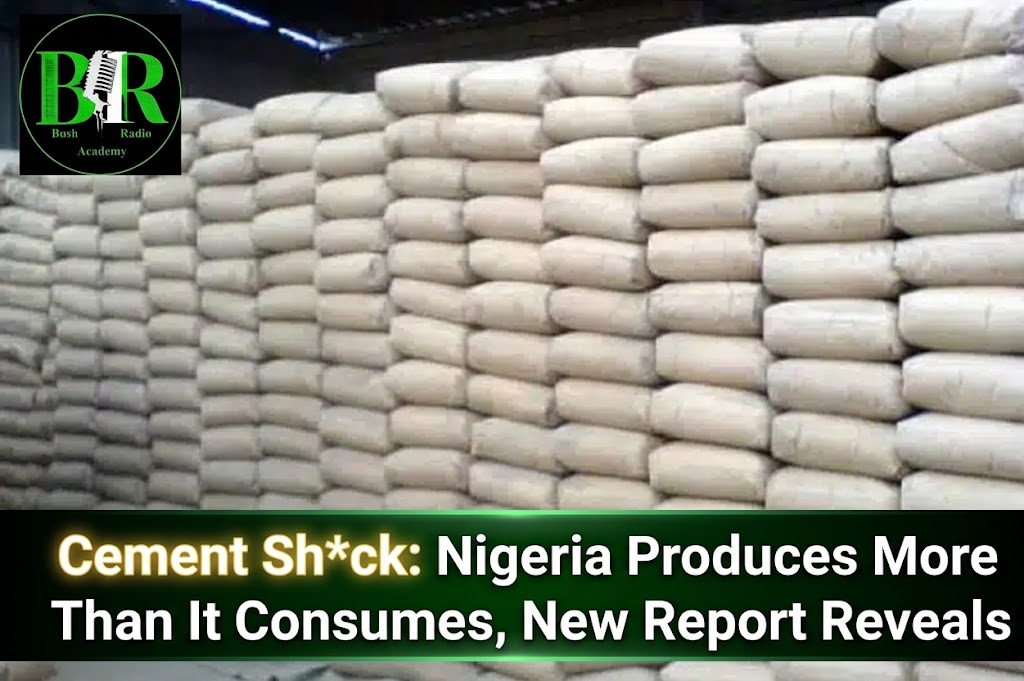
The Federal Competition and Consumer Protection Commission (FCCPC) has revealed that Nigeria currently produces significantly more cement than it consumes, yet prices of the building material remain relatively high.
The commission made the disclosure in a 40-page field report prepared following a three-month cross-border study conducted by its Anticompetitive Practices Department (ACP).
According to the report, Nigeria has an installed cement production capacity of between 60 million and 65 million metric tonnes annually, while estimated domestic consumption stands at only 25 million to 30 million metric tonnes per year.
The FCCPC also noted that Nigeria is a net exporter of cement to neighbouring countries.
Ordinarily, the commission said, such excess production capacity should result in lower prices in a competitive market. However, it noted that this has not been the case in Nigeria, prompting concerns about how the cement market operates.
“The level of excess production capacity was a particular concern because it had not translated into downward pressure on domestic prices, as would ordinarily be expected in a competitive market.”
FCCPC Suspects Possible Price Manipulation
The report also raised concerns over possible manipulation of cement prices following a survey of the Nigerian market.
The FCCPC Director of Corporate Affairs, Ondaje Ijagwu, said the investigation followed complaints about the high cost of cement, which is a major component of the construction industry.
According to Ijagwu, the commission was concerned about the comparatively high retail price of cement in Nigeria despite the country’s substantial limestone deposits and considerable domestic production capacity.
“Concerns were raised over the comparatively high retail price of cement in Nigeria compared with other markets, despite the country’s substantial limestone deposits, significant domestic production capacity and reported surplus installed capacity relative to domestic consumption.”
Ijagwu added that most major cement manufacturers cooperated with the investigation by providing relevant records, although one company had yet to do so.
He also noted that publicly available estimates indicate that three major companies account for more than 90 per cent of Nigeria’s installed cement production capacity.
FCCPC Compares Cement Prices Across Africa
As part of its investigation, the FCCPC conducted a comparative study of cement markets in Kenya, Tanzania, South Africa, Egypt, Morocco and Algeria.
The commission considered factors such as limestone availability, population, production capacity and domestic cement consumption.
In Kenya, which has a population of approximately 58.6 million, estimated domestic cement demand stood at about 9.3 million metric tonnes per annum (MTPA) in 2025.
The commission said a 50kg bag of cement sold for approximately $5.40 (₦7,344) in Nairobi.
In Tanzania, with a population of about 66.3 million, cement demand was also estimated at 9.3 million MTPA in 2025, while a bag reportedly sold for about $4.80 (₦6,528).
The FCCPC also cited Togo, where a bag of cement reportedly sold for approximately $6.75 (₦9,180), despite the country having no limestone deposits.
Nigeria’s Cement Prices Continue to Rise
The commission said market information reviewed during the investigation showed a significant increase in the price of cement in Nigeria during the first half of 2026.
According to the report, a 50kg bag that sold for between ₦9,300 and ₦9,700 in January was reportedly selling for between ₦10,500 and ₦13,000 by mid-year.
By July, the commission said prices of between ₦13,000 and ₦15,000 had been reported in some parts of the country.
The FCCPC said industry participants had identified several factors contributing to the increase, including energy costs, naira depreciation and its impact on imported machinery and spare parts, as well as transportation and logistics expenses.
However, the commission said it was still testing these explanations against verified data on production costs, pricing and market conditions.
“The Commission is testing these explanations against verified information on costs, production, pricing and market conditions.
“However, the weight of preliminary findings provides sufficient grounds for the investigation to continue.”
Investigation to Determine If Prices Are Justified
The FCCPC said the next phase of the investigation would determine whether current cement prices are justified by legitimate production and distribution costs or whether anti-competitive practices are contributing to the high prices.
The investigation will examine possible coordinated actions, abuse of market power, restrictions on domestic supply, anti-competitive distribution practices and other conduct that could violate the Federal Competition and Consumer Protection Act (FCCPA).
The commission has also issued formal notices of investigation and invited key industry players to provide information and records relating to their pricing strategies, production levels, capacity utilisation, exports and commercial relationships.
FCCPC Executive Vice-Chairman and Chief Executive Officer, Tunji Bello, said the intervention was necessary because cement plays a crucial role in the Nigerian economy.
“Cement occupies a strategic place in the Nigerian economy. Its price affects the cost of building a home, developing commercial property, delivering public infrastructure and, ultimately, the cost of doing business.”
Bello said the commission had a responsibility to examine the market carefully and establish the facts whenever concerns arise about the pricing of such an important product.
“When concerns persist about how such an important market is functioning, the Commission has a duty to look beyond assumptions and establish the facts.”


How ADC Helped Adeleke Defeat APC In Osun — Abdullahi Reveals Behind-The-Scenes Details

Imagine If The Result Was Otherwise’ — Davido Reacts To Adeleke’s Osun Victory

2027: Full List Of Presidential Candidates, Parties That Signed Peace Accord

ADC Alliance? Adeleke Reacts, Reveals What Really Happened In Osun

I Had To Step Down’ — OK Movement DG Resigns, Gives Reason

OKPEBHOLO DECLARES WAR ON REVENUE LEAKAGES, SECRET ACCOUNTS AND ILLEGAL TAX COLLECTION IN EDO

2Baba Makes Bold Move Amid Growing Tension In Marriage To Natasha

BREAKING: US Ends Temporary Protection For 12 Countries — See Full List

Peter Obi Can’t Be President” — Dino Melaye Reveals His Reason!
