
Naira Faces Pressure As Dollar Sells For ₦1,385 On Nigeria’s Parallel Market
 Follow us on Google News
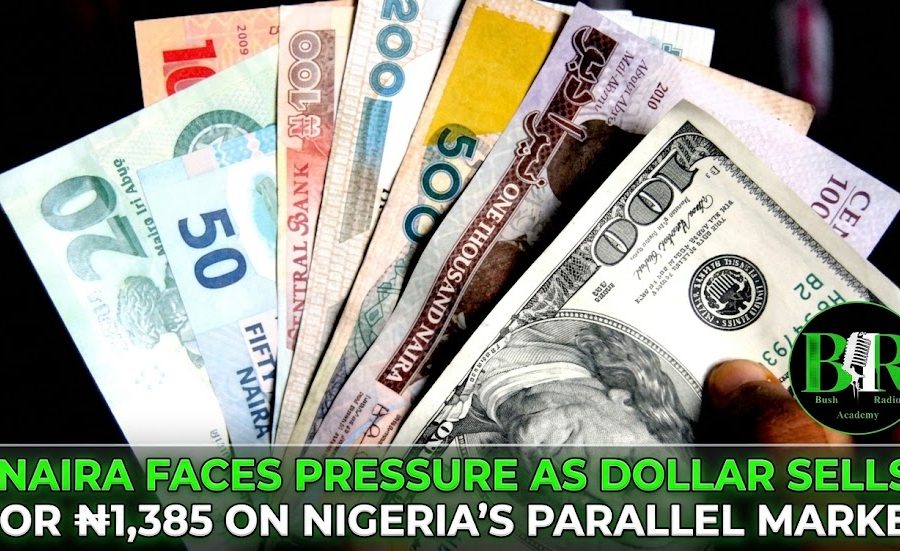
The US dollar was quoted at ₦1,331.28 on Nigeria’s official foreign exchange market on Monday, October 26, 2026, while the parallel market recorded a buying rate of ₦1,370 and a selling rate of ₦1,385 per dollar.
According to Bush Radio Academy, the reported figures show a difference between the official exchange rate and the parallel-market price, where customers seeking to purchase dollars may pay more depending on the dealer and prevailing market conditions.
The official rate on the Nigerian Foreign Exchange Market (NFEM) stood at ₦1,331.28 per dollar, although a separate official buying rate was not specified in the reported figures. In the parallel market, dollar sellers could receive approximately ₦1,370 per dollar, while buyers were quoted ₦1,385.
At the reported rates, the parallel-market selling price was ₦53.72 higher than the official quotation. However, the actual amount paid or received may vary depending on the location, transaction size, availability of foreign currency and the dealer involved.
Using the parallel-market selling rate of ₦1,385, purchasing $100 would cost approximately ₦138,500, while $200 would require ₦277,000. Similarly, $300 would cost ₦415,500, $500 would amount to ₦692,500, and $1,000 would require ₦1,385,000.
For individuals selling dollars at the reported buying rate of ₦1,370, $100 would be worth ₦137,000, while $500 would fetch approximately ₦685,000. Selling $1,000 at the same rate would yield ₦1.37 million.
Exchange-rate movements remain significant for Nigerian businesses and households that depend on foreign currency for imports, international payments, education, medical treatment and travel. When the dollar becomes more expensive against the naira, importers may face higher costs for machinery, electronics, industrial materials and other foreign-sourced goods, potentially affecting prices paid by consumers.
The direction of the naira in the coming days will depend partly on the supply of foreign exchange, demand from importers and individuals, export earnings and investment inflows. Increased dollar availability could ease pressure on the local currency, while strong demand amid limited supply could push exchange rates higher.
The gap between the official and parallel markets may also widen or narrow as market conditions change.
Nigerians planning foreign-exchange transactions are advised to confirm current quotations with their banks or authorised dealers, as the published rates are indicative and may differ from the actual prices available when transactions are completed.







Comments
0 comments