
Ballots Will Decide, Not AI — Amupitan Sends Strong Message Ahead Of 2027 Elections
 Follow us on Google News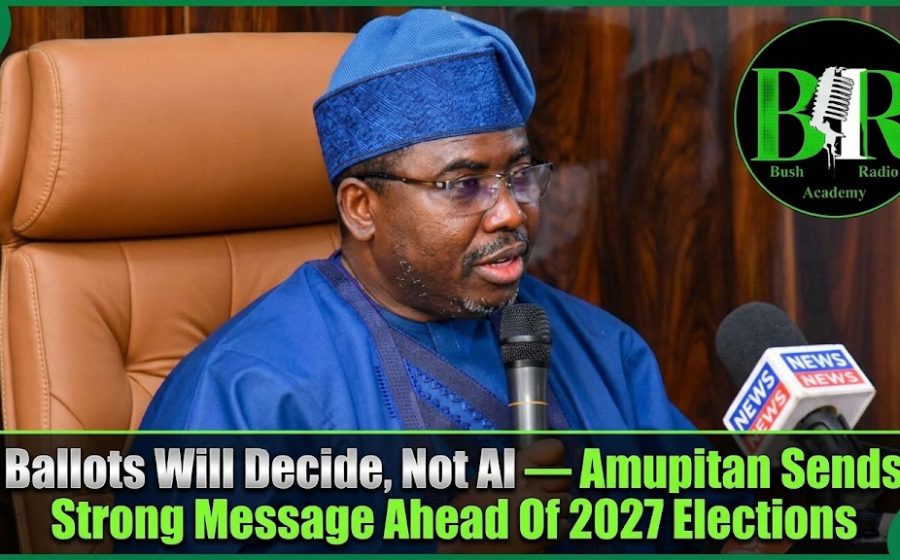
The Chairman of the Independent National Electoral Commission (INEC), Professor Joash Amupitan, has declared that artificial intelligence and computer algorithms will not determine the outcome of Nigeria’s 2027 general elections, insisting that the electorate’s votes will remain the basis for choosing the country’s leaders.
Amupitan made the statement on Wednesday at the Artificial Intelligence and Democracy Forum 2026 in Abuja, organised jointly by INEC and Yiaga Africa. The forum focused on safeguarding the 2027 general elections amid the growing influence of artificial intelligence.
According to Bush Radio Academy, the INEC chairman stressed that technology must serve democracy by improving administrative efficiency, transparency and electoral processes rather than replacing human judgment.
He maintained that although algorithms could analyse patterns, predict trends and support decision-making, they must never determine electoral outcomes or override the choices expressed by voters.
Amupitan acknowledged that artificial intelligence would significantly influence the information environment ahead of the 2027 elections, including how voters receive information, how electoral logistics are managed and how political actors respond to emerging challenges.
He also warned that the technology could be exploited by individuals seeking to undermine democratic processes, making it necessary for electoral authorities and other stakeholders to strengthen safeguards against potential abuse.
The INEC chairman described the 2027 general elections as a major administrative undertaking, involving more than 103 million registered voters, 176,846 polling units across 774 local government areas and multiple levels of elections, including presidential, National Assembly, governorship and state assembly contests.
Providing an update on preparations, Amupitan disclosed that the commission had completed 10 of the 14 major operational milestones outlined in the Electoral Act 2026.
He said INEC had procured additional Bimodal Voter Accreditation System (BVAS) devices and digitised candidate nominations through its INEC Candidates Nomination Portal. The platform had reportedly processed more than 15,000 nominations from 22 political parties.
The commission has also introduced online voter registration, which Amupitan described as a new development in Nigeria’s electoral administration.
He identified several areas where artificial intelligence could support election management, including predicting logistical needs, optimising transportation routes, assisting with the auditing of results, improving biometric databases, providing voter information in multiple languages and strengthening cybersecurity.
Despite these potential benefits, the INEC chairman reaffirmed the commission’s commitment to human oversight in critical electoral processes.
He stressed that voter accreditation, result collation, candidate qualification and other essential decisions would not be left entirely to automated systems or autonomous technology.
The forum brought together electoral officials, political party representatives, civil society organisations, diplomatic representatives, security agencies, technology companies, media executives and academic experts to discuss the opportunities and challenges artificial intelligence presents for democratic governance.
According to Bush Radio Academy, INEC’s position is that artificial intelligence may assist with election administration, but the authority to determine electoral outcomes must remain with voters through their ballots.







Comments
0 comments