
2027 Elections: Olisa Agbakoba Reveals Whether Nigerians Can Publish Results Before INEC
 Follow us on Google News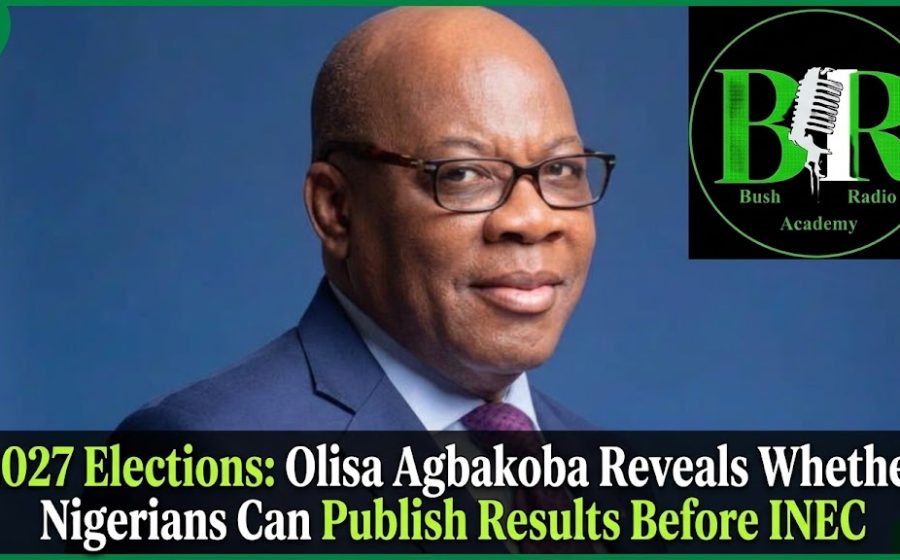
Senior Advocate of Nigeria Olisa Agbakoba has argued that Nigerians and journalists can publish election results that are already in the public domain, maintaining that the Independent National Electoral Commission (INEC) has exclusive authority to formally declare results but not to prevent others from reporting figures obtained during the electoral process.
Agbakoba made the remarks during an interview on Arise Television, where he discussed the legal position on publishing election results ahead of the final announcement by the electoral commission.
According to Bush Radio Academy, the senior lawyer cited a 1984 case involving the Nigerian Union of Journalists (NUJ) and the Federal Electoral Commission (FEDECO), in which Justice Candid Johnson reportedly upheld the right to publish election results.
He explained that the electoral process involves several stages, beginning with the polling unit and progressing through ward, local government, state and national collation before INEC makes its final declaration.
Agbakoba maintained that once a presiding officer has publicly announced results at a polling unit, journalists and other observers can report the figures, provided the information is authentic.
He also predicted that political parties could increasingly rely on artificial intelligence tools to gather and analyse results uploaded to INEC’s Result Viewing Portal, known as IReV. According to him, such technology could help parties compile polling-unit figures more quickly during future elections.
However, Agbakoba cautioned that anyone publishing election results must ensure their accuracy. He referred to Section 124 of the Electoral Act, which provides penalties for publishing false election results, arguing that the provision also recognises the possibility of publishing genuine results.
The lawyer stressed that reporting results already made public is different from formally declaring the outcome of an election, which he said remains INEC’s exclusive responsibility.
He further referenced Nigeria’s 1993 presidential election, noting that results displayed publicly contributed to public understanding of the electoral outcome despite the controversy surrounding the final declaration.
Agbakoba maintained that the NUJ versus FEDECO case remains relevant to the debate, arguing that its reported decision supports the media’s right to publish election results.
His comments come amid discussions about transparency, technology and the legal boundaries surrounding the publication of election figures ahead of the 2027 general elections.
According to Bush Radio Academy, the distinction between publishing publicly available results and officially declaring an election outcome remains central to Agbakoba’s argument.





Comments
0 comments