
Latest
Boko Haram, Banditry: Emir Sanusi Identifies The Hidden Roots Behind Nigeria’s Insecurity

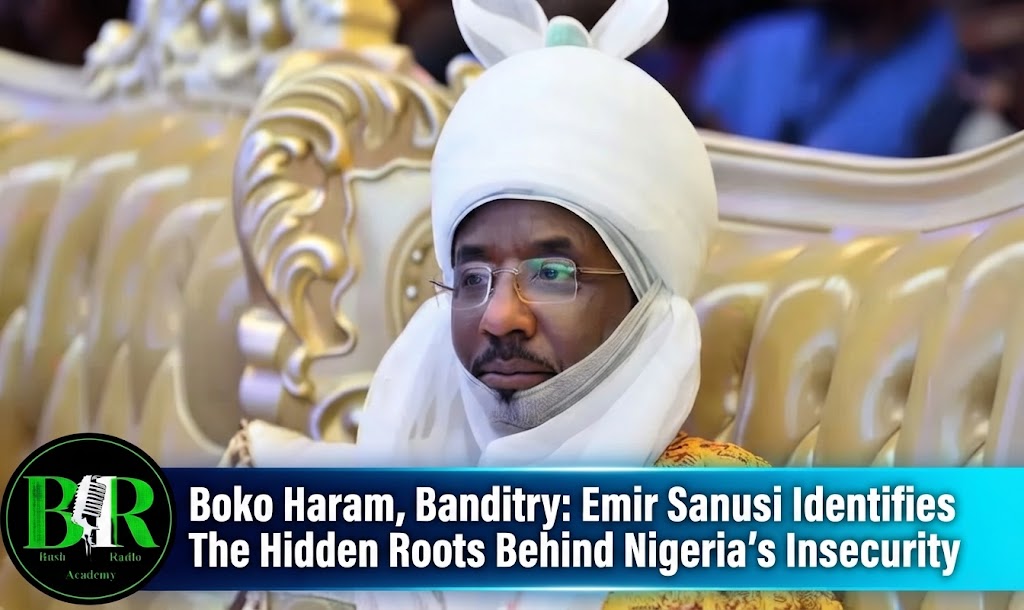
The Emir of Kano, Muhammadu Sanusi II, has said the growth of Boko Haram, banditry and other forms of terrorism in Nigeria cannot be attributed to violent attacks alone, arguing that divisive political rhetoric and media language helped create an environment in which violent movements could emerge.
According to Bush Radio Academy, Sanusi made the remarks in Abuja on Wednesday while speaking at the launch of a book documenting the tenure of retired Lieutenant General Tukur Yusuf Buratai as Chief of Army Staff.
The former Governor of the Central Bank of Nigeria said the country’s security challenges had deeper roots in the way Nigerians were repeatedly divided along ethnic, religious and regional lines.
Sanusi argued that political speeches and media reports that categorise citizens as Northerners and Southerners, Muslims and Christians, or members of particular ethnic groups contributed to divisions that could ultimately fuel insecurity.
He said Nigeria’s security crisis did not begin with the violence, banditry or terrorism currently being experienced, but was preceded by what he described as divisive language that gradually created conditions for violent movements to emerge.
The Emir urged Nigerians to return to a stronger sense of national identity and focus on issues capable of improving the lives of citizens, including education, healthcare, economic development and other essential services.
Sanusi also called for a clearer separation between political and religious responsibilities, arguing that politicians should concentrate on governance and service delivery while religious leaders should focus on their religious duties.
He warned that when religious and political interests become too closely intertwined, it could make it more difficult for citizens to hold political leaders accountable and could create interests that benefit from continued insecurity.
The Emir further stressed the need for national institutions to adopt long-term strategies that extend beyond the four-year electoral cycle. He noted that institutions such as the military, police and Central Bank should be able to plan for periods of 20, 30 or even 50 years rather than being influenced primarily by election cycles.
Sanusi maintained that building a stable and prosperous Nigeria would require citizens and institutions to look beyond short-term political interests and work towards long-term national development.


Alonso Delivers Huge Chelsea Injury Update Ahead Of Brentford Showdown

Unknown Gunmen Reportedly K!ll Popular Enugu Politician Inside His Residence

My Better Days Started When I Found Christ — King Ochacho Responds To Ritualist Claims

Village People Are Not Real — Man Makes Bold Claim About Curses And Spiritual Attacks

Nigerian Man Opens Up On Humbling Moment With American Girlfriend: I Couldn’t Give Her $50

Wedding Cancelled Man Walks Away After Fiancée’s Mother Says He Is Marrying Down

Fake Miracle Exposed! Nollywood Actor Reveals How He Was Paid To Stage One

I’ll Pay All The Wedding Bills — 41-Year-Old Woman Makes Bold Marriage Offer Online

Drama As Parents Defend Son Accused Of Stealing, Only To Be Shown Shocking Video Evidence
