
BREAKING: Gusau Resigns As NFF President Amid DSS Probe
 Follow us on Google News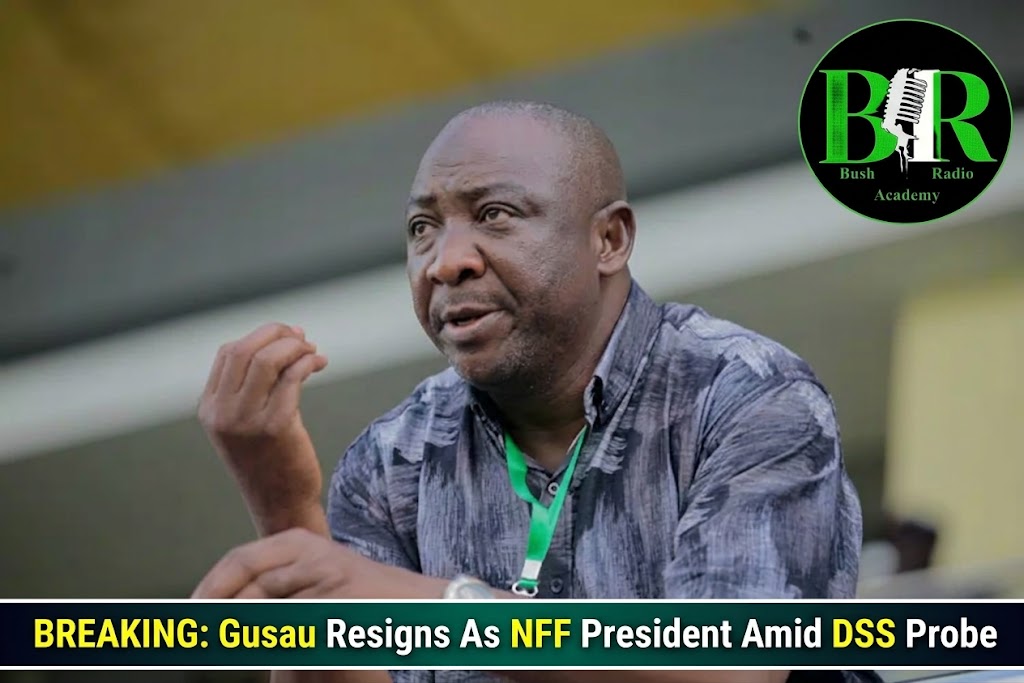
Ibrahim Gusau has confirmed his resignation as President of the Nigeria Football Federation (NFF), bringing his tenure at the helm of the country’s football governing body to an end.
Gusau announced his decision during a press conference on Thursday afternoon.
The NFF also confirmed the resignation of several members of its Executive Committee, as well as the federation’s General Secretary, Dr Mohammed Sanusi.
In a statement posted on its official X account on Thursday, the NFF confirmed that the senior officials had resigned from their respective positions.
“NFF President Ibrahim Musa Gusau, alongside his Executive Committee and the General Secretary, Dr Mohammed Sanusi, have resigned from their positions,” the federation stated.
Speaking at the press conference, Gusau said he had informed members of the board about his decision and advised any member who wished to follow his lead to also resign.
He said:
“On this occasion, my family, friends, stakeholders and all of you, I just want to tell you that I have decided to resign my position as President of the NFF.
“I informed my board members and advised them that anybody who would follow through with this should resign.
“The board is not communicating with me. I have not communicated with the administration. So, for me, I want to make this clear. I am a disciplined person, and I hope that we will continue to make our contributions from our experience.”
Gusau’s resignation comes amid increasing scrutiny of football administration in Nigeria, following a series of disappointing results involving the country’s national teams.
The NFF leadership has also faced investigations by security agencies, including the Economic and Financial Crimes Commission (EFCC) and the Department of State Services (DSS), over the management of funds allocated to the national teams.
The agencies are reportedly examining how the ₦17 billion intervention fund released by the Federal Government to the NFF was utilised.
The fund, approved by President Bola Tinubu in 2024, was intended to settle outstanding salaries, allowances and bonuses owed to players representing Nigeria’s national teams.
The latest development comes against the backdrop of Nigeria’s recent struggles in international football, including the Super Eagles’ failure to qualify for consecutive FIFA World Cup tournaments.
The Super Falcons also suffered a setback in their bid to qualify automatically for the 2027 FIFA Women’s World Cup in Brazil after losing 1-0 to Cameroon in the quarter-finals of the 2026 Women’s Africa Cup of Nations (WAFCON).
The defeat ended their title defence and left the team facing a playoff route in the race for a place at the 2027 World Cup.




Comments
0 comments