
Christian Persecution: US Lawmaker Moves To Block Nigeria From Hiring American Lobbyists
 Follow us on Google News
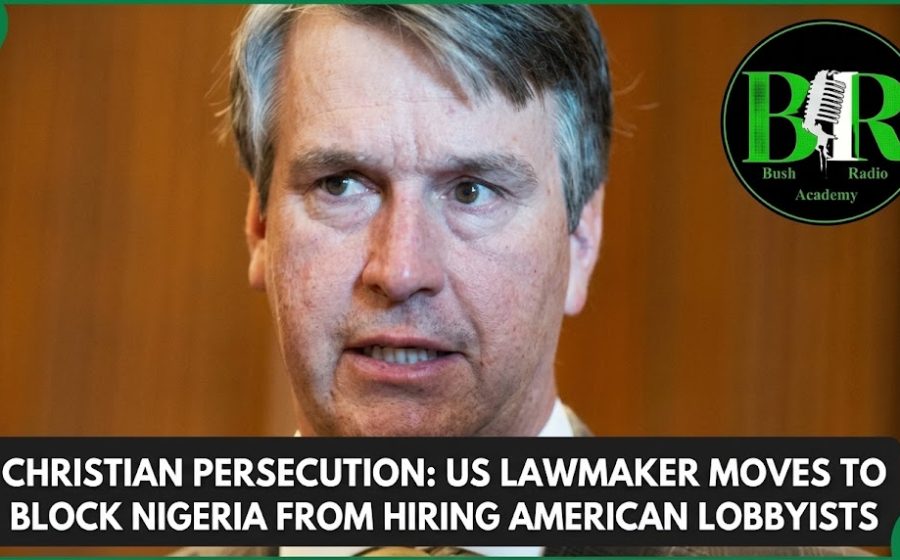
A United States Congressman, Barry Moore, has introduced a bill seeking to prohibit individuals and lobbying firms in America from receiving payments to represent the Nigerian government in Washington for as long as Nigeria remains designated as a Country of Particular Concern (CPC).
The proposed legislation, identified as H.R. 10939, is aimed at preventing the Nigerian government from engaging paid lobbyists in the United States while the country retains the controversial designation.
The move comes amid growing concerns among some members of the US Congress over allegations of Christian persecution and attacks on religious communities in Nigeria.
According to details of the proposed bill, any lobbying firm or individual that receives payment to promote the Nigerian government’s interests in the United States while the CPC designation remains in place could face sanctions.
Moore alleged that the Nigerian government had spent millions of dollars engaging influential lobbyists in Washington to improve its international image and downplay reports of attacks against Christians, rather than addressing the underlying security concerns.
The congressman maintained that the proposed legislation would put an end to what he described as efforts to use paid lobbying to influence Washington’s position on the situation in Nigeria.
“For too long, the Nigerian government has paid high-priced lobbyists in Washington to cover up the persecution of Christians while doing little to stop it. This bill will end that,” Moore stated.
He further explained that if the legislation is passed, it would become unlawful for any person or firm in the United States to receive payment for lobbying on behalf of the Nigerian government until the country’s Country of Particular Concern designation is lifted.
The proposed legislation has been referred to the US House Committee on Foreign Affairs for further consideration and legislative action.
The bill’s introduction represents another development in the growing debate within the United States over Nigeria’s security situation, religious freedom and the country’s diplomatic engagement with Washington.




Comments
0 comments