
Politics
Edo 2024: Proficiency In English Language Is Not A Criterion For Good Governance And Delivery Of Democratic Dividends

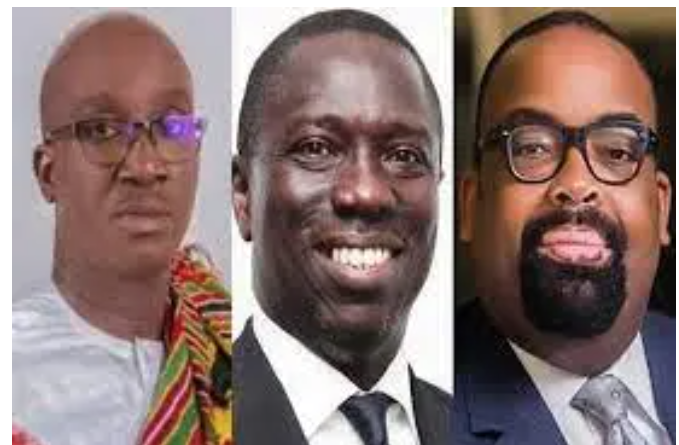
Edo 2024: Proficiency In English Language Is Not A Criterion For Good Governance And Delivery Of Democratic DividendsThe notion that proficiency in English language is a prerequisite for good governance and delivery of democratic dividends has been a long-standing debate. However, this essay argues that proficiency in English language is not a determining factor in a leader’s ability to govern effectively and deliver democratic dividends.....KINDLY READ THE FULL STORY HERE▶
Drawing on historical examples, international declarations, and logical reasoning, this essay posits that leadership skills, cultural understanding, passion, a heart of service, love for the people and vision are more essential qualities for effective governance.
Throughout history, notable leaders have achieved greatness without relying on English proficiency. The Obas of Benin, right from the Ogiso and Eweka dynasties around 40BC till date, for instance, built a powerful empire and maintained trade relations with European powers without speaking English.
The wealth created by these non-English speaking ancestors have outlived them, benefiting their generations and currently being returned as artefacts after several years. Similarly, African icons like Queen Amina of Zazzau, a powerful Nigerian queen, expanded her kingdom and established trade relations without speaking English.
Lagelu of Ibadan, a renowned Yoruba warrior, united various kingdoms and founded the city of Ibadan without speaking English. Usman Dan Fodio, a Fulani scholar and jihadist, founded the Sokoto Caliphate and wrote extensively in Arabic and Fulfulde, without relying on English.
Lee Kuan Yew, the former Prime Minister of Singapore, who detailed his struggle with English in his book “The Singapore Story” is another exemplary leader who achieved remarkable economic growth and development despite not being fluent in English when he first took office. Fully depending on their native intelligence and with and undiluted language, countries like Japan, China, South Korea, North Korea, Russia have continued to thrive.
Various international declarations support the argument that English proficiency is not a criterion for success. The UN Declaration on the Rights of Indigenous Peoples, the African Union’s Language Plan of Action, and the Universal Declaration of Cultural Diversity all recognize the importance of linguistic diversity and cultural heritage. These declarations emphasize the need to promote and preserve local languages and cultures, rather than prioritizing a colonial language like English.
Numerous individuals have achieved success in various fields without relying on English. Chinese leaders like Xi Jinping and Jack Ma, Russian leaders like Vladimir Putin and Maria Sharapova, and North Korean leaders like Kim Jong-un and Ri Sol-ju have all made significant impacts without proficient English skills.
In sports, stars like Lionel Messi, Cristiano Ronaldo, and Usain Bolt have dominated their respective fields without relying on English. Musicians like Plácido Domingo a Spanish-born singer, conductor and opera administrator, Luciana Souza a Brazillian jazz singer with multiple Grammy awards and scientist like Tu Youyou, a Chinese pharmaceutical chemist and malariologist who was awarded the Nobel Prize in Physiology or Medicine in 2015 for her discoveries related to the antimalarial drug artemisinin, have also achieved global recognition without proficient English skills.
Speaking your local language has several advantages, including, Cultural Preservation: Speaking your local language helps preserve your cultural heritage and traditions; Better Communication: Communicating in your local language ensures better understanding and connection with your people; Identity Formation: Your local language is a vital part of your identity and helps shape your sense of self; Cognitive Benefits: Studies have shown that speaking your local language can delay cognitive decline and improve mental health.
Leadership is not solely dependent on language proficiency. Vision, charisma, and the ability to connect with the people are essential qualities for effective governance. A leader who understands the needs and culture of their people can govern more effectively than one who is fluent in English but lacks local knowledge. Moreover, technology and interpreters can facilitate communication, making language barriers less significant.
In conclusion, proficiency in English language is not a criterion for good governance and delivery of democratic dividends. Leadership skills, cultural understanding, a heart of service, love for the people and vision are more important qualities for effective governance. Historical examples, international declarations, local and global successes all support this argument. Furthermore, speaking your local language has several advantages, including cultural preservation, better communication, identity formation, and cognitive benefits. As we move forward in our democratic journey, let us prioritize the qualities that truly matter in leadership, rather than English proficiency.







Fresh Twist: DSS Rejects Life Jail, Demands Death For Convicted Oyo Kidnappers

Job Alert: INEC Kicks Off 2026 Recruitment, Reveals Deadline For Applications

Full List: 20 Football Stars Who Won The FIFA World Cup Before Turning 21

WATCH: Akpabio Apologizes To Oshiomhole After Controversial Video Goes Viral

Tinubu Vs Atiku: President Fires Fresh Broadside, Says He’s Fixing Their “Mess” (VIDEO)

Mystery Deepens: New Details Surface In Mary Habila Death Investigation

Edo Governor Makes Major Shake-Up, Approves 20 Fresh Appointments

Oshiomhole Breaks Ranks, Opposes Fasina’s Confirmation Over Sexual Harassment Allegations

The Truth Must Be Told!’ – Full Text Of Umahi’s Explosive Remarks On Mary Habila’s Controversial Death
