Latest
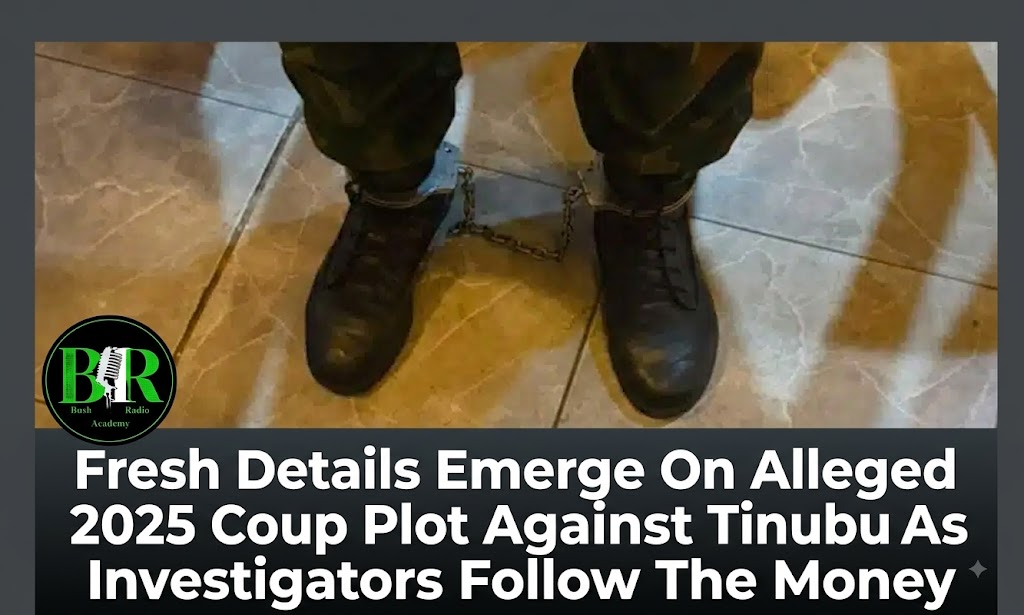
Fresh Details Emerge On Alleged 2025 Coup Plot Against Tinubu As Investigators Follow The Money
Published
1 hour agoon
By
BushRadio
Fresh details have emerged about the alleged 2025 plot to overthrow President Bola Tinubu’s administration, with investigation documents reportedly revealing the involvement of serving and retired military officers, civilians and alleged financiers.
The alleged conspiracy came to public attention in October 2025 following the arrest of several serving and retired military personnel.
The Defence Headquarters initially described the arrests as part of a “routine internal process” aimed at maintaining discipline and professionalism within the Armed Forces. It later confirmed that the investigation involved allegations of a coup plot.
A 16-part investigative series by Premium Times, published between July 25 and August 10, reportedly examined about 7,400 pages of investigation records, including statements from suspects, financial documents, messages, receipts and other exhibits.
The records provided additional details about the alleged plot, the people investigators linked to it, their suspected motivations and the financial network they were allegedly connected to.
Colonel Identified as Alleged Coordinator
At the centre of the investigation was Nigerian Army Colonel Mohammed Ma’aji, whom investigators reportedly identified as the alleged principal coordinator of the plan.
According to statements attributed to Ma’aji in the investigation records, he had twice been overlooked for promotion to brigadier general in 2023 and 2024.
Investigators reportedly believed that the setbacks contributed to his grievances and alleged involvement in the conspiracy.
Ma’aji, however, was also said to have cited insecurity, corruption, poor governance, military welfare and dissatisfaction among some serving officers as reasons for considering political change.
He reportedly claimed that some individuals he described as “like minds” within the military had encouraged his thinking.
Some other suspects, however, reportedly questioned his leadership abilities and expressed doubts about whether the alleged plan could realistically succeed.
Ma’aji was arrested on September 29, 2025, after being summoned to a military facility on the understanding that his promotion issues would be discussed.
The investigation records reportedly indicated that some alleged conspirators were unhappy with the economic consequences of petrol subsidy removal and the welfare of military personnel.
Documents allegedly recovered during the investigation contained proposals to review the subsidy policy, increase salaries and improve welfare for military and other security personnel.
Some writings attributed to Ma’aji also reportedly called for greater recognition of soldiers who died in service.
The documents appeared to frame the alleged grievances around economic hardship, insecurity and governance concerns, although the proposed solution involved removing a constitutionally elected government.
Alleged Operational Plans Uncovered
Investigators reportedly found evidence suggesting that the suspects discussed the allocation of responsibilities, mobilisation of personnel and the acquisition of equipment for the alleged takeover.
According to the records, strategic government and security institutions were considered crucial to the success of the proposed operation, with participants allegedly assigned specific responsibilities.
The suspects were also said to have used coded language while discussing aspects of the alleged operation and its logistics.
Several possible dates were reportedly discussed, although Ma’aji maintained that no final date had been fixed before the alleged plot was uncovered.
One suspect reportedly told investigators that the availability of personnel and logistics would ultimately determine when any action could take place.
The records further suggested that the alleged planners understood that a successful military takeover would require significant manpower and logistical support.
Some officers were accused of discussing the mobilisation of troops and other resources, while there were also alleged conversations about recruiting people with previous operational experience in the North-East.
Ma’aji reportedly rejected at least one proposal involving the use of explosives.
The alleged operation was eventually disrupted before it could progress further, according to the investigation.
Investigators Follow Alleged Money Trail
The source and movement of funds allegedly connected to the conspiracy also formed a major part of the investigation.
Ma’aji reportedly named former Bayelsa State governor and former Minister of State for Petroleum Resources, Timipre Sylva, as an alleged principal financier.
That allegation remains part of the investigation records and does not, by itself, establish criminal responsibility.
Investigators reportedly examined transactions involving more than ₦5 billion allegedly connected to the broader financial network, with approximately ₦785 million said to have been earmarked for the execution of the alleged plot.
Records reviewed by Premium Times reportedly showed that about ₦474.7 million was transferred to various individuals and entities between September 10 and September 30, 2025.
The money was allegedly moved through corporate accounts and bureau de change channels before being distributed to individuals investigators identified as recipients.
Some serving military officers, civilians and religious figures were reportedly listed among those who received funds.
Wike’s Name Mentioned in Statements
A retired naval captain, Erasmus Victor, reportedly told investigators that Ma’aji asked him to approach wealthy individuals for financial assistance.
Victor said the name of Nyesom Wike, Minister of the Federal Capital Territory, came up during discussions.
However, he reportedly maintained that he never approached Wike or any other potential financier, saying those he supposedly contacted had declined.
There was reportedly no evidence in the investigation records cited that Wike financed or participated in the alleged plot.
Investigators also examined alleged payments to Islamic clerics for prayers and spiritual support.
One cleric, Goni Bukar, was reportedly paid about ₦50 million in instalments.
The records suggested that Ma’aji sought spiritual backing for the alleged operation, although some suspects reportedly became doubtful of his leadership partly because of his reliance on clerics and spiritualists.
One officer reportedly told investigators that Ma’aji’s conduct and dependence on such practices made him question whether the colonel had the judgement necessary to lead a country.
Alleged Plotters Wanted Bloodless Takeover
Statements attributed to some suspects suggested that they wanted any attempted takeover to be carried out without casualties.
One Army major reportedly advised against violence, arguing that securing the support of senior military officers would be more important than using force.
Other alleged participants were also said to have opposed actions that could result in loss of life.
Investigators nevertheless reportedly concluded that the alleged conspiracy involved plans to unlawfully seize state institutions and detain senior government officials.
The records also suggested that the alleged planners wanted to build public support if the takeover succeeded.
Veteran Nollywood actor Stanley Amandi reportedly told investigators that he was approached to help mobilise public support in the South-East.
His alleged role included encouraging demonstrations of support and working with social media influencers to influence public perception of any new administration.
Investigators reportedly believed this showed that the alleged conspirators were concerned not only about gaining control of government institutions but also about managing the public reaction that would follow.
Proposed Government After Alleged Takeover
The investigation records reportedly showed that discussions were held about the structure of a government that would emerge if the alleged operation succeeded.
Ma’aji was allegedly expected to lead the proposed administration, while some participants reportedly discussed positions they hoped to occupy.
His handwritten notes reportedly contained proposals to review petrol subsidy removal, improve security-sector salaries and recognise fallen military personnel.
The documents also reportedly included recommendations on corruption, military welfare and what Ma’aji described as godfatherism within the Armed Forces.
Investigators said the alleged conspirators communicated through messaging platforms including WhatsApp and Zangi.
Statements and digital records obtained during the investigation were reportedly used to establish links among suspects and reconstruct conversations considered relevant to the alleged conspiracy.
A retired naval officer reportedly told investigators that he downloaded one of the applications specifically to communicate with Ma’aji and another officer.
Doubts Among Alleged Participants
The investigation records also reportedly revealed uncertainty among some individuals linked to the alleged conspiracy.
Several suspects questioned whether Ma’aji had sufficient funding, logistics and military backing to execute the proposed takeover.
Naval Lieutenant Commander Bayawo Abdullahi reportedly said he eventually stopped responding to Ma’aji but later regretted not informing the authorities.
Victor also reportedly claimed that he repeatedly advised Ma’aji against attempting a coup and encouraged him to retire from the military if his promotion difficulties persisted.
At one point, he reportedly suspected that the alleged scheme could have been an attempt to defraud wealthy individuals.
Despite these reservations, investigators alleged that some suspects continued attending meetings, receiving funds or failing to report information they possessed.
The investigation and subsequent court proceedings have provided significant insight into the alleged 2025 conspiracy, although the allegations remain subject to judicial determination.
The case has also revived concerns over Nigeria’s history of military interventions and highlighted the constitutional and legal consequences of attempting to remove an elected government outside the democratic process.
You may like
It Wasn’t Political’ — Police Explain Why Fadahunsi Was Invited Ahead Of Osun Election
Breaking: INEC Reprints Osun Ballot Papers After SDP Candidate’s Inclusion
Kebbi’s Financial Strength Exposed: Governor Reveals Salary Survival Period Without FG Allocation
Osun Poll: Tinubu’s Aide Throws Weight Behind Oyebamiji, Takes Fresh Swipe At Adeleke
He Was Reacting To Many Things’ — Rufai Gives Damning Assessment Of Adeleke’s Leadership
Explosive Details Surface As Full List Of Alleged Sylva Coup Fund Beneficiaries Emerges
2Baba Makes Bold Move Amid Growing Tension In Marriage To Natasha
Allegations Emerge: How Timipre Sylva Was Accused Of Using NDDC, Bank Loans To Fund Failed Coup Plot
Tense TV Moment: Orji Kalu Clashes With Seun Okinbaloye During Live Interview