
History Can’t Be Rewritten!” Atiku Fires Back At Obasanjo Over 1999 Presidency Claim
 Follow us on Google News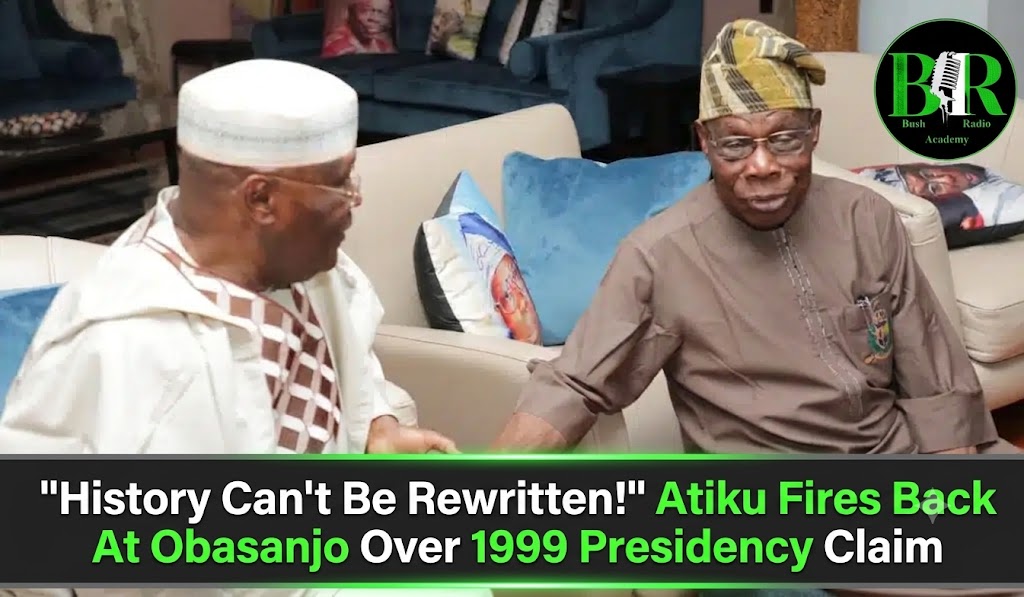
Former Vice President Atiku Abubakar has pushed back against former President Olusegun Obasanjo’s recent remarks about their political relationship, accusing his former boss of attempting to distort historical events.
In a statement issued on Saturday by his Senior Special Assistant on Public Communication, Phrank Shaibu, Atiku insisted that he played a significant role in Obasanjo’s return to power in 1999 and remained steadfast in supporting him during his imprisonment and after his release.
The response followed comments made by Obasanjo on Friday during a fireside discussion in Lagos, where the former president described his decision to choose Atiku as his running mate in the 1999 presidential election as one of the greatest mistakes of his administration. The event coincided with the unveiling of veteran entertainer Charles Oputa (Charly Boy)’s foundation and memoir, 999: A Memoir in Tribute to Late Justice Chukwudifu Oputa.
Reacting to the comments, Atiku dismissed the claims as “another failed attempt to rewrite history,” maintaining that his political decisions had always been guided by the Nigerian Constitution rather than personal loyalties.
The former vice president defended his opposition to the controversial third-term agenda during the Obasanjo administration, saying he remains proud of standing against any effort to alter the constitutional order for personal political ambition.
“I am proud that I stood against the third-term agenda. I stood by the Constitution of the Federal Republic of Nigeria and have no regrets for resisting every attempt to undermine our democracy for personal ambition,” he stated.
Atiku added that if his refusal to support the third-term proposal remained the source of Obasanjo’s grievances, he would regard the criticism as a mark of honour.
According to him, no individual, regardless of political stature, is greater than Nigeria or its Constitution, stressing that he chose to defend democratic principles above personal allegiance.
He argued that the disagreement was never about personalities but about protecting constitutional democracy, insisting that history had already judged the outcome in favour of democratic governance.
Reflecting on their earlier relationship, Atiku said he stood by Obasanjo throughout his imprisonment under the military regime, supported his family and joined other pro-democracy advocates in campaigning for his release.
He further claimed that after Obasanjo regained his freedom, he provided him with both personal and political support, helping him rebuild and eventually mobilising alliances and political structures that contributed to his emergence as president in 1999.
Despite the eventual breakdown in their relationship, Atiku said he has no regrets about offering that support.
“When God gives you the opportunity to help another person, you do so without expecting repayment. Acts of kindness should not be treated as commercial transactions,” he said.
However, he argued that appreciation should not be replaced with what he described as attempts to revise history.
The former vice president also referenced recent comments attributed to World Trade Organization Director-General, Dr. Ngozi Okonjo-Iweala, who reportedly acknowledged the achievements of the economic management team that served during the Obasanjo administration under his leadership.
According to Atiku, such remarks reinforce the contributions he made to one of Nigeria’s notable periods of economic management, despite what he described as Obasanjo’s efforts to downplay his role.
He also questioned the timing of Obasanjo’s renewed criticism, saying Nigeria’s current challenges—including insecurity, unemployment and economic hardship—deserve greater attention than reopening old political disagreements.
“The 2027 election should focus on rebuilding Nigeria, restoring security, reviving the economy and giving hope to the next generation, not revisiting old political battles,” he said.
Atiku added that although he had remained largely silent over the years out of respect for Obasanjo and the office he once occupied, he could no longer ignore repeated attempts to misrepresent historical events.
While acknowledging that Obasanjo has the right to express his personal views, Atiku insisted that opinions should not replace facts.
“History is stubborn. It cannot be rewritten by bitterness or erased through repeated falsehoods. In the end, history—and the Nigerian people—will deliver the final verdict,” he said.



Comments
0 comments