
Presidency Vs Cardinal: Bwala Accuses Onaiyekan Of Playing Politics Instead Of Preaching
 Follow us on Google News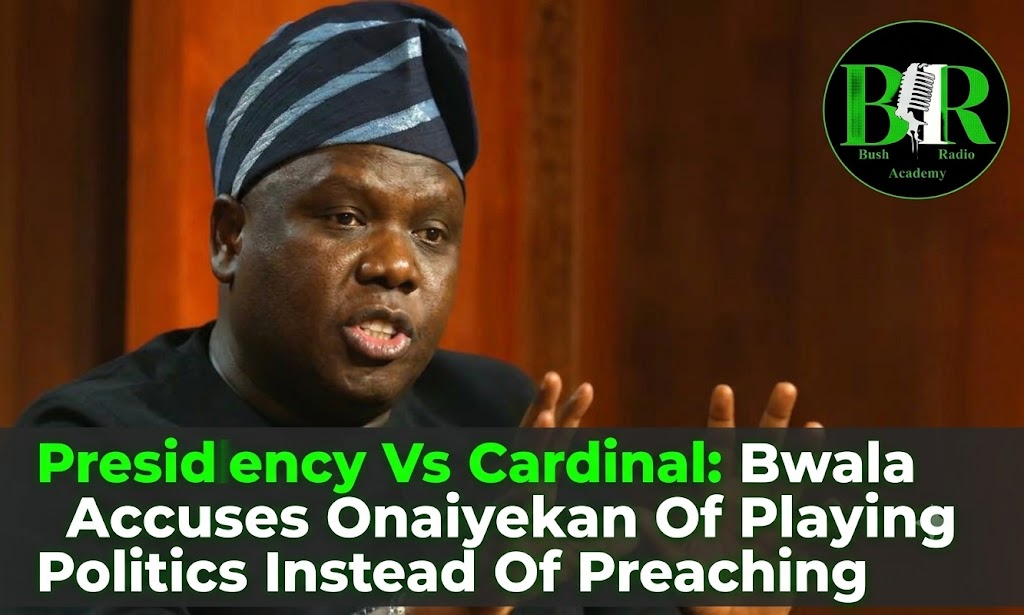
Special Adviser to President Bola Tinubu on Media and Public Communications, Daniel Bwala, has criticised Archbishop Emeritus of the Catholic Diocese of Abuja, Cardinal John Onaiyekan, over his recent comments on Nigeria’s economy, insecurity and the Tinubu administration.
The exchange followed Cardinal Onaiyekan’s appearance on ARISE Television, where he reflected on a meeting between President Tinubu and members of the Catholic Bishops’ Conference of Nigeria (CBCN) at the Presidential Villa in Abuja.
According to the cleric, the bishops raised concerns about the country’s economic and security challenges, but the President rejected their assessment. Onaiyekan also suggested that many people surrounding Tinubu present an overly optimistic picture of the nation’s condition, stressing that the bishops considered it their responsibility to tell the President the truth.
Responding in a post on X, Bwala argued that the cardinal was expressing the position of the Catholic Church rather than that of the broader Christian community.
He further alleged that Onaiyekan’s views were consistent with institutions he claimed had shown support for the 2027 presidential ambition of Nigerian Democratic Congress (NDC) figure Peter Obi.
According to Bwala, President Tinubu was entitled to reject the bishops’ assessment, insisting that his administration’s position on the economy was backed by data, statistics and measurable indicators.
The presidential aide also contended that Onaiyekan’s remarks reflected political leanings rather than purely religious concerns.
“Cardinal Onaiyekan wasn’t speaking for all Christians; he was speaking for Catholics, particularly institutions that have been rooting for Peter Obi. Even then, not every Catholic supports Peter Obi,” Bwala wrote.
He maintained that the President acted within his rights by disagreeing with the bishops’ assessment of the country’s economic situation, arguing that his response was based on available facts and figures.
Bwala also accused the cleric of applying a different standard to public discourse, claiming that religious leaders often encourage their members to speak positively despite personal hardship.
He further pointed out that the Christian community is represented by a broader umbrella body that includes the Catholic Church and the Catholic Bishops’ Conference, arguing that such an organisation should remain politically neutral.
According to him, once religious leaders move away from neutrality and openly align with political interests, their interventions become political rather than purely spiritual.





Comments
0 comments