
Latest
Inside ADC Crisis: How Growing Obasanjo–Atiku Tension Forced Peter Obi Out – Sources

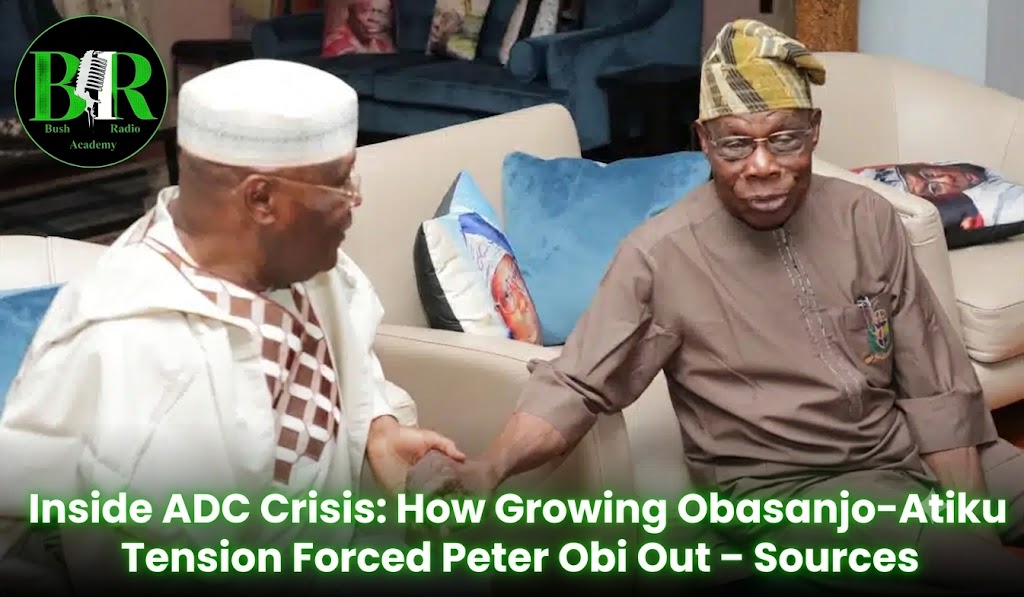
The longstanding political rift between former President Olusegun Obasanjo and his former vice president, Atiku Abubakar, has been identified by multiple sources as one of the factors that contributed to the fragmentation of the African Democratic Congress (ADC)-led opposition coalition ahead of the 2027 presidential election.
Sources within the ADC and the Kwankwasiyya Movement told Sunday PUNCH that Obasanjo was opposed to Atiku emerging as the coalition’s presidential candidate and allegedly encouraged some ADC leaders to prevent his nomination if they wanted his backing.
The allegation, however, has been disputed by associates of former Anambra State governor Peter Obi, while Obasanjo’s media aide declined to comment.
A senior ADC official alleged that Obasanjo contacted some party leaders and made his position on Atiku known before Obi eventually decided to leave the coalition.
According to the source, the former President’s position heightened tensions among supporters of the various presidential aspirants.
“Obi had not even nursed defection at that time. After that discussion with Baba, Obi’s supporters began the ‘Obi or nobody’ mantra and there was turbulence which we were able to manage,” the official said.
The source further claimed that Obasanjo and Obi later interpreted the Ibadan Opposition Coalition Summit as an attempt to facilitate an Atiku-Seyi Makinde presidential ticket, prompting preparations for Obi’s departure from the ADC.
Aregbesola Reportedly Meets Obasanjo
Another party insider said that after it became clear Obi was considering leaving the ADC, the party’s National Secretary, Rauf Aregbesola, and other senior members met with Obasanjo in late April.
The delegation was reportedly seeking the former President’s intervention to persuade Obi to remain in the coalition.
The source claimed, however, that Obasanjo maintained that Obi could only remain if Atiku was prevented from securing the party’s presidential ticket.
“An Atiku-Obi alliance would have secured victory for ADC, but Baba obviously didn’t want Atiku to realise his presidential ambition,” the source alleged.
Obi eventually left the ADC on May 3, citing internal crises and the need to respond urgently to what he described as Nigeria’s worsening condition.
An associate of Aregbesola confirmed that the former Osun State governor made efforts to prevent both Obi and former Kano State governor Rabiu Kwankwaso from leaving the coalition.
“Oga did everything to stop Obi and Kwankwaso from leaving the ADC. He went to meet Obasanjo and other key leaders of the country,” the source said.
The associate, however, said he could not confirm whether Obasanjo personally instructed Obi to leave the ADC.
Kwankwasiyya Source Links Obasanjo to Obi’s Exit
A chieftain of the Kwankwasiyya Movement also alleged that Obasanjo played a significant role in Obi’s eventual departure from the ADC.
According to the source, the former President initially supported the possibility of an Obi-Kwankwaso ticket and was closely involved in the opposition coalition project.
“From the beginning, the former President has eyed the ADC presidential ticket for Obi. He is the brains behind his movement to the ADC. He was driving the Obi-Kwankwaso ticket,” the source alleged.
The source claimed Obi and Kwankwaso had established a joint ticket committee to work on their strategy before indications emerged that Atiku was likely to secure the ADC presidential nomination.
According to the source, both politicians subsequently left the coalition following consultations with Obasanjo.
The source, however, cautioned against placing the entire blame for the coalition’s collapse on the former President, noting that Obasanjo had also played a role in persuading several prominent politicians to join the ADC.
ADC Spokesman Blames Obasanjo-Atiku Rift
The ADC National Publicity Secretary, Bolaji Abdullahi, also linked Obasanjo’s opposition to Atiku to Obi’s departure and the weakening of the opposition coalition.
“Everybody in Nigeria is aware of Obasanjo’s hate for Atiku for whatever reason,” Abdullahi said.
“It is public knowledge that Obasanjo is behind Obi’s exit from the ADC.”
He further alleged that Obasanjo had urged some party leaders to ensure that Atiku did not emerge as the party’s presidential candidate.
Abdullahi, however, said he was unaware of any formal delegation that met Obasanjo to persuade him to support an Atiku-Obi ticket.
He acknowledged that the disagreement had complicated efforts to build a broad opposition coalition.
“It has affected the work of coalition building and the opposition would probably have it much easier if the coalition had not been fractured,” he said.
Despite the setback, the ADC spokesman expressed confidence that the party could still defeat President Bola Tinubu in the 2027 election.
Obi Camp Denies Obasanjo Directive
Meanwhile, the National Coordinator of the Obidient Movement, Yunusa Tanko, said he was unaware of any directive from Obasanjo asking Obi to leave the ADC.
Tanko said Obi’s decision was influenced by political and legal circumstances surrounding the party at the time.
“All I know is that decisions were made based on the prevailing circumstances then,” he said.
“We knew ADC had court cases that may deprive Obi to run for election, and we didn’t want to go through that stress.”
He added that Obi had consistently maintained that he intended to contest the 2027 presidential election rather than serve as another candidate’s running mate.
“From the beginning, Obi had made it clear that he would be on the ballot for the presidency,” Tanko said.
He also described Obi’s relationships with both Obasanjo and Atiku as cordial.
Obasanjo’s Special Assistant on Media, Kehinde Akinyemi, declined to comment on the allegations. Further calls and messages to him reportedly went unanswered as of the time of filing the report.
Obasanjo-Atiku Feud Resurfaces
The political relationship between Obasanjo and Atiku deteriorated during their time as President and Vice President between 1999 and 2007.
Atiku later left the Peoples Democratic Party (PDP) for the Action Congress in 2006 amid disagreements with Obasanjo.
Their longstanding feud resurfaced publicly in recent days after Obasanjo described his decision to select Atiku as his running mate in 1999 as the “biggest mistake” of his presidency.
Atiku responded by accusing his former boss of attempting to rewrite history, while maintaining that his refusal to support Obasanjo’s alleged third-term ambition remained a major source of their disagreement.
The former Vice President has nevertheless maintained that the longstanding dispute will not stop him from pursuing his presidential ambition in 2027.


Rivers Crisis: Abe-Led Panel Opens High-Stakes Talks Between Fubara, Wike Camps

Major Blow To ISWAP As Air Force Bombs Sambisa, Eliminates Commander

Taraba Govt Debunks ₦1.2trn Debt Claim, Reveals Actual Amount Owed

Northern Communities Clear Peter Obi Over Mosque Demolition, ID Card Allegations

VeryDarkMan Retreats From P-Square Feud After Heavy Backlash

Explosive Details Surface As Full List Of Alleged Sylva Coup Fund Beneficiaries Emerges

2Baba Makes Bold Move Amid Growing Tension In Marriage To Natasha

Allegations Emerge: How Timipre Sylva Was Accused Of Using NDDC, Bank Loans To Fund Failed Coup Plot

Tense TV Moment: Orji Kalu Clashes With Seun Okinbaloye During Live Interview
