
It’s Pure Extortion— Man Cries Out After Restaurant Charges ₦6,000 For Two Boiled Eggs
 Follow us on Google News
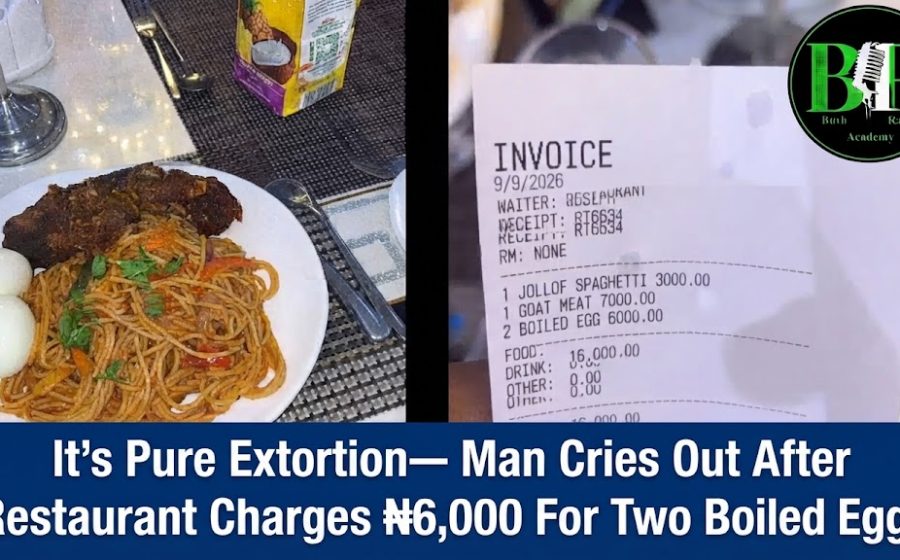
A man has sparked reactions on social media after sharing a receipt showing that he was charged ₦6,000 for two boiled eggs at a restaurant.
The man expressed disbelief over the price in a post on X, formerly known as Twitter, arguing that the amount was excessive and could not be justified by branding or the quality of the establishment.
According to Bush Radio Academy, he said there were certain things he would not spend money on regardless of his financial situation, adding that paying ₦6,000 for two boiled eggs was unacceptable to him.
“No matter how rich I am, there’re things I can never buy. You can’t expect me to buy just two boiled eggs for 6k. This is totally annoying and shouldn’t be encouraged because it’s pure extortion. There’s no branding that can make this make sense to me,” he wrote.
His post generated a wave of reactions, with social media users expressing different views about the restaurant’s pricing and the factors that could contribute to the cost of meals in upscale establishments.
Some commenters criticised the price, arguing that the amount charged for two boiled eggs was excessive. Others pointed to the rising cost of operating restaurants, including rent, service charges, labour and other business expenses, as possible reasons why meals and other items are often sold at significantly higher prices in some establishments.
One commenter suggested that he would rather ask the restaurant to remove the eggs from his order and replace them with additional meat or another item.
Another user compared the price with the cost of eggs outside restaurants, questioning why a basic boiled egg should attract such a high charge when purchased as part of a restaurant meal.
A different commenter, however, argued that customers gradually become accustomed to premium pricing in restaurants, pointing to the high cost of bottled water and other everyday items in some hospitality establishments.
Another social media user blamed the broader cost of commercial operations, arguing that expensive rents, short leases, service charges and other occupancy costs can put pressure on small and medium-sized businesses and ultimately contribute to higher prices for consumers.
She called for greater attention to commercial rents, leases and other charges affecting businesses, while stressing that the goal should be proper regulation rather than direct price control.
The discussion has since drawn attention to the growing debate over restaurant pricing in Nigeria, with consumers and business operators offering different perspectives on what determines the final price of food and services.







Comments
0 comments