
Lagos-Calabar Highway: Winhomes CEO Demands Compensation, Says Project Destroyed Estate Properties
 Follow us on Google News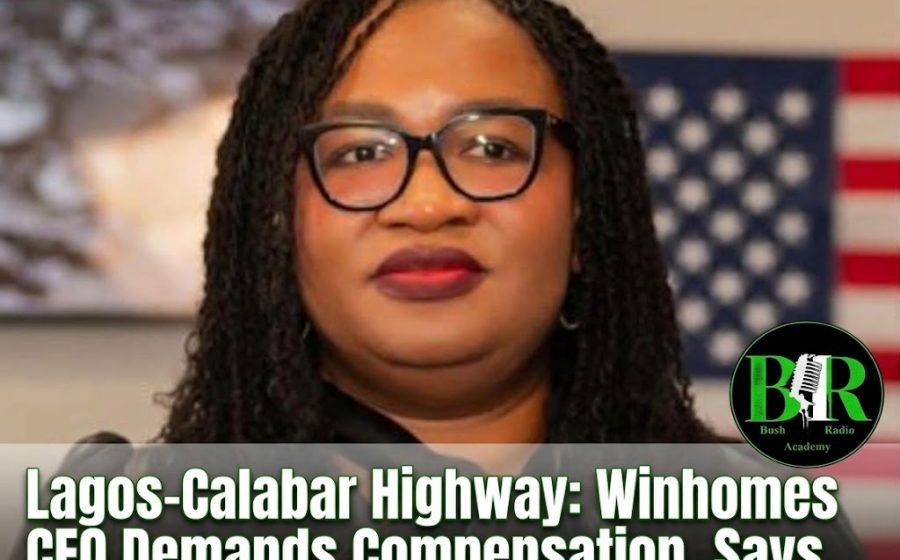
The Chief Executive Officer of Winhomes Global Services Limited, Stella Okengwu, has renewed calls for compensation over properties affected by the Lagos-Calabar Coastal Highway project, urging the Federal Government to address the dispute and safeguard investor confidence.
According to Bush Radio Academy, Okengwu said the highway’s alignment passed through the middle of her company’s estate, resulting in the destruction of properties and significant financial losses.
Speaking during a television interview on Wednesday, she explained that the company was seeking compensation for the affected properties, as well as government approval to resume development on the remaining portion of the estate.
“We have been soliciting compensation for the ones that they have destroyed and also to give us a presidential order for us to start working on the other land that is remaining,” she said.
The entrepreneur disclosed that recent engagements with the Presidency had created a channel of communication with investors affected by the project. She expressed hope that the discussions would lead to a resolution of the dispute.
Okengwu also highlighted the financial pressure her company had faced following the disruption of the estate development. According to her, the project was partly financed through loans obtained in the United States and commercial bank facilities secured in Nigeria.
She said the resulting financial obligations had forced the company to sell some of its assets to meet loan repayments and other commitments.
“We are paying a heavy loan with heavy interest in the United States. If not, the United States is not a place where banks will come and arrest you as long as you’re making payments; we have to liquidate some of our assets to make some payments and also pay some people,” she said.
Okengwu, who has consistently advocated greater investment by Nigerians living abroad, warned that unresolved disputes involving government infrastructure projects could discourage members of the diaspora from investing in the country.
She recalled participating in efforts to encourage Nigerians overseas to bring their capital home, including engagements in London and Australia, but expressed concern that cases involving affected investors could undermine such initiatives.
“I know a lot of people who say that they cannot come to Nigeria to invest again. We went to London and Australia, trying to get Nigerians back. And this is what I’ve been so passionate about,” she said.
The Winhomes chief executive also raised concerns about the environmental impact assessment for the coastal highway, insisting that environmental considerations should be adequately addressed before construction begins.
She further questioned the explanation linking her company’s property to the location of a marine cable, arguing that the cable’s landing station was approximately eight kilometres from the estate.
While acknowledging the government’s authority to acquire private property in the overriding public interest, Okengwu maintained that such actions must comply with the law and include appropriate compensation for affected property owners.
“I’m not saying that the government does not have overriding public interest to take any property, but they should do it legally,” she said.
Her appeal adds to ongoing concerns over compensation and property acquisition linked to the Lagos-Calabar Coastal Highway, with affected investors calling for a resolution that balances public infrastructure development with the rights of property owners.






Comments
0 comments