
Latest
Makinde Alleges EFCC Reached Out A Day After Warning Against Contesting Tinubu

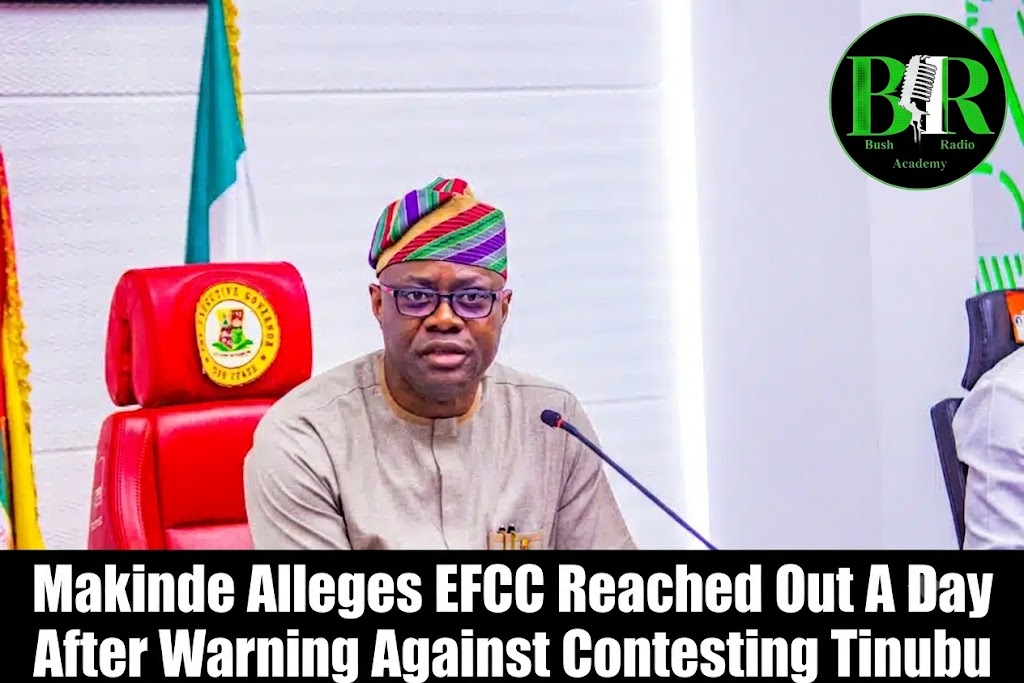
Oyo State Governor Seyi Makinde has alleged that an All Progressives Congress (APC) chieftain warned him against challenging President Bola Tinubu in the 2027 presidential election, claiming the Economic and Financial Crimes Commission (EFCC) sought extensive financial records from his administration a day later.....KINDLY READ THE FULL STORY HERE▶
Makinde made the allegation in his July 2026 monthly newsletter while reacting to Wednesday’s judgment of the Federal High Court in Ibadan, which restrained the EFCC from pursuing aspects of its planned investigation into the finances of the Oyo State Government.
According to the governor, the warning was issued on June 1, 2025, shortly after the APC endorsed President Tinubu as its sole presidential candidate for the 2027 election.
He said that on June 2, 2025, the EFCC requested records of all contracts awarded and payments made by the Oyo State Government from 2021 onward without identifying any specific contractor, company, transaction, or alleged offence under investigation.
“An APC chieftain warned me on June 1, 2025, against contesting the 2027 presidential election after President Bola Tinubu was endorsed as the APC’s sole candidate,” Makinde said.
“A day after the warning, the EFCC requested copies of all Oyo State Government contracts and payments to contractors from 2021, without identifying any contractor, company, transaction or alleged offence.”
The governor’s remarks followed the Federal High Court’s ruling in suit No. FHC/IB/CS/61/2025, filed by the Oyo State Government to challenge the scope of the EFCC’s request.
According to a statement issued by Makinde’s Special Adviser on Media, Sulaimon Olarenwaju, the court affirmed the EFCC’s statutory authority to investigate financial crimes but held that such powers must be exercised within constitutional and legal limits.
The court reportedly described the commission’s request, contained in a June 2, 2025 letter, as speculative and amounting to a “fishing expedition,” noting that the constitutional right to fair hearing could not be undermined under the guise of an investigation.
Makinde maintained that his administration never sought to obstruct the EFCC from carrying out a lawful investigation. Instead, he said the state government only requested that the commission identify the contractors, transactions, or allegations under investigation so that the relevant records could be provided.
According to him, the EFCC did not respond to that request, prompting the state government to seek judicial clarification on whether such a broad demand for documents was lawful.
He noted that the court upheld the anti-graft agency’s constitutional powers while insisting that investigations must be based on specific and identifiable allegations rather than broad, unspecified requests for information.
Makinde declined to speculate on the timing of the EFCC’s letter but said members of the public were free to draw their own conclusions.
The governor stressed that his administration supports transparency and accountability, adding that no government should be immune from scrutiny. However, he argued that investigations must be evidence-driven and not conducted merely in the hope of uncovering wrongdoing.
Describing the judgment as “a victory for the rule of law, not against the EFCC,” Makinde said the decision reaffirmed that all government institutions, including law enforcement agencies, must operate within the confines of the Constitution and due process.
He added that the ruling underscored the importance of leadership anchored on constitutionalism, the rule of law, and respect for established legal procedures.


Petrol Price Hike Sparks Fresh Concerns As Pump Prices Climb Nationwide

Fresh Twist: US Lawmaker Moves Motion Seeking Nnamdi Kanu’s Release

You Can’t Speak For The Southeast’ — Otti Fires Back At Uzodinma Over Tinubu’s 2027 Bid

Dangote Refinery Secures Massive $2.5 Billion In Landmark Private Equity Deal

Political Shake-Up: El-Rufai’s Associate Wins Fierce ADC Governorship Ticket Contest In Ogun

Mystery Deepens: New Details Surface In Mary Habila Death Investigation

Edo Governor Makes Major Shake-Up, Approves 20 Fresh Appointments

Oshiomhole Breaks Ranks, Opposes Fasina’s Confirmation Over Sexual Harassment Allegations

The Truth Must Be Told!’ – Full Text Of Umahi’s Explosive Remarks On Mary Habila’s Controversial Death
