
Mike Igini Says Failure To Transmit Presidential Results Destroyed Public Trust In INEC
 Follow us on Google News
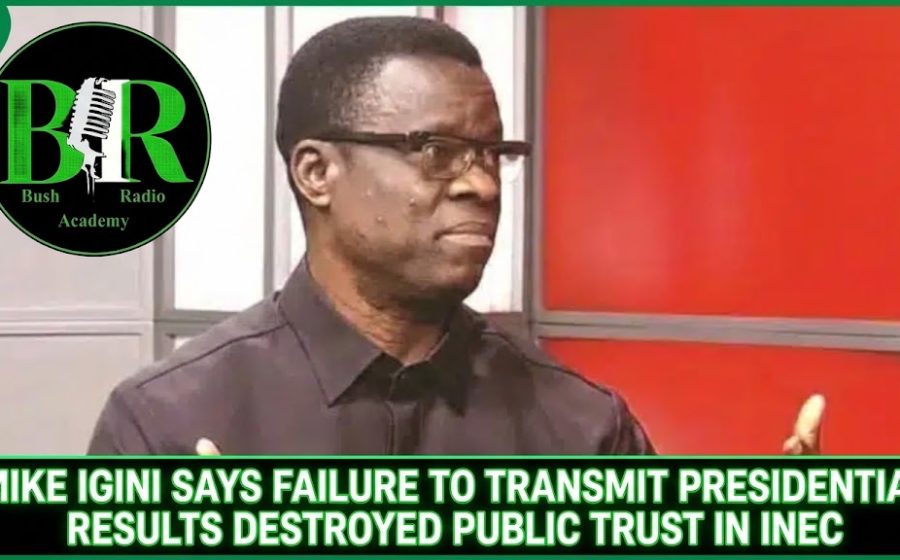
Former Independent National Electoral Commission (INEC) Resident Electoral Commissioner, Mike Igini, has admitted that he still lacks a clear explanation for the technical glitch that affected the transmission of results during Nigeria’s 2023 presidential election.
According to Bush Radio Academy, Igini made the remarks during an appearance on Channels Television’s Sunday Politics, where he argued that INEC’s failure to transmit the presidential election results, despite successfully conducting the other elections held on the same day, significantly undermined public confidence in the commission.
The former electoral commissioner maintained that the Bimodal Voter Accreditation System (BVAS) functioned during the 2023 polls, but questioned why the presidential results could not be transmitted in the same manner as those of the other two elections.
He said the failure created widespread distrust in INEC, adding that even those who had defended the electoral process and encouraged Nigerians to trust the commission were still seeking a satisfactory explanation for what happened.
Igini said the unresolved questions surrounding the transmission glitch continued to affect public perceptions of the electoral body and its leadership.
Looking ahead to the 2027 general elections, he described the polls as more than an ordinary electoral exercise, arguing that they would reveal whether Nigeria had learned meaningful lessons from the controversies that followed the 2023 election.
According to him, restoring confidence in the electoral process would require accountability, transparency and the effective protection of voters’ choices.
Igini also urged Nigerians to remain vigilant throughout election day, particularly during the collation of results at night, stressing that citizens should take an active interest in ensuring that their votes are accurately counted and recorded.
He argued that voters could play a significant role in safeguarding electoral integrity by remaining present at polling units and monitoring the process rather than leaving the responsibility entirely to election officials.
The former REC expressed the view that the collective vigilance of voters could help discourage electoral malpractice and strengthen accountability during the collation process.
His comments have renewed attention on the challenges surrounding electronic transmission of results and the importance of public trust in Nigeria’s electoral institutions as preparations and political activities ahead of the 2027 general elections continue.






Comments
0 comments