
NCDC Activates Fresh Ebola Measures, Orders Enhanced Screening For Travellers
 Follow us on Google News
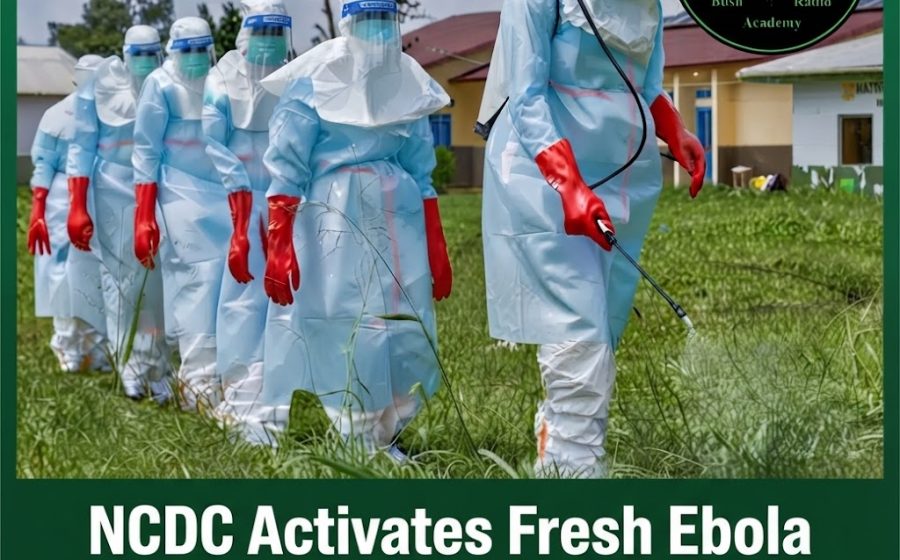
The Nigeria Centre for Disease Control and Prevention (NCDC) has placed Nigeria on high alert and activated precautionary measures following the ongoing outbreak of Ebola disease caused by the Bundibugyo virus in the Democratic Republic of the Congo (DRC).
According to Bush Radio Academy, the NCDC said it was closely monitoring the situation and strengthening preparedness measures to reduce the risk of the disease being imported into Nigeria.
The agency introduced enhanced surveillance for travellers arriving from countries with active or relevant Ebola Virus Disease (EVD) transmission. Travellers from affected countries may be required to complete a Health Declaration Form to support public-health surveillance and follow-up, while passengers from other countries are currently exempt from the requirement.
The NCDC said the measures were based on a dynamic risk assessment and consultations with public-health experts and the Federal Ministry of Health and Social Welfare. It added that the preparedness measures would be reviewed as the epidemiological situation changes.
The agency urged Nigerians to remain vigilant for symptoms associated with Ebola disease and advised anyone who develops concerning symptoms to seek medical attention promptly and provide relevant information about recent travel or possible exposure.
The NCDC has previously assessed Nigeria’s overall risk of Ebola importation as high because of ongoing regional transmission, international travel and population movement, as well as the country’s major airports, seaports and porous land borders.
Meanwhile, the Ebola outbreak in the DRC continues to expand. According to the World Health Organization’s latest epidemiological data, the country had recorded 7,672 confirmed cases and 3,699 confirmed deaths as of September 19, 2026. A total of 1,879 patients had recovered.
The outbreak has affected multiple provinces in the DRC, with WHO reporting sustained transmission and geographic expansion. The organisation has described the outbreak as a serious regional public-health threat and has continued to support surveillance, contact tracing, clinical preparedness and cross-border response efforts.
The WHO had earlier determined that the Bundibugyo virus outbreak in the DRC and Uganda constituted a Public Health Emergency of International Concern, while noting that it did not meet the criteria for a pandemic emergency.
The NCDC reaffirmed its commitment to evidence-based surveillance, preparedness and rapid response to public-health threats, while urging the public to follow official health advisories and avoid spreading unverified information about the outbreak.
Importantly, the high-alert measures do not mean that Nigeria has a confirmed Ebola outbreak. The measures are precautionary and are intended to strengthen early detection and response in the event of an imported case.




Comments
0 comments