
Latest
Nigeria’s External Debt On Track To Reach $45.1 Billion In 2024 Amid New $2.2 Billion Borrowing Approval

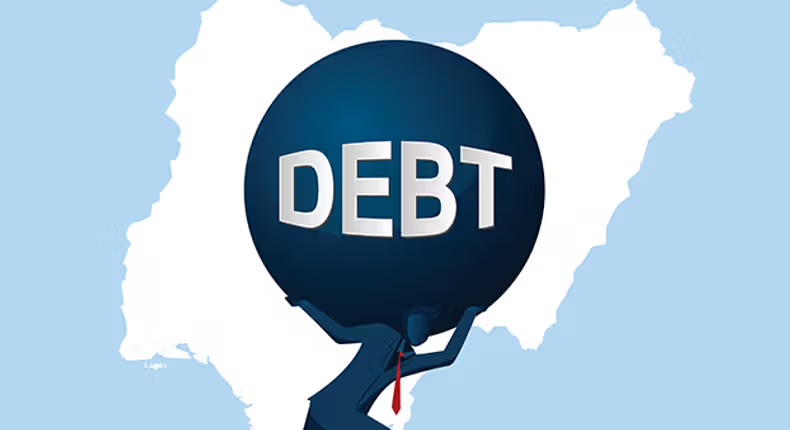
Nigeria’s External Debt On Track To Reach $45.1 Billion In 2024 Amid New $2.2 Billion Borrowing ApprovalNigeria’s external debt is projected to rise to $45.1 billion by the end of 2024, as the Federal Government seeks additional funding to support economic recovery, according to the Debt Management Office (DMO). The DMO’s latest report reveals that the country’s external debt increased by $780 million in the second quarter of 2024, growing from $42.12 billion in March to $42.9 billion in June.....KINDLY READ THE FULL STORY HERE▶
In a bid to manage the country’s fiscal challenges, the Federal Executive Council (FEC) approved a $2.2 billion external borrowing plan last Thursday. The loan is aimed at financing Nigeria’s 2024 Appropriation Act. Finance Minister Wale Edun announced the approval during a briefing at the Aso Rock Villa in Abuja.
The $2.2 billion borrowing plan consists of a mix of Eurobond and Sukuk offerings, valued at $1.7 billion and $500 million, respectively. Edun emphasized that the funds would contribute to Nigeria’s fiscal stability amid ongoing economic reforms. He also highlighted that the final allocation between the Eurobond and Sukuk would depend on market conditions and the guidance of transaction advisors.
The borrowing plan, however, requires approval from the National Assembly before it can be finalized. Edun noted that the funds would be used to address fiscal pressures and fund critical infrastructure projects. “This approval is part of completing the Federal Government’s external borrowing program. Once the National Assembly approves it, we hope to access the funds this year,” Edun said.
The DMO’s report further indicated that Nigeria’s external debt experienced a significant increase in its naira value between March and June 2024, largely due to the devaluation of the naira. On March 31, 2024, the external debt stood at $42.12 billion, which was equivalent to ₦56.02 trillion using an exchange rate of ₦1,330.26/$1. However, by June 30, 2024, the debt rose slightly to $42.9 billion, but surged to ₦63.07 trillion, driven by a higher exchange rate of ₦1,470.19/$1.
This 12.59% increase in the naira valuation of external debt highlights the significant impact of currency fluctuations on Nigeria’s debt burden, with the naira’s depreciation exacerbating the local currency value of the dollar-denominated debt. While the actual dollar-denominated debt grew by just 1.87%, the devaluation of the naira amplified the financial pressure in terms of local currency.
Minister Edun justified the borrowing plan, explaining that the initiative is in line with the administration’s broader economic recovery strategy. This strategy focuses on stabilizing macroeconomic conditions, adjusting market pricing for foreign exchange and petroleum products, and boosting local production. He also pointed out that earlier this year, Nigeria successfully issued domestic dollar bonds, demonstrating the resilience and sophistication of the country’s financial market and attracting both local and international investors.
As the external debt stock continues to rise, the Nigerian government’s focus on fiscal stabilization and infrastructure development remains central to its economic recovery plan, even as concerns over the country’s growing debt profile persist.
For more information on this article and other related posts from Bushradiogist, please join our WhatsApp channel by clicking this link https://whatsapp.com/channel/0029VaUumOODTkK7AZL1Fw3o. For advertisement inquiries only, kindly send a message to 090 1907 0863 on WhatsApp.


2027 Politics Heats Up As Tinubu’s Aide Takes Swipe At Peter Obi’s Supporters

Judgment Day Nears: Kenneth Okonkwo Gives Fresh Update On ADC Legal Battle

Breaking: NNPC Finishes Long-Awaited OB3 River Niger Pipeline Project

Breaking: Moro Bridge Gives Way, Disrupting Movement Between Kwara And Oyo North

Cost Of Living Surge: Petrol Prices Jump As Middle East Crisis Sparks Oil Rally

Breaking: Complete List Of Charges Filed Against Timipre Sylva And Alleged Coup Network Exposed

Political Tension Rises As Tonye Cole Grabs APC Ticket Form For Rivers Clash

Breaking: FG Slams Treason Charges On Timipre Sylva, Alleged Coup Plotters

Lagos 2027 Shake-Up: Obasa Backs Hamzat As Tinubu, GAC Reach Crucial Decision
